


Ho Chi Minh City vs Bangkok 2026: Costs, Lifestyle, and the Best Expat City in Southeast Asia
Choosing between Ho Chi Minh City and Bangkok might be the single most important decision for your Southeast Asia expat adventure. One city offers lean startup energy and rock-bottom rents, while the other delivers world-class infrastructure and convenience at a premium. Recent cost-of-living data shows Ho Chi Minh City runs 10–25% cheaper overall than Bangkok, yet Thailand’s capital remains the region’s most popular expat hub for good reason. This comprehensive HCMC Bangkok cost comparison breaks down housing, food, transport, healthcare, and quality-of-life factors in USD, plus sample monthly budgets and long-stay logistics, so you can confidently pick the best expat city in Southeast Asia for your budget and lifestyle.

Key takeaways
- Ho Chi Minh City runs 10 to 25 percent cheaper than Bangkok overall, and 15 to 20 percent cheaper on consumer prices once rent is included.
- A one-bedroom in District 1 or District 3 costs $450 to $750 a month, against $650 to $1,100 in Bangkok’s Sukhumvit corridor or Ari.
- Bangkok’s BTS and MRT cover more than 150 stations with an unlimited monthly pass around $50. Ho Chi Minh City’s Metro Line 1 is barely operational, so most expats ride GrabBike or rent a scooter at $50 to $80 a month.
- Bangkok’s private hospitals remain the regional benchmark, and serious cases in Saigon are still routinely transferred to Bangkok or Singapore.
- International school fees of $8,000 to $18,000 a year apply in both cities, which erases most of Ho Chi Minh City’s cost advantage for families.
HCMC Bangkok Cost Comparison: The Numbers in USD
Current data confirms that Ho Chi Minh City vs Bangkok tilts financially toward Vietnam’s commercial capital. Consumer prices in Ho Chi Minh City sit roughly 15–20% below Bangkok’s when rent is factored in, though specific categories reveal nuanced trade-offs.
Housing: Where Your Budget Stretches Furthest
All figures in US dollars per month unless stated otherwise.
| Monthly cost | Ho Chi Minh City | Bangkok |
|---|---|---|
| One-bedroom, central | $450–750 (D1, D3) | $650–1,100 (Sukhumvit, Ari) |
| Two-bedroom, central | $700–1,200 | $950–1,600 |
| Two-bedroom, expat zone | $800–1,400 (Thao Dien, Thu Duc) | $1,500–2,200 (Thonglor, Ekkamai) |
| Utilities, 85 m² flat | $70–100 | $90–130 |
| Fibre internet | $15–25 | $20–30 |
| Unlimited 5G mobile | $8–12 | $12–18 |
| Street-food dish | $1.50–2.50 | $2–3.50 |
| Mid-range restaurant meal | $6–10 | $8–13 |
| Coffee | $1.50–3 | $3–5 |
| Weekly groceries, one person | $30–50 | $35–60 |
| Local beer, convenience store | $0.80–1.20 | $1.20–1.80 |
| Getting around | GrabBike $0.80–2; scooter rental $50–80 plus $20–30 fuel | BTS/MRT $0.50–1.50 a ride; monthly pass ~$50 |
| Coworking membership | $80–150 | $100–180 |
| Mid-range gym | $25–50 | $35–65 |
| GP visit, international clinic | $25–50 | $35–60 |
| Specialist consultation | $60–100 | $80–120 |
| Dental cleaning | $30–50 | $40–70 |
| Health insurance | $80–150 | $100–180 |
Rent accounts for the largest slice of any expat budget, and Saigon delivers clear savings. A modern one-bedroom apartment in District 1 or District 3 typically runs $450–$750 per month, while the same unit in Bangkok’s Sukhumvit corridor or Ari neighborhood commands $650–$1,100 (see this practical guide to renting an apartment in Bangkok). Two-bedroom flats follow the same pattern: $700–$1,200 in central HCMC neighborhoods versus $950–$1,600 along Bangkok’s BTS lines. Thao Dien and Thu Duc, Ho Chi Minh City’s expatriate-heavy zones, push closer to $800–$1,400 for spacious two-beds with pools and gyms (deep dive: Ho Chi Minh City expat guide), yet comparable family-friendly condos near Thonglor or Ekkamai in Bangkok easily breach $1,500–$2,200.

Deposits in both cities mirror local norms: one to two months upfront in Bangkok, often two months in Saigon. Serviced apartments cost 20–40% more but include utilities, housekeeping, and gym access, making budgeting simpler for newcomers testing the waters before committing to neighborhoods in Ho Chi Minh City or Bangkok’s diverse districts.
Utilities, Internet, and Mobile: Small Wins Add Up
Monthly electricity, water, and gas bills for a typical 85 m² apartment average $70–$100 in HCMC and $90–$130 in Bangkok, with air-conditioning driving summer spikes in both cities. Fiber internet delivers symmetrical gigabit speeds for $15–$25 monthly in Ho Chi Minh City and $20–$30 in Bangkok. Mobile data packages reflect Vietnam’s aggressive telecoms competition: unlimited 5G plans cost $8–$12, while Thai carriers charge $12–$18 for similar coverage.
Food, Groceries, and Dining: Street Eats to Fine Dining
Street food remains the ultimate budget hack in both cities (flavors to hunt: must-try cuisines in Southeast Asia). A satisfying bowl of pho or plate of pad kra pao runs $1.50–$2.50 in Saigon and $2–$3.50 in Bangkok. Mid-range restaurant meals, a staple for expats balancing convenience and cost, average $6–$10 per person in HCMC versus $8–$13 in Bangkok. Coffee culture thrives everywhere: Vietnamese iced coffee or a flat white costs $1.50–$3 in Ho Chi Minh City’s exploding café scene, while Bangkok’s third-wave shops charge $3–$5.
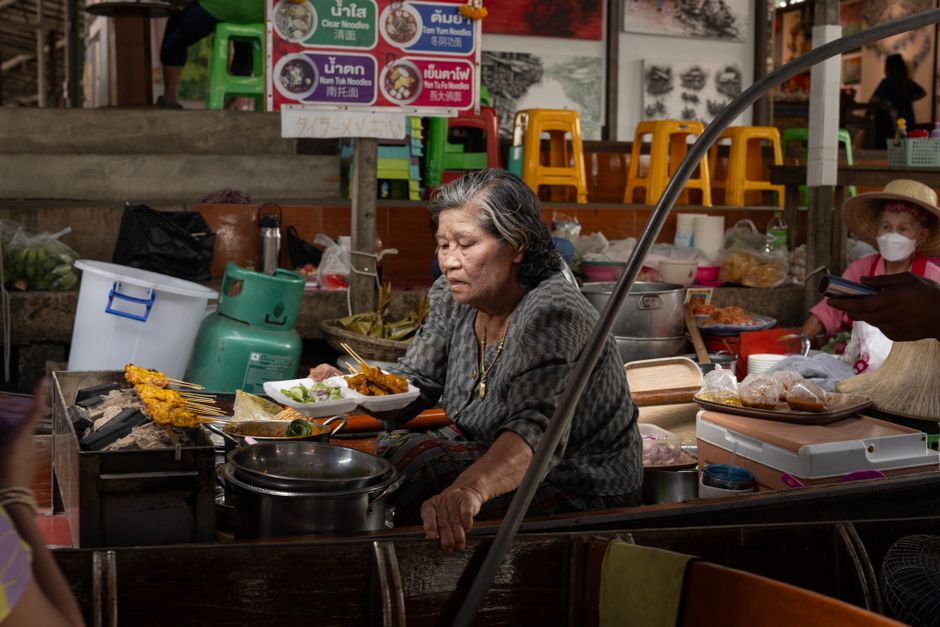
Supermarket shopping tilts slightly toward Bangkok for imported goods. A week’s groceries for one person, mixing local produce from wet markets with Western staples from Villa Market or Big C, runs $30–$50 in HCMC and $35–$60 in Bangkok. Local beer at convenience stores costs around $0.80–$1.20 in Vietnam and $1.20–$1.80 in Thailand, though craft brews and imported bottles erase the gap.
Transport: Motorbikes vs. Mass Transit
This category highlights the cities’ starkest infrastructure divide. Bangkok’s BTS Skytrain and MRT subway cover 150+ stations, with single rides costing $0.50–$1.50 and unlimited monthly passes around $50 (Bangkok infrastructure developments). Grab and Bolt taxis remain affordable for door-to-door trips, typically $3–$8 for cross-town journeys. Airport Link trains connect Suvarnabhumi to the city center for under $2.
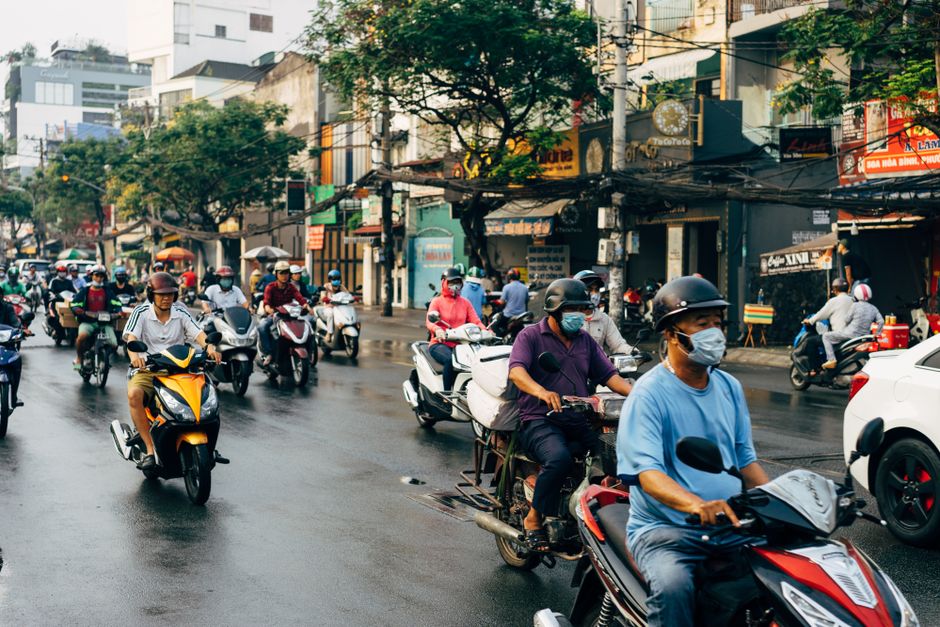
Ho Chi Minh City’s public transit footprint is minimal in early 2025, with Metro Line 1 finally operational but limited. Expats rely on GrabBike motorbike taxis, costing $0.80–$2 for short hops, or rent their own scooters for $50–$80 monthly plus $20–$30 in fuel. Owning a bike offers freedom but requires navigating Saigon’s famously chaotic traffic. Taxi rides and Grab cars run $2–$6 for typical distances, undercutting Bangkok’s equivalent fares by 20–30%.
Coworking, Gyms, and Workspaces
Remote workers find excellent infrastructure in both cities. Day passes at popular coworking spaces cost $8–$15 in HCMC and $10–$18 in Bangkok, with monthly memberships ranging $80–$150 and $100–$180 respectively (best coworking spaces in Bangkok). Café work culture thrives citywide: order a $2 Vietnamese coffee and claim a table for hours in Saigon, or settle into a Bangkok specialty shop with $4 lattes and reliable Wi-Fi.
Mid-range gym memberships run $25–$50 per month in Ho Chi Minh City and $35–$65 in Bangkok. Premium chains with international trainers and rooftop pools push $70–$120 in both cities.
Healthcare: Clinics, Hospitals, and Insurance
General practitioner visits at international clinics cost $25–$50 in HCMC and $35–$60 in Bangkok. Specialist consultations climb to $60–$100 in Saigon’s FV Hospital or Raffles Medical and $80–$120 at Bangkok’s Bumrungrad or Samitivej. Dental cleanings run $30–$50 versus $40–$70, while routine blood work and health screens stay under $100 in both cities.
Bangkok’s hospital infrastructure remains unmatched in Southeast Asia, with English-speaking staff, cutting-edge equipment, and seamless insurance billing. Ho Chi Minh City has closed the gap significantly, yet serious conditions often prompt transfers to Bangkok or Singapore. Basic expat health insurance in Asia 2025 premiums start around $80–$150 monthly in Vietnam and $100–$180 in Thailand, depending on age, coverage limits, and pre-existing conditions.
Sample Monthly Budgets: HCMC vs Bangkok in USD
Monthly totals in US dollars. International school fees of $8,000 to $18,000 a year sit on top of the family figures and narrow the gap considerably.
| Household | Ho Chi Minh City | Bangkok |
|---|---|---|
| Single remote worker | $1,200–1,800 | $1,500–2,200 |
| Couple, no children | $1,800–2,700 | $2,300–3,300 |
| Family with one child | $2,800–4,200 | $3,500–5,000 |
Single remote worker (modest but comfortable):
- HCMC: $1,200–$1,800 (rent $500–$700; food $200–$300; transport/misc $100–$150; utilities/internet $80–$100; coworking/gym $100–$150; entertainment/travel $150–$250)
- Bangkok: $1,500–$2,200 (higher rent and dining; offset by better public transit)
Couples without children:
- HCMC: $1,800–$2,700
- Bangkok: $2,300–$3,300
Families with one child:
- HCMC: $2,800–$4,200
- Bangkok: $3,500–$5,000
Note: International school fees add $8,000–$18,000 annually in both cities, narrowing the overall cost advantage.
Planning a move to Bangkok?
Tell us where you are now and what the move looks like. We will match you with people who have done it before and can save you the expensive mistakes.
Saigon vs Bangkok Living: Vibe, Neighborhoods, and Quality of Life
Numbers tell half the story; daily experience seals the deal. Saigon vs Bangkok living diverges sharply in pace, polish, and personality.
Vibe and Energy
Ho Chi Minh City pulses with entrepreneurial hustle. Motorbikes swarm every intersection, street vendors occupy sidewalks until midnight, and the startup ecosystem attracts builders chasing Vietnam’s 6–7% GDP growth. The city feels raw, fast, and unfiltered, where construction cranes signal constant change and café culture fuels 12-hour workdays. Expats describe HCMC as scrappy, dynamic, and occasionally exhausting.
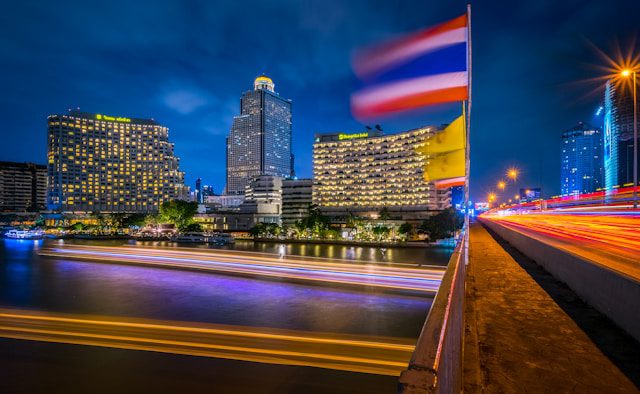
Bangkok operates at a different scale. Nine million residents navigate a mature megacity offering rooftop bars, Michelin-starred street food, sprawling malls, peaceful temples, and weekend escapes to beaches or mountains within two hours. The vibe balances frenetic markets with orderly BTS commutes, late-night chaos with serene riverside neighborhoods. Expats find Bangkok polished, convenient, and endlessly explorable.
“Bangkok is convenience; Saigon is momentum.” Pick the rhythm that makes you productive and happy.
Neighborhoods: Where to Land
Young professionals in Ho Chi Minh City cluster in District 1 for walkable nightlife and coworking density, District 3 for quieter tree-lined streets near cafés, or Thao Dien in District 2 for villa compounds, international schools, and weekend brunches. Thu Duc City, the newly merged eastern zone, attracts families seeking modern apartments, green space, and lower rents.
Bangkok’s neighborhood menu runs deeper. Sukhumvit between Asok and Ekkamai delivers expat-friendly condos, gyms, and restaurants steps from BTS stations. Ari and Sathorn appeal to professionals wanting local flavor without sacrificing convenience. Families colonize Thonglor and Ekkamai for parks, international schools, and Japanese supermarkets, while retirees and wellness seekers explore Chiang Mai or beach towns like Hua Hin (best family neighborhoods in Southeast Asia).
Safety, Air Quality, and Weather
Both cities rank safe for expats, with petty theft the primary concern. Violent crime remains rare, though motorbike bag-snatching happens in both HCMC and Bangkok. Traffic poses the real danger: scooter accidents injure thousands annually in Vietnam’s chaotic flow and Thailand’s speed-heavy roads.
Air quality swings seasonally. Bangkok endures PM2.5 pollution spikes from December to March as agricultural burning blankets northern Thailand, pushing sensitive groups indoors. Ho Chi Minh City faces year-round exhaust haze from millions of motorbikes but avoids Bangkok’s worst extremes. Both cities bake in tropical heat, with April and May topping 35°C and rainy seasons running May through October, flooding low-lying streets during afternoon downpours.
Culture, Nightlife, and Food
Vietnamese culture emphasizes family, respect, and rapid economic ambition. Learning basic Vietnamese phrases unlocks genuine warmth, though English proficiency lags behind Thailand in service sectors. Street food defines HCMC, where banh mi, bun cha, and fresh spring rolls cost pocket change and rival any restaurant.
Thai culture blends Buddhist serenity with sanuk, the pursuit of fun. English penetration runs deeper in Bangkok, easing daily logistics. The food scene spans $1 som tam carts to internationally acclaimed fine dining, while nightlife ranges from gritty Khao San backpacker bars to sky-high cocktail lounges and sprawling nightclubs.
Expat Ecosystems
Bangkok hosts Southeast Asia’s largest and most diverse expat community: retirees on long-stay visas, corporate transferees in Sathorn towers, digital nomads in Ari cafés, and teaching professionals citywide. Meetup groups, sports leagues, coworking events, and international schools create instant social infrastructure.
Ho Chi Minh City’s expat scene skews younger and entrepreneurial. Networking revolves around startups, e-commerce ventures, and English teaching. The community feels tight-knit yet transient, as visa uncertainties and growth ambitions cycle people through every 1–3 years.
Ultimately, the best expat city in Southeast Asia depends on your priorities: choose HCMC for lower costs and startup buzz, Bangkok for infrastructure and deep expat networks.
Vietnam vs Thailand Living: Long-Stay Logistics
Visas: Staying Legal
Thailand offers multiple pathways for extended stays. Visa-exempt entries grant 60 days for many nationalities, extendable once for 30 days. Education visas tied to language schools or Muay Thai gyms enable year-long stays with 90-day border runs. The Long-Term Resident visa targets wealthy pensioners, remote workers earning $80,000+ annually, and skilled professionals, granting five-year renewable permits (Thailand LTR visa guide 2025). Digital nomad and SMART visas cater to tech talent and startup founders (Thailand digital nomad visa options). Details shift frequently; consult our comprehensive Thailand visa guide before committing.
Vietnam’s visa landscape has simplified. E-visas now extend up to 90 days for most nationalities, with straightforward online applications. Renewable business visas and temporary residence cards through employment or company ownership suit longer stays (Vietnam golden visa vs Thailand LTR). The system remains less foreigner-friendly than Thailand’s, with bureaucratic hurdles and reliance on visa agents common. Our Vietnam visa guide walks through current options.
Renting: Contracts and Deposits
Standard lease terms run 12 months in both cities, though short-term furnished rentals cater to testing periods. Expect two months’ deposit in HCMC and one to two months in Bangkok, plus one month advance rent. Landlords rarely conduct Western-style credit checks; passport copies and upfront cash suffice. Inspect air-conditioning units, water pressure, and Wi-Fi before signing, and photograph everything to avoid deposit disputes. Utility bills sometimes fall to tenants, sometimes to landlords; clarify upfront. Agents charge one month’s rent as commission, split between tenant and landlord or paid entirely by the landlord depending on negotiation.
Banking, SIMs, and Money Movement
Opening local bank accounts requires work permits or long-stay visas in both countries, though some banks accept tourist visas with agent assistance. E-wallets like GrabPay, Momo, and ShopeePay dominate cashless payments in Vietnam, while Thailand leans on PromptPay and banking apps (open a bank account in Thailand guide). Cash remains king for street food, taxis, and small vendors.
Local SIM cards cost $2–$5 with passport registration. Prepaid data plans offer incredible value: $8–$12 monthly buys unlimited 5G in Vietnam, $12–$18 in Thailand. Tourist SIMs at airports cost double but activate instantly.
Wise, Revolut, and traditional wire transfers handle international money movement. Remittance apps like Wise typically beat bank rates by 1–2%, saving hundreds annually on large transfers.
Internet, Power, and Remote Work
Both cities deliver world-class internet for remote work. Fiber connections reach 500 Mbps to 1 Gbps for $15–$30 monthly, with 99% uptime in modern buildings. Power outages strike occasionally during storms but rarely last more than minutes thanks to building generators. Coworking spaces and cafés maintain backup internet and power, ensuring uninterrupted Zoom calls.
Choose neighborhoods wisely: central districts in HCMC and BTS-adjacent zones in Bangkok minimize commute stress and maximize after-hours options. Quiet residential pockets like District 3 or Ari balance focus with lifestyle.
Healthcare Access and Insurance
Bangkok’s hospital infrastructure justifies the city’s cost premium for families and retirees. Bumrungrad International Hospital ranks among Asia’s best, offering concierge-level service, English-speaking specialists, and direct insurance billing for major global providers. Samitivej and BNH Hospital deliver similar standards. Routine checkups, vaccinations, and chronic disease management run smoothly with minimal wait times.
Ho Chi Minh City’s international hospitals, including FV Hospital, Raffles Medical, and Columbia Asia, provide excellent care for common needs. Complex surgeries or rare conditions often prompt medical tourism to Bangkok or Singapore. Out-of-pocket costs stay lower in Vietnam, but insurance coverage and specialist availability tilt toward Thailand.
Expat health insurance premiums depend on age, coverage limits, deductibles, and pre-existing conditions. Policies covering both countries cost $100–$200 monthly for healthy individuals under 40, climbing to $300–$600 for families or those over 50. Budget another $500–$1,500 annually for out-of-pocket copays, dental work, and prescription drugs.
Making Your Choice: HCMC or Bangkok?
The Ho Chi Minh City vs Bangkok debate distills to budget and priorities. If minimizing monthly burn rate tops your list and you thrive in fast-moving, unpolished environments, Ho Chi Minh City delivers 15–25% cost savings alongside Vietnam’s explosive growth story. Entrepreneurs, lean digital nomads, and adventurous singles find Saigon’s energy addictive.
If seamless infrastructure, world-class healthcare, superior public transit, and a mature expat ecosystem justify higher costs, Bangkok remains the best expat city in Southeast Asia for families, retirees, and professionals prioritizing convenience over savings. The gap narrows for high earners, as international school fees and upscale housing equalize budgets, making Bangkok’s polish worth the premium.
Neither choice is permanent. Spend three months in each city, track your actual spending, and discover which rhythms suit your work style and social needs. Grab our free country guides packed with neighborhood breakdowns, visa strategies, and real-world budgets (best cities in Asia 2026):
Both cities offer exceptional quality of life at costs unimaginable in Western capitals. Your perfect Southeast Asia base is waiting, whether it hums with motorbike engines in Saigon or glides past on Bangkok’s Skytrain.
Frequently asked questions
Is Ho Chi Minh City cheaper than Bangkok?
Yes, by roughly 10 to 25 percent overall, and 15 to 20 percent on consumer prices once rent is counted. Housing drives most of the gap: a central one-bedroom is $450 to $750 in Saigon against $650 to $1,100 in Bangkok. Food, utilities, mobile data and healthcare all come in cheaper too, though Bangkok narrows the gap on imported groceries.
How much does it cost to live in each city per month?
A single remote worker needs $1,200 to $1,800 in Ho Chi Minh City or $1,500 to $2,200 in Bangkok. A couple without children should budget $1,800 to $2,700 against $2,300 to $3,300. A family with one child needs $2,800 to $4,200 against $3,500 to $5,000, before school fees, which run $8,000 to $18,000 a year in both cities.
Which city has better public transport?
Bangkok, by a wide margin. The BTS Skytrain and MRT subway cover more than 150 stations, single rides cost $0.50 to $1.50 and an unlimited monthly pass is around $50. Ho Chi Minh City’s Metro Line 1 only recently began operating and covers little of the city, so expats depend on GrabBike at $0.80 to $2 a trip, or rent a scooter for $50 to $80 a month plus fuel.
Which city has better healthcare?
Bangkok’s hospital infrastructure is the strongest in Southeast Asia, with English-speaking staff and seamless insurance billing. Ho Chi Minh City has closed much of the gap and costs less at every level – a specialist consultation is $60 to $100 against $80 to $120 – but serious conditions still frequently prompt a transfer to Bangkok or Singapore.
Which is better for a remote worker?
It comes down to what you want from the city rather than the numbers. Saigon is cheaper, faster-moving and has a growing startup scene, with coworking at $80 to $150 a month. Bangkok costs more but offers deeper infrastructure, wider English, better transport and easier weekend travel, with coworking at $100 to $180.
Still weighing up your visa options?
Tell us your nationality, your plans and how long you want to stay. We will put you in touch with immigration specialists who handle these applications daily.


