


Vietnam Golden Visa vs Thailand LTR Visa
Vietnam and Thailand are taking opposite approaches to long-term visas in 2025. Vietnam is opening up with a new 10-year “Golden Visa” program and easing naturalization rules for foreign spouses. In contrast, Thailand is tightening entry requirements: it has introduced a selective 10-year Long-Term Resident (LTR) visa for wealthy and skilled foreigners while cutting its general visa-free tourist stay from 60 to 30 days. This guide breaks down the key 2025 visa changes in both countries and what they mean for expats, retirees, entrepreneurs, and digital nomads looking to relocate in Southeast Asia.


Vietnam’s Expanding Visa and Citizenship Options
10-Year Golden Visa Program
In 2025 Vietnam launched a new multi-category Golden Visa system to attract foreign investment and talent. The program offers long-term residency (5–10 years) and simplified applications, largely online. Key features include:
Visa categories: A general “Golden Visa” valid 5–10 years (renewable), a 10-year Investor Visa (renewable) and a 5-year Talent Visa for skilled professionals.
Applicants can include investors, entrepreneurs, qualified professionals and even digital nomads and retirees.

-
Renewal & Family: These visas are renewable. Holders can sponsor dependents (spouse/children) on residence visas, granting family access to healthcare and education.
-
Pathway to permanent residency: Investors on the 10-year visa may apply for Vietnamese permanent residency after five years of continuous investment. In practice, experts note the Golden Visa (with low investment thresholds around VND3 billion, ~US$120k) is meant to complement existing investor visas.
Vietnam’s Golden Visa emphasizes digital and user-friendly processing. Applications are fully online with no embassy visits required. Authorities hope this will “strengthen Vietnam’s position as a center for life, business and tourism” in ASEAN.
Indeed, Vietnam’s National Tourism Authority reported 7.67 million foreign visitors in Jan–Apr 2025 (up 23.8% YoY) and is targeting over 22 million arrivals in 2025.
Citizenship Law Amendments
In June 2025 Vietnam’s National Assembly passed a landmark nationality law reform. Foreigners married to Vietnamese citizens (or with Vietnamese children) can now apply for citizenship without the old requirements of 5-year residency, Vietnamese language proficiency, or proof of financial self-sufficiency. In other words, a foreign spouse can naturalize as a Vietnamese national immediately, bypassing the typical five-year wait and exam.
This change is intended to attract skilled professionals and investors with family ties: Justice Minister Nguyen Hai Ninh noted it will draw “talented professionals, scientists, investors and experts” to Vietnam.
Recap of Vietnam’s 2025 changes:
- The new Golden Visa offers renewable 10-year residency with a fast track to permanent residency.
- The nationality law now allows foreign spouses to become Vietnamese citizens without the former 5-year residency or language requirements.
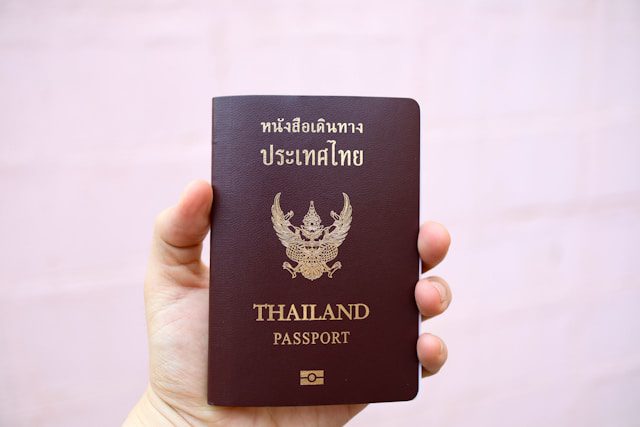
Thailand’s Tightening Visa Landscape
Long-Term Resident (LTR) Visa
Thailand introduced its Long-Term Resident (LTR) visa in late 2022, with final details solidified by 2025. The LTR is a 10-year visa (initial 5 years + 5-year renewal) aimed at wealthy and highly skilled foreigners.
It comes with special incentives (tax breaks, easier work permits, etc.) to position Thailand as a hub for global talent. There are four LTR categories, each with strict income or asset requirements:
High-Skilled Professionals: Foreign experts in targeted industries must earn at least US$80,000/year on average over the past two years (No longer requires proof of work experience).
The list of eligible sectors has been broadened beyond the original science/tech fields. “non-STEM” sectors are included (e.g. development & sustainability, disaster and risk management, integrated innovation), and all fields of higher/vocational education are now covered.
This means applicants with academic roles or expertise in a wider range of industries can qualify. Addtionally, you must have health insurance and either social security or a US$100,000 bank deposit.
-
Remote Workers (Work-from-Thailand Professionals): “Digital nomads” working for stable foreign companies qualify under similar income rules: US$80,000/year (No longer requires proof of work experience). Additional criteria include working for public companies or subsidiaries with ≥USD$50 million revenue, and the same insurance/bank-deposit safeguards.
-
Wealthy Global Citizens: Individuals holding US$1,000,000+ in assets can apply. They must invest at least US$500,000 in Thai government bonds, local companies or real estate, and maintain a US$100,000 bank balance or insurance.
-
Wealthy Pensioners (Retirees): Foreign retirees (50+) with ≥US$80,000/year in unearned income (pension, rental, dividends, etc.) qualify. Those earning US$40,000–$80,000 must also invest US$250,000 in Thailand. Pensioners also need health insurance or a US$100,000 deposit.
In All Categories, dependents now include parents and any legal dependents, with no limit on number. In practice, LTR visa holders can bring an expanded family group. (Note: the expanded dependent rights take effect when the Interior Ministry issues the official announcement.)
The LTR visa holder enjoys perks like a flat 17% personal income tax rate for certain professionals and exemption on foreign-sourced income. However, this program is exclusive by design: the Thai government’s goal is to attract “one million wealthy or talented foreign residents” over five years. The eligibility thresholds (especially the US$1M asset or US$80k income rules) ensure only affluent expatriates or high earners qualify.
Other Thai Visa Changes (2025)
Alongside the LTR visa, Thailand is curbing its tourist visa privileges. Notably, from March 2025 the visa-free entry for travelers from 93 countries is being cut from 60 days back to 30 days. Tourism officials say this aims to “curb misuse” of visa waivers by foreigners engaging in unapproved work or business activity. In summary, Thailand’s policy is shifting toward fewer but higher-value long-term residents, while tightening standard tourist entry.
Working out which visa you need?
Tell us your nationality, your plans and how long you want to stay. We will put you in touch with immigration specialists who handle these applications daily.
Vietnam vs Thailand: Visa Policy Comparison
| Feature | Vietnam (2025 changes) | Thailand (2025 changes) |
|---|---|---|
| Long-Term Visa | 10-year Golden Visa program with multiple categories (investors, talents, nomads/retirees) offering long-term residency. | 10-year LTR visa (5+5 years) for select foreigners
|
| Duration & Renewal | Initial 5–10 years, renewable (investor visa is 10 years; talent visa 5 years) | 10-year initial visa (5 years, extendable by 5) |
| Eligibility | Investors (with varying capital); skilled professionals; digital nomads/entrepreneurs | Four categories:
– Wealthy: ≥US$1M assets (plus US$500k Thai investment/government bonds)- Pensioners: ≥US$80k passive income (or US$40k + US$250k investment)- Skilled workers: ≥US$80k income (No longers requires proof of work experience and the list of eligible sectors has been broadened)- Remote workers: ≥US$80k (No longers requires proof of work experience) |
| Income/Assets Req. | (Proposals suggest low entry, ~US$120k for lowest tier) | ≥US$80,000/year income for professionals; ≥US$1,000,000 assets for wealthy category. |
| PermanentResidency | Investor visa holders can apply for PR after 5 years. | No direct path to Thai permanent residency or citizenship via LTR. |
| Citizenship/Naming | Foreign spouses can naturalize without residency or language test; dual citizenship now allowed with presidential approval. | Dual citizenship is restricted (Thai nationals must renounce other citizenship to hold government office); new LTR does not change Thai nationality law. |
| Visa-Free/Tourist | Vietnam continues expanding e-visas and visa exemptions (up to 3 months for many nationalities). | Visa-free stay cut from 60 to 30 days for nationals of 93 countries (effective 2025). |
| Policy Intent | Attracting FDI and skilled expats; boosting tourism and investment. | Attracting high-net-worth and skilled residents (target 1M in 5 years), while cracking down on visa abuse by general tourists. |
What This Means for Expats
- Retirees: Vietnam’s Golden Visa (and general long-term visa) is a boon for wealthy retirees. It allows a 10-year stay with minimal fuss, and foreign spouses of Vietnamese can now naturalize without hurdles. Thailand’s LTR visa also has a “wealthy pensioner” category, but it requires US$80,000+ yearly passive income (or lower income plus a US$250k Thai investment). Thailand still offers its old retirement visa for 50+ foreigners, but the LTR is more expensive and aimed at the rich.
In short, Vietnam is broadening its appeal to retirees (with easier 10-year visas), whereas Thailand expects retirees to meet high financial thresholds.
- Entrepreneurs/Investors: Entrepreneurs will notice Vietnam’s new Golden Visa opening new doors. A relatively modest investment can secure long-term residency (and eventual permanent residency). The simplified process (fully online, fast-tracked) is especially attractive. In Thailand, International entrepreneurs fall under the “Wealthy Global Citizen” LTR: you need a US$1 million+ portfolio and US$500k invested in Thailand.
Thailand’s investment visas already required large outlays; the LTR formalizes this and adds perks. Overall, Vietnam’s rules for investors are becoming more accessible, while Thailand’s LTR is more exclusive (targeting only the very wealthy).
- Digital Nomads & Remote Workers: Vietnam’s Golden Visa explicitly includes digital nomads and long-term residents without needing a big investment. Even its Talent and investor categories don’t demand active work in Vietnam, making it ideal for freelancers or remote workers who want stability.
Thailand’s LTR visa for “Work-from-Thailand Professionals” has recently been made more accessible. The previous requirement of earning at least US$80k annually and having five years of relevant work experience has been removed. Now, applicants no longer need to meet a minimum income or experience threshold. Instead, they must work for an overseas company with at least USD 50 million in revenue over the past three years, or a wholly owned subsidiary of such a company. This opens the door for a wider range of remote professionals to secure a 10-year visa, along with potential tax benefits and dependent eligibility.
Final Thoughts
In summary, Vietnam is loosening its rules to welcome long-term residents. Its Golden Visa program (up to 10-year stay) and relaxed citizenship law (no five-year wait or language test for foreign spouses) make relocation easier than ever. Thailand, meanwhile, is tightening short-term stays while upgrading its LTR Visa to attract wealthy investors and top professionals. Requirements are eased in some categories but still favor high earners and big investors.
For expats, this means Vietnam is increasingly attractive for retirement, entrepreneurship, or remote work – offering simplicity and long-term security. Thailand still appeals for those who meet its high-income requirements, with a full decade-long visa and perks.
To stay ahead of these evolving rules, join Asia Lifestyle Magazine’s visa waiting list for Thailand and Vietnam. You’ll receive timely updates and expert guidance on these visa programs so you can plan your Southeast Asia relocation with confidence.
Sources:
Laotian Times, Euronews, Financial Express, english.luatvietnam, ltr.boi.go, visa-digital-nomad
Thinking seriously about moving to Asia?
Tell us where you are now and what the move looks like. We will match you with people who have done it before and can save you the expensive mistakes.


