Jakarta Expat Guide: Cost, Best Districts & Jakarta vs Bali for 2026
Jakarta sprawls across 664 square kilometers of Java, home to over 10 million residents and the nerve center of Indonesia’s economy—context captured in this Jakarta global city population shift overview. For the Indonesia capital expat, choosing Jakarta means trading Bali’s beaches for boardrooms, international schools, and a transit network that’s finally catching up with regional rivals. Whether you’re a corporate professional eyeing SCBD towers, a family hunting international curricula, or a remote worker chasing lower rents and authentic street food, this guide delivers what you need.

You’ll walk away with monthly budget templates, neighborhood snapshots by commute and lifestyle, and practical decision frameworks to confidently navigate Indonesia’s capital in 2026.
Understanding Living in Jakarta Costs: Monthly Budgets in USD
Housing anchors your budget. A studio in central neighborhoods like Menteng or Kuningan starts at $550–800 per month, while a two-bedroom apartment in the same zones climbs to $1,000–1,800. Families needing three-bedroom units in South Jakarta enclaves such as Kemang or Pondok Indah should plan $1,500–2,800 monthly; detached houses with gardens push toward $2,500–4,000. Head north to Kelapa Gading or west to BSD City and rents drop by 20–30 percent: a modern two-bedroom condo there averages $700–1,100, perfect for remote workers willing to buffer commute time for savings.
First-month move-in costs compound quickly. Landlords expect a two-month deposit plus the first month upfront, so budget three months’ rent in cash. Real-estate agents typically charge half a month’s rent, though many expat-focused platforms absorb that fee. Add $150–300 for SIM cards, electricity deposits, and basic furniture if your unit arrives unfurnished.

Utilities and connectivity remain affordable. Electricity for a 90-square-meter apartment averages $60–90 monthly with air-conditioning use; water adds $10–15. Fiber internet delivering 50–100 Mbps costs $20–35 per month, and premium mobile data plans with 50 GB run $10–15. Co-working memberships in Sudirman or SCBD hover around $150–250 monthly for hot-desks, dropping to $80–120 in northern or suburban hubs.
Transport choices shape daily spending. Jakarta’s MRT and TransJakarta bus rapid-transit lines charge $0.30–0.70 per ride; a monthly unlimited pass is roughly $15. Ride-hailing via Grab or Gojek offers motorbike trips for $0.50–1.50 across short hops and car rides averaging $3–6 for mid-distance journeys. Owning a car adds $150–250 monthly in fuel, parking fees that hit $100–180 in premium buildings, plus annual insurance around $600–1,000.
Food costs swing with preference. Street warungs serve nasi goreng or soto for $1.50–3 per meal, meaning a local-diet expat can eat three meals daily for under $150 monthly. Mid-range café lunches cost $5–8, and dinner for two at a Senopati restaurant with drinks runs $30–50. Groceries from Ranch Market or Kemchicks for Western staples, dairy, and imported wine average $300–500 monthly for a couple; stick to Alfamart or traditional markets and halve that figure.
Childcare and schooling dominate family budgets. Full-time daycare or preschool ranges $200–500 monthly; international schools such as Jakarta Intercultural School or British School Jakarta charge annual tuition between $15,000–30,000 (roughly $1,250–2,500 per month when amortized). Many employers include education allowances, making South Jakarta’s school-dense neighborhoods the default choice for families.
Healthcare and insurance depend on coverage tier. Employer-sponsored plans typically cover outpatient visits and hospitalization; individual international policies start at $100–200 monthly for basic coverage, scaling to $400–600 for comprehensive plans with regional evacuation. Out-of-pocket GP consultations at expat clinics cost $30–50, specialist visits $60–100, and generics keep prescription medications affordable.
Lifestyle spending rounds out the picture. Gym memberships in premium facilities average $50–90 monthly; boutique studios reach $120–180. Movie tickets cost $6–9, craft cocktails in SCBD bars $8–12, and weekend spa treatments $30–60. Budget an extra $100–200 monthly for entertainment, rideshares to nightlife districts, and occasional domestic flights to Yogyakarta or Bali.
“In Jakarta, your address is your time strategy: live near work or near school—rarely both.”
Sample Monthly Budgets
Single professional in a Kuningan studio, MRT commute, mix of local and mid-range dining:
Rent $700 • Utilities/Internet $80 • Transport $100 • Food $350 • Insurance $150 • Lifestyle $150 • Total: ~$1,530
Remote-working couple in a Kemang two-bedroom, co-working once weekly, balanced groceries:
Rent $1,400 • Utilities/Internet $120 • Transport $120 • Food $550 • Insurance $300 • Co-working $100 • Lifestyle $250 • Total: ~$2,840
Family of three in Pondok Indah house, one child in international school, car ownership:
Rent $2,600 • Utilities/Internet $150 • Car/Fuel/Parking $450 • Food $700 • School $2,000 • Insurance $500 • Domestic Help $350 • Lifestyle $300 • Total: ~$7,050
District choice and lifestyle habits can swing totals by 30 percent. Northern neighborhoods and BSD offer the lowest rents; central areas trade space for commute savings; school proximity drives family clustering in South Jakarta.
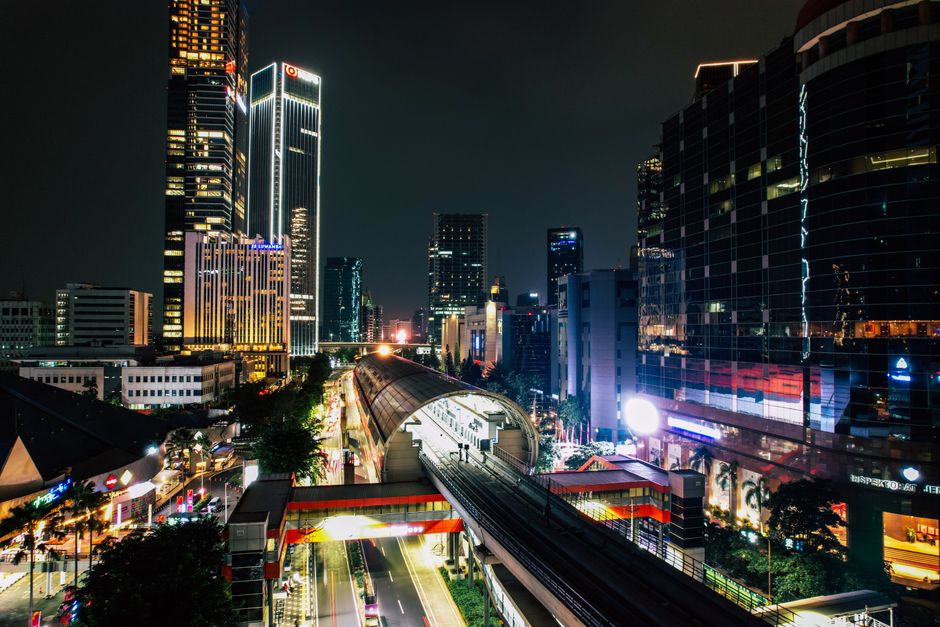
Best Districts Jakarta Expats Choose: Lifestyle, Commute & Budget
Menteng sits in Central Jakarta, bordered by broad tree-lined boulevards and Dutch colonial villas converted into embassies, boutique hotels, and heritage cafés. Proximity to Thamrin’s business corridor means 15-minute drives to SCBD during off-peak hours, though morning gridlock can double that. Expats here skew toward diplomats and senior executives who value prestige addresses and walkable green spaces. One-bedroom apartments start at $650, two-bedrooms $1,200–1,800. Limited international schools make Menteng better for singles or couples without school-age children.
SCBD and Senopati form South Jakarta’s walkable business-dining nexus. Office towers, serviced apartments, rooftop bars, and Japanese izakayas pack the grid. Professionals working in Equity Tower or Pacific Place walk to the office, lunch at Nusa Gastronomy, and happy-hour at BART. Studios run $700–1,000, one-bedrooms $1,100–1,600. The MRT Senayan and Istora stations link northward to Bundaran HI in 12 minutes. Noise and density trade off against convenience; families with young kids often prefer quieter enclaves nearby.
Kemang stretches south along Jalan Kemang Raya, blending villa compounds, garden apartments, international preschools, yoga studios, and weekend brunch spots. The vibe skews creative and family-friendly. Rent for a two-bedroom house with a small yard averages $1,400–2,200; condos drop to $900–1,400. Commute to SCBD takes 20–30 minutes off-peak, 50+ minutes during rush hour—ideal for flexible schedules or those prioritizing neighborhood quality of life over short commutes.
Kuningan and Mega Kuningan anchor the CBD, lined with apartment towers, embassies, shopping malls, and corporate headquarters. Walk to Lotte Shopping Avenue, grab the MRT at Setiabudi Astra, reach SCBD in 10 minutes. One-bedrooms cost $800–1,200, two-bedrooms $1,300–2,000. Limited green space and higher density are offset by unmatched convenience for finance, consulting, and tech professionals.
Pondok Indah sprawls southwest, known for gated estates, the Pondok Indah Mall complex, international schools, and cleaner air than central zones. Families dominate: three-bedroom houses with gardens rent for $2,000–3,500, modern condos $1,200–1,800. Commute to SCBD averages 25–40 minutes by car; the lack of nearby MRT stations means reliance on ride-hailing or personal vehicles.
Kelapa Gading in North Jakarta delivers value and variety. Two-bedroom units average $700–1,100, undercutting South Jakarta by 20–30 percent. Commute to SCBD stretches 45–70 minutes in peak traffic—best for remote workers, retirees, or those with offices in North/West Jakarta.
Pantai Indah Kapuk (PIK) and PIK 2 hug the northern coastline with waterfront dining, golf courses, and contemporary apartments. Studios start at $500, two-bedrooms $800–1,300. Expect 60+ minute commutes to SCBD; lifestyle amenities and lower rents make it appealing for young professionals and remote workers.
BSD City and Alam Sutera sit 25 kilometers southwest in Greater Jakarta, offering landed houses, international schools, and expansive malls. Three-bedroom houses rent for $1,000–1,800, modern condos $600–1,000. The suburban layout rewards car owners; central Jakarta commutes take 60–90 minutes via toll roads.

Planning a move to Bali?
Tell us where you are now and what the move looks like. We will match you with people who have done it before and can save you the expensive mistakes.
Jakarta vs Bali Living: Costs, Jobs, Infrastructure & Quality of Life
Housing and daily costs often surprise newcomers. While Canggu and Seminyak villas command $1,200–2,500 monthly due to tourism-driven demand (Digital Nomad Cost of Living Bali 2026), Jakarta’s broader inventory keeps equivalent condos in Kemang or Kuningan at $900–2,000. Bali’s dining scene tilts expensive in expat hotspots, avocado toast and smoothie bowls hitting $8–12, whereas Jakarta’s mix of warungs, mid-range chains, and high-end restaurants offers wider price dispersion. Groceries in Bali cost 10–20 percent more for imported goods. For families, international school tuition overlaps, both islands hosting institutions in the $15,000–28,000 annual range, though Jakarta boasts more options—see the Bali Expat Guide 2026 for island context.
Employment and professional networks tilt heavily toward Jakarta. Multinational headquarters, consulting firms, finance hubs, and tech unicorns cluster in SCBD, Kuningan, and Sudirman, generating mid-to-senior roles with expat packages. Bali’s job market skews tourism, hospitality, creative freelance, and remote work; salaried positions are scarce and typically pay 20–40 percent less than Jakarta equivalents. Entrepreneurs should review PT PMA company setup Indonesia 2026 when considering incorporation and compliance.
Infrastructure and commuting diverge sharply. Jakarta’s MRT covers 16 kilometers from Lebak Bulus to Bundaran HI with extensions underway, while TransJakarta buses serve 251 kilometers of corridors. Traffic remains brutal—peak-hour crawls along Sudirman can hit 10 km/h—but ride-hailing saturation and gradual MRT adoption provide alternatives. Bali relies on scooters and cars; most expats rent motorbikes for $50–70 monthly, navigating narrow roads and seasonal flooding. Gridlock in Seminyak or Ubud during high season rivals Jakarta’s worst, but outside those pockets Bali’s roads are manageable.
Community and lifestyle reflect each city’s DNA. Jakarta’s expat circles organize around industry mixers, international school parent groups, and neighborhood sports leagues. Social life centers on rooftop bars, mall complexes, and weekend escapes to Puncak or Thousand Islands. Bali blends surf breaks, yoga shalas, beach clubs, and wellness retreats, fostering a slower, outdoors-focused rhythm—digital nomad hubs in Canggu host co-working socials and sunset sessions; families in Sanur enjoy quieter compounds.
Healthcare and education favor Jakarta’s depth. Hospitals like Siloam, Pondok Indah, and MRCCC offer specialized departments and international insurance partnerships; Bali’s BIMC and Siloam Sanur handle routine care and emergencies but refer complex cases to Singapore or Jakarta. International schools in Jakarta span IB to British A-levels across dozens of campuses; Bali’s options concentrate in Canggu, Sanur, and Ubud with fewer spots and common waitlists.
Air quality and environmental factors present ongoing concerns. Jakarta’s PM2.5 levels spike during dry season, sometimes breaching 150 µg/m³—see the regional context in ASEAN pollution crisis solution 2025. Coastal flooding affects northern districts during monsoon months, though southern neighborhoods stay dry. Bali enjoys cleaner air year-round (often under 50 µg/m³) but contends with seasonal beach trash and occasional volcanic-ash advisories.
- Choose Jakarta if you seek corporate growth, diverse schools, and specialist healthcare in a dense, opportunity-rich city.
- Choose Bali if you prioritize coastal living, creative work, and a slower rhythm with strong co-working communities.
Making Your Move: Practical Tips for Indonesia Capital Expats
Start your housing search 60–90 days before arrival. Shortlist 6–8 listings, schedule virtual tours, confirm lease terms in English, and clarify maintenance responsibilities. Plan site visits across two weekends to trial commutes during rush hour, scout nearby clinics and grocery stores, and gauge neighborhood vibe. Landlords favor year-long leases—negotiate break clauses if your assignment is uncertain.
Commuting strategy determines daily sanity. Use public transit apps for MRT/TransJakarta, pair with Grab/Gojek for last-mile motorbike taxis. Peak traffic runs 7:00–9:30 AM and 5:00–8:00 PM. If your office sits near an MRT station, prioritize the Red Line; otherwise, calculate door-to-door times using Saturday midday as your baseline and triple it for Monday morning reality checks.
Mobile and payments: buy a tourist SIM on arrival, then upgrade to postpaid once you have a KITAS. Digital wallets (GoPay, OVO) integrate with ride-hailing, merchants, and e-commerce; open a local bank account for smooth top-ups and bill payments.
Safety: violent crime is rare in expat districts; petty theft happens in crowded areas. Use ride-hailing at night, keep phones zipped, and always wear helmets/seatbelts. Traffic is the biggest risk—defensive habits matter.
Language: a few Bahasa basics—Terima kasih (thank you), Maaf (excuse me), Berapa harganya? (how much), Tidak pedas (not spicy)—unlock smiles and smoother daily interactions.
Still weighing up your visa options?
Tell us your nationality, your plans and how long you want to stay. We will put you in touch with immigration specialists who handle these applications daily.