ASEAN pollution is a 2025 crisis spanning air and plastic waste, with Southeast Asia’s urban skylines now regularly shrouded in haze and rivers choked with discarded packaging. The numbers tell a stark story: air pollution alone costs the region up to $600 billion annually in lost productivity and premature deaths, while millions of tonnes of plastic trash leak into waterways each year. Yet as the crisis deepens, credible pathways to solve it are finally coming into focus and 2025 may be the year Southeast Asia locks in the policies that will determine whether its cities remain choking on smog and plastic for decades, or whether the region becomes a global leader in clean air and circular economy innovation.

For the millions of expats, digital nomads, and retirees who’ve made ASEAN home—drawn by its vibrant culture, affordable living, and career opportunities—pollution is no longer just an abstract policy issue. It’s the haze that cancels outdoor plans in Chiang Mai, the plastic-strewn beaches in Bali, the air-quality app you check before your morning run in Bangkok. Understanding the scale of the crisis, the forces driving it, and the solutions gaining traction isn’t just about being informed; it’s about protecting your health, making smarter choices about where to live and work, and seeing where Southeast Asia’s environmental trajectory is headed.
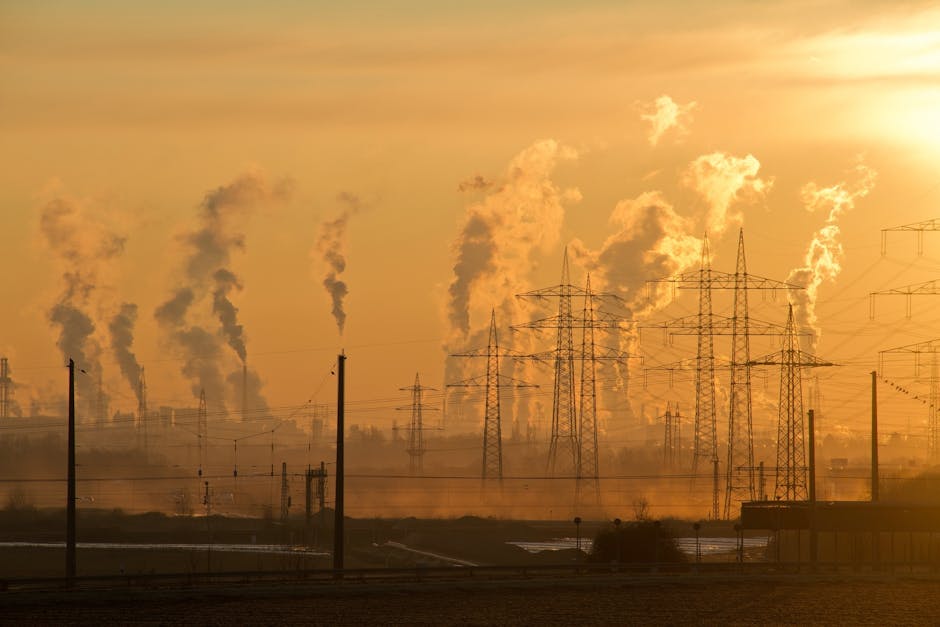
In 2025, PM2.5 particulate matter exposure across ASEAN remains far above World Health Organization guidelines. Recent analyses show that populations in major cities from Jakarta to Hanoi routinely breathe air with PM2.5 concentrations several times the WHO’s recommended 5 micrograms per cubic meter annual mean. The human toll is devastating: hundreds of thousands of premature deaths each year from respiratory and cardiovascular disease linked to dirty air, with children and the elderly most vulnerable.

The economic price tag is equally staggering. Current estimates place the combined cost of air pollution in Southeast Asia at up to $600 billion per year when you factor in healthcare expenses, reduced workforce productivity, and the drag on tourism and urban livability. To put that in perspective, that’s roughly equivalent to the entire GDP of Thailand. Seasonal spikes driven by transboundary haze from agricultural burning regularly push air-quality indices into hazardous territory, forcing school closures and flight cancellations across the region.
On the waste and plastic front, the picture is just as troubling. Despite some collection improvements in capital cities, secondary urban areas and rural zones still lack basic waste infrastructure. The informal sector, waste pickers and community collectors handles a surprising share of recycling, but they operate without formal support or safety nets. Meanwhile, single-use plastics proliferate: sachets, bags, bottles, and food packaging that often end up in open dumps, rivers, and eventually the ocean. Southeast Asia accounts for a disproportionate share of global marine plastic pollution, with several ASEAN countries ranking among the top contributors.
Progress on the UN Sustainable Development Goals related to pollution has been mixed. The ASEAN SDG Report 2025 highlights that while some targets around waste management and air quality have seen modest advances, the region still lags on SDG 3 (health), SDG 11 (sustainable cities), SDG 12 (responsible consumption), and SDG 13 (climate action). The gap between urban and rural areas is widening, and cross-border pollution remains a governance blind spot.
For expats living in Vietnam or considering a move to Singapore, these numbers aren’t academic. They shape daily life, whether you can safely exercise outdoors, which neighborhoods offer cleaner air, and how your host country’s environmental policies might evolve in ways that affect healthcare costs and quality of life.
Understanding the root causes of ASEAN pollution is essential for anyone hoping to see real change, or looking to make informed decisions about where to settle in the region.
- On the air pollution side, transport is a major culprit. Rapid urbanization has flooded cities with motorbikes, cars, and diesel trucks, often running on low-quality fuel with minimal emissions controls. Coal and diesel power generation remain dominant across much of the region, pumping sulfur dioxide, nitrogen oxides, and fine particulates into the air. Industrial facilities, steel mills, cement plants, chemical factories, often operate with outdated technology and lax enforcement of emission standards.
- Then there’s biomass burning and agricultural haze. Every dry season, slash-and-burn land clearance for palm oil plantations and rice-straw burning by smallholder farmers create vast smoke plumes that drift across national borders. Indonesia’s fires send haze to Malaysia and Singapore; Thailand’s and Myanmar’s agricultural burning reaches Laos and northern Vietnam. These transboundary pollution events expose millions to hazardous air for weeks at a time, yet coordination between governments remains patchy.
- The waste and plastic crisis has its own distinct drivers. Rapid economic growth and rising consumption have outpaced waste-management infrastructure. Many cities still rely on open dumping or rudimentary landfills that leak contaminants into groundwater and rivers. Formal recycling markets are thin, and Extended Producer Responsibility (EPR) schemes where manufacturers fund collection and recycling, are either absent or weakly enforced. Single-use plastics remain cheap and ubiquitous, driven by convenience culture and a lack of alternatives.
Cross-border dynamics amplify the problem. Plastic trash generated upstream in one country flows down shared river systems into the seas of neighbors. Informal waste trade moves low-value plastic scrap across borders, sometimes ending up burned or dumped illegally. And because ASEAN’s economic integration continues to deepen, supply chains and consumption patterns increasingly ignore national boundaries, meaning pollution does too.

Recent research on clean air and climate solutions in ASEAN underscores that many of the sources overlap: the diesel generator that pollutes the air also emits greenhouse gases, and reducing plastic production cuts both fossil-fuel extraction and waste. Solving one crisis can accelerate progress on the other, but only if policies are designed with those co-benefits in mind.
Planning a move to Asia?
Tell us where you are now and what the move looks like. We will match you with people who have done it before and can save you the expensive mistakes.
Amid the grim statistics, there’s real momentum building for solutions that could bend the curve. In 2025, a handful of proven interventions are gaining traction across ASEAN, backed by credible scenarios showing what’s possible if political will catches up with technical know-how.
On the air-quality front, the most promising approaches center on clean energy transitions and transport reform. Recent scenario modeling shows that switching households from traditional biomass cooking to clean LPG or electric stoves, electrifying urban transport fleets, tightening industrial emission standards, and managing agricultural residues without burning can deliver massive co-benefits for both air quality and climate. These aren’t moonshot technologies; they’re off-the-shelf solutions that cities from Shenzhen to Oslo have already deployed at scale. The challenge in ASEAN is financing, political economy (vested interests in coal and fossil fuels), and the capacity to enforce new standards.
Several ASEAN capitals are now piloting low-emission zones, congestion pricing, and bus-rapid-transit systems. Thailand is rolling out electric-vehicle incentives (see details here); Indonesia has committed to phasing out new coal plants and is exploring carbon pricing (recent developments). Vietnam is expanding its renewable-energy capacity. None of this is happening fast enough, but the direction of travel is clear.
For plastics and waste, the game-changers are EPR laws, circular-design standards, and upstream reduction. An OECD analysis released in 2025 projects that with stronger policies, including EPR schemes that make producers financially responsible for end-of-life management, design standards that favor reusable and recyclable materials, bans on the most problematic single-use items, and major investment in collection and sorting infrastructure, plastic leakage to the environment could fall by more than 95 percent across Southeast and East Asia by 2050. That’s not wishful thinking; it’s a scenario built on existing policy tools and technology.
Countries are starting to move. Several ASEAN members have introduced or strengthened EPR roadmaps, often targeting packaging first. Regional forums are discussing harmonized standards and producer fees to level the playing field and avoid waste simply shifting from one country to another. Cities are experimenting with waste-sorting pilots, deposit-return schemes for bottles, and bans on styrofoam and single-use bags. The informal waste sector is slowly being integrated through cooperatives and formalized contracts, improving livelihoods while boosting recycling rates.
There’s also growing recognition of what not to do. Waste-to-energy incineration, once touted as a silver bullet, is now viewed more cautiously. If rushed into place without robust recycling infrastructure, it can lock in plastic consumption and divert resources from higher-value circular solutions. The focus is shifting toward waste hierarchy: reduce, reuse, recycle first, then consider energy recovery only for truly non-recyclable residues.
What to watch in 2025: Upcoming ASEAN ministerial meetings (read more) are expected to advance regional frameworks on transboundary haze and marine plastics. National governments in Indonesia, Thailand, Vietnam, and the Philippines are all at various stages of drafting or revising EPR legislation and waste-management roadmaps. City-level pilots in Manila, Jakarta, and Kuala Lumpur will test models for expanded producer responsibility and community-based recycling that could scale regionally. Multilateral funding channels, development banks, climate finance, philanthropic partnerships, are earmarking hundreds of millions of dollars for clean-air and circular-economy projects.
Businesses are also starting to align. Regional brands are committing to recycled-content targets and reusable packaging. Multinational retailers are investing in reverse-logistics systems to take back packaging. Tech startups are building apps that connect households, waste collectors, and recyclers in real time, creating transparency and value where chaos once reigned.
For expats and residents, this policy momentum creates tangible opportunities. In Indonesia, new waste regulations may mean better neighborhood collection and cleaner beaches. In Thailand, improved air quality could reduce respiratory hospital visits and health-insurance premiums. In Singapore, circular-economy initiatives are generating green jobs and innovation hubs. Staying informed on these shifts helps you choose where to live, which brands to support, and how to advocate for stronger local action.
ASEAN pollution is solvable, but the window to lock in transformative policies is narrow. The choices made in 2025 on EPR laws, emission standards, transport electrification, waste infrastructure, and regional coordination will shape the air you breathe and the coastlines you enjoy for the next 30 years.
As a resident, digital nomad, or expat, you’re not a passive bystander. Small, consistent actions add up when millions of people make them. Refuse single-use plastics wherever possible; bring your own bags, bottles, and containers. Choose brands that participate in EPR schemes and use recycled or minimal packaging. Follow air-quality alerts and adjust outdoor activities on high-pollution days to protect your health. Support waste-sorting programs in your condo or neighborhood, even if they’re imperfect at first; early adoption signals demand and helps systems improve.
Advocate, too. Local and national policies change when residents including the international community speak up. Attend town halls, sign petitions for stronger air-quality standards, and push employers and landlords to green their operations. Your voice matters, and your mobility gives you leverage: cities and countries that want to attract global talent know that clean air and livable streets are competitive advantages.
Stay informed on country-by-country developments by exploring our in-depth guides. Whether you’re planning a move (how to move to Southeast Asia as an expat in 2025), already settled, or just keeping an eye on regional trends, knowing which nations are leading on policy and which are lagging can guide your decisions on where to live, work, and invest.
Get our Indonesia Country Guide for relocating, visas, real estate, and healthcare, plus free weekly updates (sign up here) on 2025 policy changes, environmental initiatives, and expat life across ASEAN. Sign up here and join thousands of informed residents turning Southeast Asia’s challenges into opportunities.
Still weighing up your visa options?
Tell us your nationality, your plans and how long you want to stay. We will put you in touch with immigration specialists who handle these applications daily.