


Singapore Hawker Centres: How to Eat Like a Local in 2026
In Singapore, the best meals are often the cheapest. They’re served on plastic plates under ceiling fans, in the open sided food halls known as Singapore hawker centres, by cooks who have spent decades making one dish.

Hawker centres are where the city eats breakfast, lunch and supper. Office workers, families, pensioners and visitors share the same long tables. A plate of chicken rice or noodles usually costs a few Singapore dollars.
This guide explains how the system works, the unwritten rules, what to order first, and a few words that help at the counter.
A way of eating listed by UNESCO
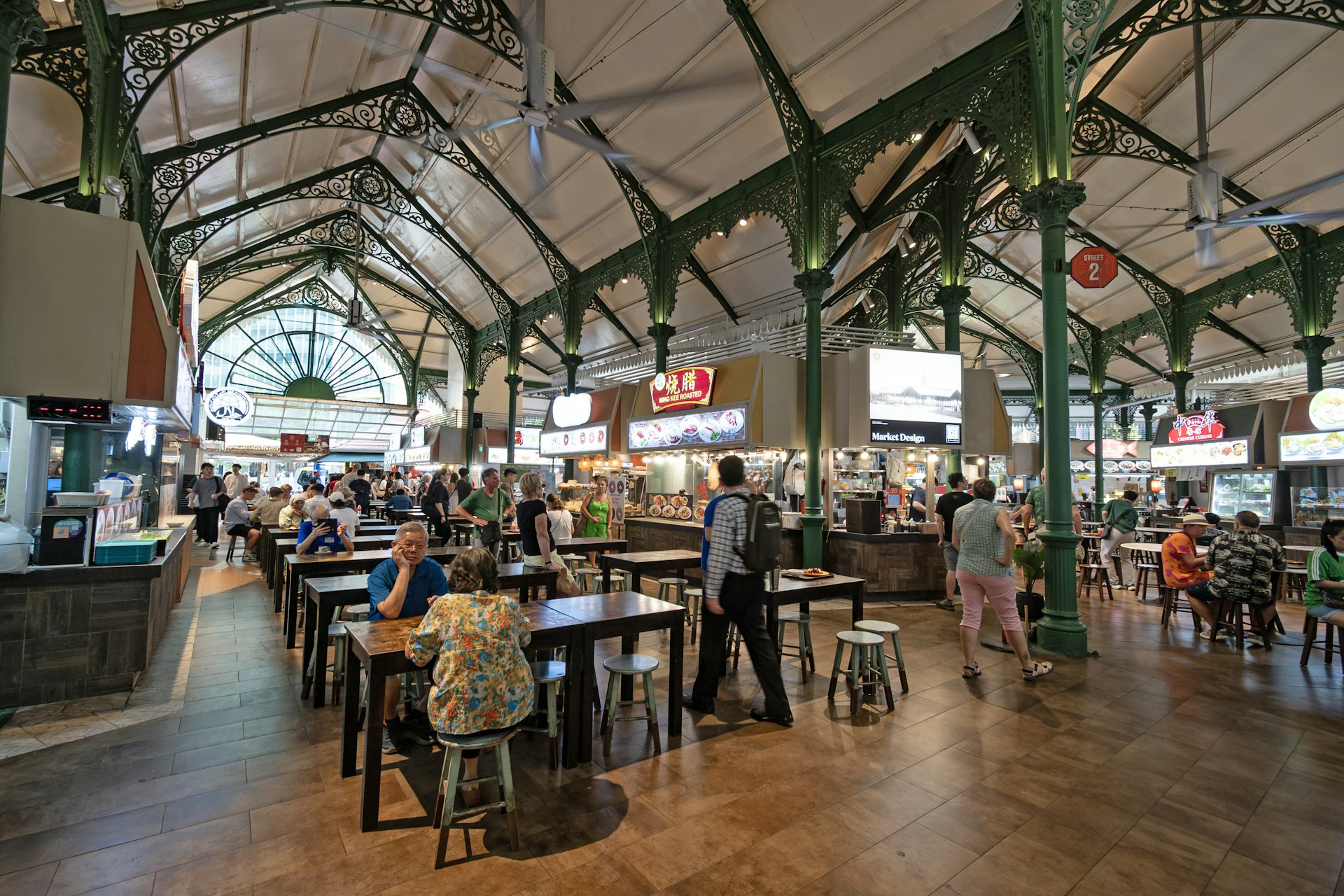
In December 2020, Singapore’s hawker culture was added to UNESCO’s list of the Intangible Cultural Heritage of Humanity. The listing recognises the people and the community life of the centres as much as the food.
Hawker centres grew out of the street food stalls that once lined Singapore’s roads. From the late 1960s and through the 1970s, the government moved street hawkers into purpose built centres with running water, drainage and shared seating. That move kept the food cheap and made it safer, and it created the model the city still uses.

Today, more than 100 government run markets and hawker centres serve the island, and new ones are still being built in housing estates. Many stalls are run by second and third generation families, and plenty of cooks sell a single dish they have refined for most of their working lives.
The unwritten rules

Hawker centres run on a set of habits that every local knows. Learn them and you’ll fit in on your first visit.
- Chope your seat. A packet of tissues, an umbrella or a lanyard on a table means it’s taken. Locals reserve first, then order. The custom is harmless and accepted, though it’s good manners to leave space at busy times.
- Join the longest queue. Regulars know which stall is worth the wait, and a long line at lunchtime is the most reliable review in the room.
- Return your tray. Clearing your own table is expected and has been required by law since 2021. First time offenders receive a written warning, and repeat offenders can be fined. Racks for trays and crockery are close by, and many centres separate racks for halal and non halal dishes.
- Bring small change. Many stalls accept QR code payments and cards, though cash is still handy at older stalls.
- Share a table. If a seat is free at a table already in use, a polite nod is all you need before sitting down.
Five dishes to start with
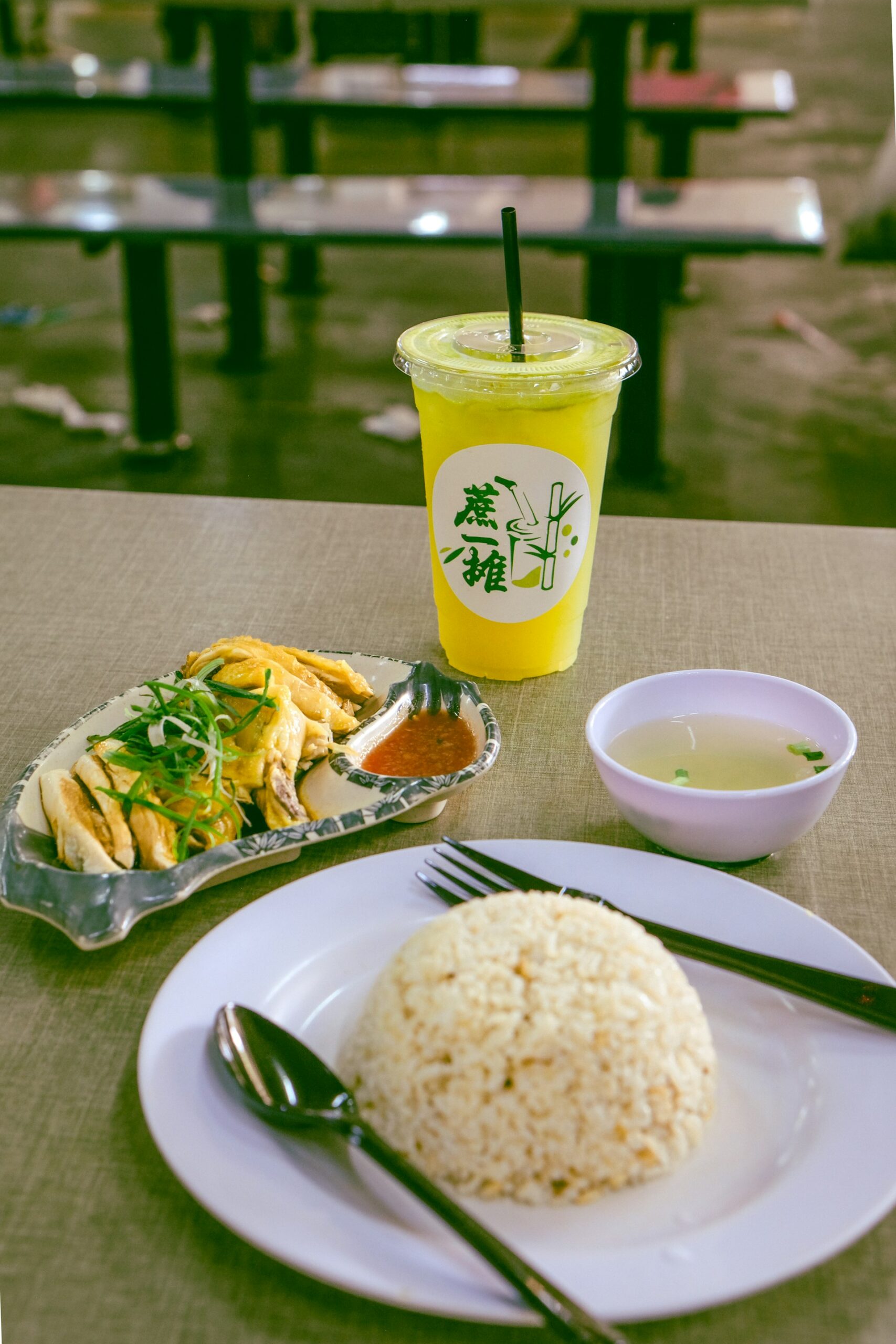
Singapore’s food reflects its Chinese, Malay, Indian and Peranakan communities. Peranakan refers to the descendants of early Chinese settlers who married into local Malay families, with a cuisine of their own. These five dishes make a good first round.
- Hainanese chicken rice. Poached chicken served with rice cooked in chicken stock, with chilli sauce, ginger paste and dark soy on the side. It was brought by migrants from Hainan Island in southern China and is often called the national dish.
- Laksa. A spiced coconut noodle soup with prawns, fishcake and cockles. The Katong style uses noodles cut short so the whole bowl is eaten with a spoon.
- Char kway teow. Flat rice noodles wok fried with dark soy, egg, Chinese sausage, bean sprouts and cockles. A good plate carries a smoky taste from the high heat of the wok.
- Satay. Grilled skewers of chicken, beef or mutton served with peanut sauce, cucumber and onion. It’s at its best in the evening, cooked over charcoal.
- Kaya toast. Toast spread with kaya, a coconut and egg jam, and a slice of cold butter, served with soft boiled eggs seasoned with soy sauce and white pepper. It’s the classic Singapore breakfast.
Say it like a local
Singlish, the local English, mixes in words from Malay, Hokkien and other languages. A few of them are useful at any hawker centre.
| Word | Meaning |
|---|---|
| Shiok | Deeply satisfying, usually said about food |
| Tapao | To take away |
| Kopi | Local coffee with condensed milk, strong and sweet |
| Kopi O | Black coffee with sugar |
| Kopi C | Coffee with evaporated milk and sugar |
| Kosong | Without sugar |
| Peng | Iced |
The terms combine. Kopi O kosong peng is iced black coffee with no sugar. The same rules apply to teh, which is tea.
A city that comes to eat
Singapore welcomed 16.9 million international visitors in 2025, up 2.3% on the year before. China, Indonesia, Malaysia, Australia and India were the five largest source markets. With around 6 million residents, that’s almost three visitors for every person who lives here.
Food and beverage spending by visitors grew by 15% in the first 9 months of 2025, and arrivals are forecast at 17 to 18 million in 2026. Changi Airport is one of Asia’s busiest transit hubs, so many travellers pass through on a layover, and a hawker meal is one of the easiest ways to make the most of a few hours in the city.
When and where to go
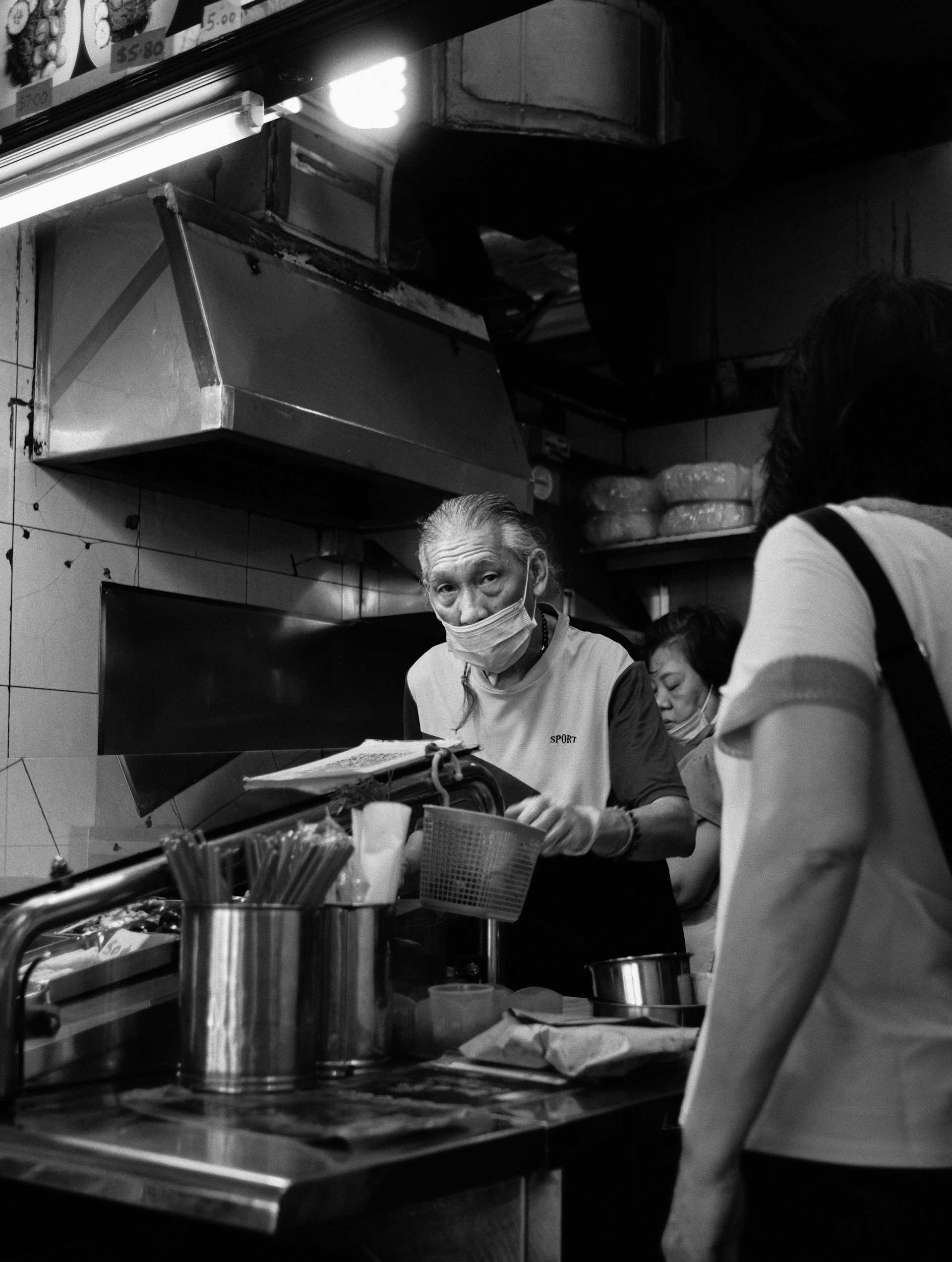
Hawker centres work to their own rhythm. Breakfast starts early, often from 6am or 7am. Lunch peaks between 12pm and 1:30pm, when office workers arrive. Many stalls close by mid afternoon or sell out, and a separate set of stalls opens for dinner and supper.
- Arrive just before noon or after 1:30pm to avoid the lunch rush.
- Check opening days. Many stalls close one day a week, and centres close for a few days each year for cleaning.
- Go to the heritage centres in the city for history, and the neighbourhood centres in housing estates for the everyday experience.
- Carry a packet of tissues. You can use it to chope a seat, and many centres don’t supply napkins.
Common questions about Singapore hawker centres
How much does a meal at a hawker centre cost?
Most single dishes cost a few Singapore dollars, which makes hawker centres the most affordable way to eat in the city. Drinks are usually priced separately at a drinks stall.
Can I pay by card at a hawker centre?
Many stalls take QR code payments and some take cards. Cash is still useful, especially small notes and coins at older stalls.
Do I have to return my tray?
Yes. Diners are required to return trays and crockery and clear their litter. Racks are placed around every centre.
What does chope mean?
Chope means to reserve a seat, usually by leaving a packet of tissues on the table. It’s an accepted custom, and you should look for another seat if a table is already marked.


