Koh Samui vs Phuket: Two Islands, Two Completely Different Buyers
The Koh Samui vs Phuket question gets asked the wrong way round. People want to know which island is better. After a week on Samui, we think the more useful question is which island is built for whom.

Asia Lifestyle Magazine spent last week on the ground with developers, local agents, brokers and property professionals, among them Ornsirin, a Thai developer listed on the Stock Exchange of Thailand. We asked all of them the same thing. Who actually buys here, and why not Phuket?
Guiding us was Asa Marsh, real estate expert in Asia, who spends his year moving between property markets across the region.
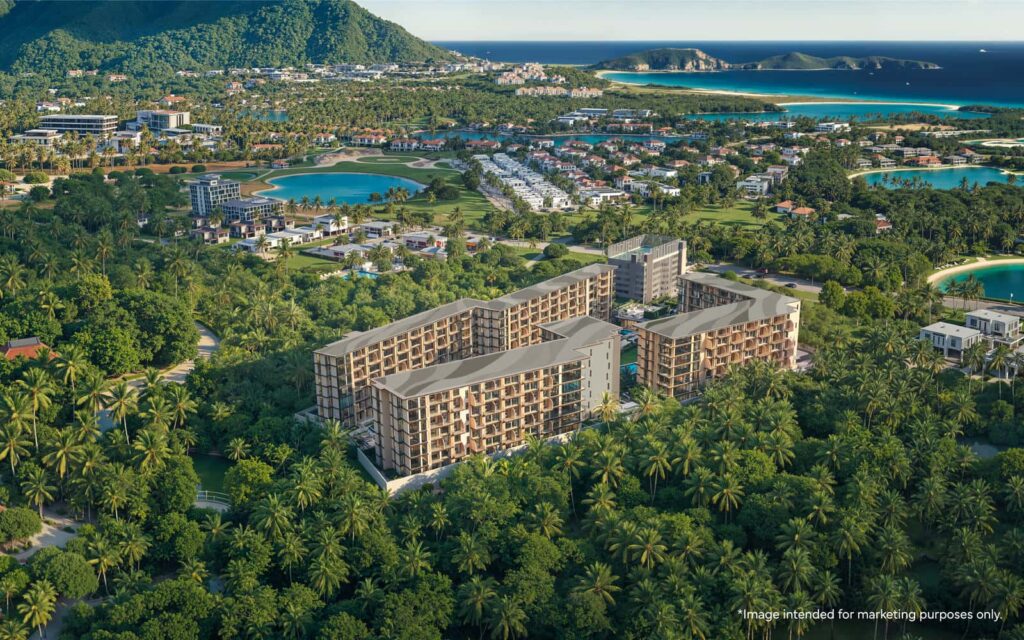
What Phuket has become
Phuket is no longer a Thai island with foreign buyers on it. It is a fully international property market that happens to be in Thailand.
The last decade has built out everything an international resident expects.

- Branded residences carrying names that a buyer in London or Singapore already recognises
- International schools, several of them, at a standard that lets a family relocate permanently
- Private hospitals equipped for more than holiday accidents
- Marinas, golf courses and beach clubs operating year round rather than seasonally
- Direct international flights, which is the piece everything else rests on
That infrastructure has a price, and buyers pay it in the square metres they do not get.
What Samui offers
The Samui buyer is looking for something the Phuket buyer has already decided against.
They are not chasing the newest building or the biggest brand. They want a slower pace, less traffic, smaller communities and an island that still behaves like an island. Every agent we spoke to described the same person, and none of them described a buyer comparing branded residence specifications.
“That doesn’t mean it’s a better investment than Phuket,” Marsh says. “It means it’s a different investment.”
The distinction is worth holding on to, because the market talks about it badly. A quieter island with lower entry prices and healthy rental demand is not a discounted version of a busier one. It serves a different buyer with a different set of intentions.
The money question
Here is where the conversation gets concrete.
“A budget of 15 to 25 million baht can still buy you an exceptional villa here, often with sea views or generous land,” Marsh says.
That is roughly USD 460,000 to 770,000. Take the same budget to Bang Tao or Laguna in Phuket and it does not stretch nearly as far. Not because Phuket is overpriced, but because a market with international flights, international schools and a much larger permanent population prices land accordingly.
So the trade is legible. Convenience and depth of infrastructure on one side. Space, quiet and a lower entry price on the other. Neither side is a mistake.
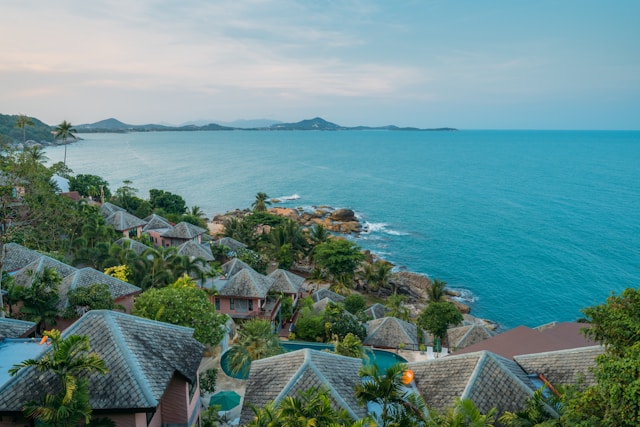
Buying in Phuket instead?
Phuket answers a different brief, and it answers it well. Easy Living Phuket has advised international buyers on the island since 2016, from first purchases through to multi million dollar acquisitions, and is known for telling clients when a deal is wrong for them.
Thinking about buying in Phuket?
Tell us the budget, the area and roughly when you want to move. We will come back with straight answers from people who work this market every day.
Where Samui has been weakest
There is one part of this comparison where Samui has genuinely lost, and it is worth being honest about it rather than talking around it.
Phuket has spent two decades building quality foreign freehold condominiums. Samui has barely built any.
That matters more than it sounds, because under Thai law the condominium is the only property a foreign buyer can own outright, freehold, in their own name. Thai land cannot be held freehold by a foreign individual. Everything else means a registered leasehold or a Thai company, and Thailand’s current enforcement drive against nominee company structures has made buyers considerably more careful about both.
So a buyer who wanted clean, uncomplicated ownership has historically had to choose Phuket, whatever they thought of the island.
That is now changing. A publicly listed Thai developer is preparing one of Samui’s first serious foreign freehold condominium projects, in Fisherman’s Village. For the buyer weighing these two islands, it removes the one factor that used to settle the argument before lifestyle got a hearing.
The wrong question, and the right one
Everyone on Samui wanted to talk about the comparison. Almost nobody thought it was the right frame.
Marsh puts it plainly. The question should not be which island is better. It should be which island suits the life you are trying to build. A buyer who wants international schools, a marina berth and a direct flight home is describing Phuket, and no amount of Samui charm will fix the flight schedule. A buyer who wants a slower year, more land and fewer people is describing Samui, and Phuket will not become quieter to accommodate them.
The financial logic follows the same line. The highest yielding property is not automatically the right purchase. A holiday home you never visit because you dislike the island is a poor investment however the spreadsheet reads.
What we took away
Samui and Phuket are not competitors in any meaningful sense. They are two answers to two different questions, and the buyers who get into trouble are usually the ones who asked the wrong one.
What has changed is that Samui can now compete on ownership as well as on lifestyle. Until recently it could only offer one of those.
Which brings the question we kept turning over. If you could only own one property in Thailand, would you choose Phuket or Koh Samui, and more importantly, why?

Nothing in this article is legal, tax or financial advice. Take qualified counsel before you commit to anything.
Own it outright, in your own name
Koh Samui has almost no foreign freehold condominiums. That single fact has shaped how people buy on this island for the last twenty years, and it is the one place Phuket has consistently beaten it.
A foreigner cannot own Thai land. So a villa here means a leasehold structure, or a Thai company, with the legal work, the annual filings and the government scrutiny that now comes with it. A condominium is the exception.
Under the Condominium Act you own the unit outright, freehold, 100% in your own name, on a title deed carrying your name and nobody else’s.
A developer listed on the Stock Exchange of Thailand is preparing one of the island’s first serious foreign freehold condominium developments, in Fisherman’s Village. Whether you intend to live in it or let it, this is the cleanest form of ownership available to a foreign buyer anywhere in Thailand.
- No company structure, no nominee, no annual filings
- Freehold title registered in your own name
- Nothing for the Department of Lands to unpick, because no land changes hands
- Predictable running costs through a common area fee
- A simpler resale than any villa on the island
- Foreign ownership capped by law at 49% of the building, so the freehold allocation in any project is finite
Floor plans, pricing and first release details go to the waiting list ahead of the open market.
Join the Koh Samui freehold condominium waiting list
Thinking seriously about moving to Phuket?
Tell us where you are now and what the move looks like. We will match you with people who have done it before and can save you the expensive mistakes.