How to Buy a Condo in Bangkok Guide 2025: Best Neighborhoods, Taxes, and How to Close
Bangkok’s 2025 property market is delivering a rare window: prices have stabilized after years of oversupply cooling, rental demand is climbing as borders stay fully open, and three major transit extensions are reshaping which neighborhoods deliver real returns. Whether you’re an expat planning a permanent move, an investor chasing 5–7 percent net yields, or a regional buyer shopping for a Southeast Asian base, this buy condo in Bangkok guide 2025 walks you through exactly where to buy, what you’ll pay in fees and taxes, and how to close confidently without the common pitfalls.

The Thai capital’s condo market hit a turning point in early 2025. Developers who overbuilt in 2020–2023 have slowed new launches, inventory is being absorbed, and buyers now have negotiating leverage on both new projects and quality resale units. Selective oversupply persists in fringe locations and micro-studios, but prime and emerging neighborhoods with strong transit links are seeing occupancy rates tick up and asking prices firm. For disciplined buyers who understand the cost structure and pick the right location, Bangkok offers one of Asia’s most transparent foreign-freehold pathways and genuinely attractive risk-adjusted returns.
2025 Market Snapshot and Foreign Ownership Essentials
Market dynamics. Bangkok’s condominium market in 2025 is defined by recovery and selectivity. Average asking prices in established corridors like Sukhumvit and Sathorn have held steady at THB 150,000–250,000 per square meter for mid-tier stock, while newer towers in emerging zones such as Rama 9 and Bang Na trade between THB 100,000–180,000 per square meter. Rental yields cluster around 4–6 percent gross in the core and can push 6–8 percent in high-demand pockets near new interchange stations or international schools. The Yellow Line extension to Samrong, the Orange Line’s western section, and ongoing MRT planning are unlocking neighborhoods that were previously car-dependent, driving both capital appreciation and tenant interest.
Oversupply concerns that dominated headlines through 2023 have eased significantly. Unsold inventory peaked at roughly 60,000 units citywide but has dropped as completions slowed and foreign buyer volumes rebounded. The segments still carrying excess stock are typically sub-25 square meter studios in outer zones with weak rental fundamentals; conversely, well-located one-bedroom units of 30–40 square meters and family-sized two-bedroom layouts near good schools are clearing fast. Developers with strong track records, such as Sansiri, Ananda, and AP Thailand, are offering incentives on remaining stock, furniture packages, guaranteed rental schemes for one to two years, and flexible payment terms, all of which translate into real negotiating power for buyers who do their homework.
Foreign ownership mechanics. Thailand permits foreigners to own condominium units outright on a freehold basis, provided the building’s foreign-ownership quota does not exceed 49 percent of total saleable area. When quota remains, the process is straightforward: you wire funds in foreign currency, obtain a Foreign Exchange Transaction Form from your receiving Thai bank, present the FETF at the land office during transfer, and walk away with a freehold chanote in your name. When the 49 percent cap is full or nearly full, your options narrow to a long-term leasehold, typically 30 years renewable, or seeking a different unit or project. Leasehold works for personal use and short holds but limits resale liquidity and financing options, so most serious investors target only freehold-eligible stock.
Due diligence on the building is non-negotiable. Request the most recent juristic person annual report to verify the health of common reserves and any outstanding legal disputes. A well-managed building will show a sinking fund equal to at least THB 500–700 per square meter of total area and monthly income from common fees that covers operational costs with a small surplus. Construction quality varies widely; newer buildings from tier-one developers use reputable contractors, but smaller players occasionally cut corners on waterproofing, electrical, and finishes. Hire an independent building surveyor if buying resale or inspect show units and mock-ups closely if buying off-plan. Short-term rental regulations also matter: some buildings and landlord associations prohibit daily rentals under 30 days, which can cap your Airbnb upside, so confirm house rules and any condominium juristic restrictions before you commit.
Financing landscape. Foreigners can access mortgages in Thailand, though terms are tighter than for locals. A handful of Thai banks, including Bangkok Bank, Kasikorn Bank, and UOB Thailand, will lend to non-residents at loan-to-value ratios of 50–70 percent, with interest rates currently in the 5.5–7.5 percent range for fixed periods of three to five years. You will need proof of income, a valid work permit or long-stay visa, a credit check from your home country, and often a minimum loan size of THB 3–5 million. International lenders and private banks serving high-net-worth expats also offer portfolio loans secured against global assets, typically at lower rates but requiring larger relationship balances. Developer financing, structured as installment plans during construction with a final bank-loan balloon, can be attractive if you lock in pre-launch pricing, but always model the all-in cost and ensure you can refinance or settle the balloon on schedule. Timelines for bank approval run four to six weeks, so start pre-qualification early if leverage is part of your plan.
Best Neighborhoods to Buy in Bangkok
Picking the right neighborhood is the single biggest driver of returns and liquidity. Bangkok is a sprawling, polycentric city, and tenant demand, price appreciation, and resale velocity vary dramatically by district. The best neighborhoods to buy in Bangkok in 2025 fall into two buckets: prime core zones with proven rental demand and high liquidity, and emerging value plays where infrastructure upgrades and new commercial anchors are shifting fundamentals.
- Prime core: Sukhumvit central spine. The stretch from Asok through Phrom Phong, Thonglor, and Ekkamai remains the gold standard for investors prioritizing tenant quality and easy exits. These BTS stations sit at the heart of expat life: international schools, global-brand gyms, Japanese restaurants, coworking spaces, embassies, and multinational offices all cluster here. One-bedroom units of 35–45 square meters in mid-tier buildings rent for THB 25,000–40,000 per month, translating to gross yields of 4.5–5.5 percent on purchase prices of THB 6–9 million. Two-bedroom family units of 60–80 square meters command THB 50,000–80,000 monthly and appeal to relocating executives with schoolchildren. Liquidity is excellent; quality resale stock moves in weeks if priced fairly, and foreign-quota availability is reasonable in older buildings. Watch for new supply: several large projects are completing in 2025–2026, which may soften rents temporarily, but long-term fundamentals remain rock-solid.
- Prime core: Silom and Sathorn. Bangkok’s traditional financial district offers a different tenant mix, skewed toward finance professionals, embassies, and corporate housing budgets. Units here trend slightly cheaper per square meter than Sukhumvit, THB 120,000–200,000, but rental yields can be comparable or better because asking rents hold firm thanks to limited new supply and proximity to MRT stations like Lumpini, Sala Daeng, and Surasak. Silom and Sathorn are mature, walkable neighborhoods with heritage shophouses, rooftop bars, and riverside dining; they appeal to buyers who want urban grit and authenticity over the polished mall-condo aesthetic of eastern Sukhumvit. Resale stock dominates, so competition is transparent and pricing rational.
- Emerging value: Rama 9 and Ratchada. Officially designated as Bangkok’s “New CBD,” Rama 9 has seen a decade of government and private investment: the Super Tower office complex, Central Plaza Grand Rama 9 mall, and direct airport rail link all anchor the area. MRT coverage is dense, Phra Ram 9 and Thailand Cultural Centre stations are major interchanges, and asking prices for one-bedroom units sit at THB 3.5–6 million, yielding 5.5–7 percent gross if you secure tenants working in nearby offices. The challenge is oversupply; developers launched aggressively, and vacancy can spike in weaker buildings. Focus on projects within 500 meters of MRT exits, reputable developers, and buildings with strong occupancy track records. Ratchada, running north from Rama 9, offers similar value with a younger vibe, night markets, and entertainment clusters that appeal to local professionals and students.
- Emerging value: Bang Na, On Nut, and Udom Suk. The eastern end of the Sukhumvit BTS line is transforming. Bang Na hosts Bitec convention center, Mega Bangna mall, and excellent road links to the Eastern Economic Corridor, making it popular with Thai families and regional business travelers. On Nut and Bang Chak stations offer one-bedroom condos at THB 2.5–4.5 million, some of the city’s best value if you target units near the BTS with efficient layouts and low common fees. Rental demand comes from local middle-class tenants and young expats priced out of Thonglor; expect gross yields of 6–7.5 percent but more tenant turnover and longer void periods than in prime zones. Udom Suk sits between On Nut and Bang Na, benefiting from lower prices and improving retail; it is a classic buy-and-hold play for patient investors willing to ride infrastructure and demographic tailwinds over five to seven years.
- Emerging value: Ari, Saphan Khwai, and Ladprao. North of the city center, the BTS Sukhumvit extension and connectivity to the Dark Red commuter line are bringing new buyer attention. Ari is an established hipster enclave with cafes, vintage shops, and a strong local Thai customer base; units here trade at THB 90,000–150,000 per square meter, offering yields around 5–6 percent and excellent lifestyle appeal. Saphan Khwai and Ladprao are grittier, more affordable, and see steady rental demand from Bangkok University students and office workers. New launches in these zones often include co-living concepts and flexible floor plans tailored to younger tenants; buyer profiles skew toward first-time Thai investors and expats seeking lower entry points.
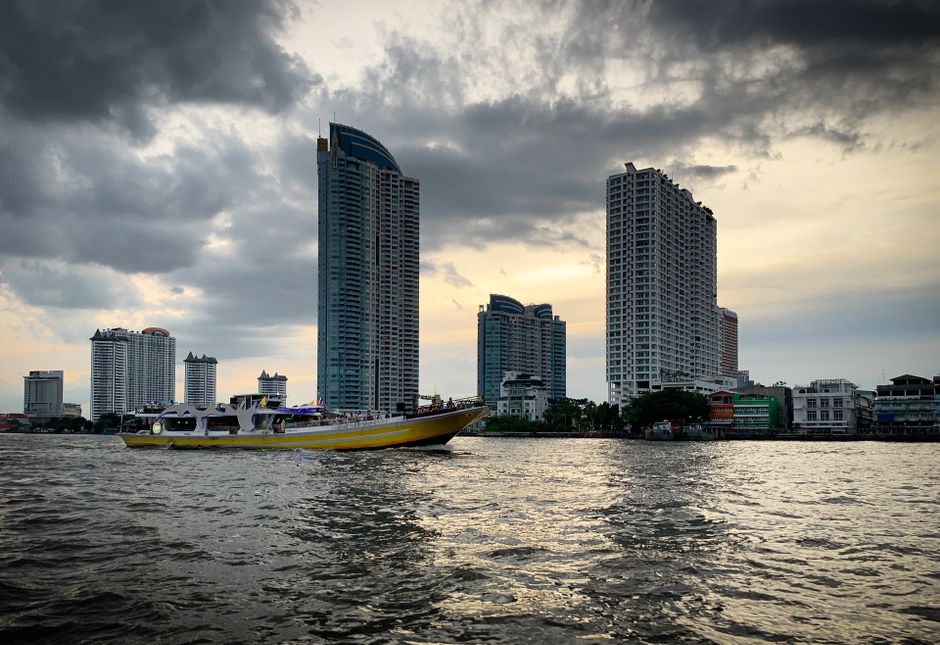
- Emerging value: Charoen Nakhon and Khlong San. The riverside boom continues. ICONSIAM opened in 2018 and anchored a luxury residential surge; the Gold Line light-rail extension now links the mall to BTS Krung Thonburi, unlocking formerly isolated riverside plots. High-rise condos with Chao Phraya views command premium pricing, THB 150,000–300,000 per square meter, and attract lifestyle buyers and short-term rental operators targeting tourists and digital nomads. Yields are moderate, 4–5 percent, but capital appreciation has been strong, and the Instagram appeal of river views supports Airbnb income if building rules allow. Be cautious of flood risk; check historical inundation maps and building elevation, and confirm that common-area insurance covers water damage.

Thinking about buying in Bangkok?
Tell us the budget, the area and roughly when you want to move. We will come back with straight answers from people who work this market every day.
Costs, Fees, and Property Taxes Thailand 2025
Understanding the full cost structure is critical to modeling net returns and avoiding surprises at closing. Thai property transactions involve a predictable set of one-time transfer fees and ongoing ownership taxes that are transparent once you know where to look.
- Transfer fee. The standard land-office transfer fee is 2 percent of the official government appraised value, which is typically lower than actual market price. Appraisals can lag market moves by a year or more, so on a THB 5 million purchase the appraised value might register at THB 4 million, yielding a THB 80,000 transfer fee. By convention, buyer and seller split this 50-50, though the division is negotiable and should be spelled out clearly in your Sales and Purchase Agreement. If you have strong leverage, in a buyer’s market or on distressed stock, you can often push the entire transfer fee onto the seller.
- Thailand transfer fee vs specific business tax. This is where confusion arises. Specific Business Tax, or SBT, is a 3.3 percent tax on the sale price or appraised value, whichever is higher, and applies when a seller disposes of a property they have owned for less than five years. SBT is almost always the seller’s obligation. If SBT is paid, stamp duty of 0.5 percent does not apply; if the seller has held the unit for five years or longer, SBT is waived and stamp duty of 0.5 percent is charged instead, again typically borne by the seller. As the buyer, you care because it affects the seller’s net proceeds and thus their willingness to negotiate on price; in practice, if you are buying new from a developer or a resale unit held under five years, assume the seller pays 3.3 percent SBT and no stamp. If buying an older resale unit, the seller pays 0.5 percent stamp instead.
- Withholding tax. Sellers, whether individual or corporate, face withholding tax at transfer. For individual sellers, the rate is progressive based on the assessed value and years of ownership, often working out to 1–2 percent effective. For corporate sellers, including developers, the withholding rate is 1 percent of the higher of the sale price or appraised value. Buyers are not liable for withholding, but land offices sometimes require buyers to withhold and remit on behalf of the seller, so clarify roles in the SPA and bring certified funds to cover your own obligations only.
- Recurring property taxes Thailand 2025. Thailand’s Land and Building Tax, introduced in 2020 and now fully implemented, applies annually to residential property. Owner-occupied homes benefit from generous exemptions, effectively zero tax on values under THB 50 million and minimal rates above that threshold. Investment condos, classified as “other residential,” face rates up to 0.1 percent of the assessed value per year. In practice, a THB 5 million condo with an assessed value of THB 4 million will incur THB 4,000 annual land tax, paid in installments. Some municipalities offer first-year discounts or exemptions; check with the local revenue office for your specific address. This tax is modest compared to Western property taxes but should be included in net-yield calculations.
- Common area and sinking fund. Monthly common-area fees, called “juristic fees,” cover security, landscaping, pool and gym maintenance, insurance, and management salaries. Expect THB 40–70 per square meter per month in mid-tier buildings and THB 70–120 in luxury towers with extensive amenities. A 40-square-meter unit thus costs THB 1,600–4,800 monthly. The sinking fund is a one-time capital contribution at purchase, usually THB 500–800 per square meter, reserved for major repairs and building upgrades; it is non-refundable and separate from your down payment or purchase price. Always confirm current sinking-fund balance and any special levies before closing; underfunded buildings can hit owners with surprise assessments.
- Example cost breakdown. Imagine you buy a resale one-bedroom condo on Sukhumvit Soi 24 for THB 6 million; official appraisal is THB 5 million. The seller held the unit for six years. Transfer fee is 2 percent of THB 5 million, or THB 100,000; you agree to split it, so you pay THB 50,000. The seller pays 0.5 percent stamp duty, THB 25,000, and individual withholding tax roughly THB 60,000, none of which you bear. Your out-of-pocket at transfer is THB 6 million purchase price plus THB 50,000 transfer, THB 30,000 sinking fund, and THB 25,000 in legal and agent fees if you hired representation, total THB 6.105 million. First-year recurring costs are THB 2,400 monthly common fee, THB 400 annual land tax, and THB 15,000 insurance, totaling roughly THB 44,000, against gross rent of THB 30,000 monthly or THB 360,000 annually, netting you THB 316,000 after ownership costs, a 5.2 percent net yield before income tax and voids.
Your Step-by-Step Buying Process and What Comes Next
Executing a Bangkok condo purchase is straightforward if you follow a disciplined sequence and validate every assumption.
- Step one: define your budget and financing. Decide how much you will invest, whether you need a mortgage, and what net yield or capital gain you require to justify the allocation. If financing, start bank pre-qualification immediately; secure a conditional approval letter before you make offers. Factor in all closing costs, furniture if the unit is bare, and a three to six month cash reserve to cover voids or repairs.
- Step two: shortlist neighborhoods and buildings. Use the best neighborhoods to buy in Bangkok framework above to narrow your search. Visit your top three zones in person if possible; walk the streets at different times of day, check proximity to transit exits and street-level amenities, and ask local agents about vacancy trends and recent transactions. Online portals like DDProperty, Hipflat, and Thailand Property carry live listings; filter by foreign-quota availability, price per square meter, and building age.
- Step three: unit selection and due diligence. Tour at least five to ten units to calibrate pricing and condition. For resale, request the most recent utility bills, tax receipts, and any building notices or levy warnings. For new projects, review the developer’s delivery track record, construction progress, and sales velocity; a project that is 70 percent sold before ground-breaking is far safer than one launched with no presales. Hire a lawyer to pull land-office title records, verify no encumbrances or liens, and confirm foreign quota and ownership chain. Budget THB 15,000–30,000 for legal due diligence; it is money well spent.
- Step four: offer, reservation, and Sales and Purchase Agreement. Submit a written offer through your agent or directly to the seller or developer. Reservation deposits range from THB 50,000 to THB 100,000 and secure the unit off-market for seven to fourteen days while you finalize the SPA. The SPA is the binding contract; it must specify purchase price, payment schedule, allocation of transfer fee and taxes, completion or transfer date, penalty clauses, and termination rights. Have your lawyer review every clause; boilerplate SPAs from developers often favor the seller, and small edits can save you significant money or grief later.
- Step five: funds remittance and FETF. Wire your purchase funds in foreign currency from an offshore account to the Thai bank account you have opened, or to the developer’s designated account. The receiving bank will issue a Foreign Exchange Transaction Form stamped with the inbound amount and purpose code “purchase of condominium.” Keep the original FETF safe; you must present it at the land office to register freehold ownership. If you are buying in installments during construction, obtain a FETF for each tranche and keep cumulative records that total the purchase price.
- Step six: land-office transfer. The seller, buyer, and often both lawyers attend the local land office on the agreed transfer date. Bring your passport, FETF originals, certified checks or bank drafts for your share of fees, and the signed SPA. The land officer will verify documents, collect fees, issue a new title deed in your name, and stamp the back with the foreign-quota notation. The entire process takes two to four hours. Once complete, you own the unit outright.
- Step seven: hand-over, snagging, and tenant placement. For resale, inspect the unit on transfer day and complete a condition checklist; any defects should have been addressed before closing or reflected in a price discount. For new-builds, the developer will schedule a hand-over inspection; bring a snagging list and insist on written commitments to fix any issues within thirty days. Activate utilities in your name, arrange insurance, and if you plan to rent immediately (renting an apartment in Bangkok), engage a property manager or list the unit on major rental portals with professional photos and a competitive price. First tenancies in Bangkok typically take two to six weeks to secure, longer if your unit is overpriced or poorly presented.
- Step eight: exit strategy and five to seven year review. Real estate is not a liquid asset. Plan to hold at least five years to avoid the specific business tax penalty and to ride out market cycles. At the five-year mark, review market comparables, assess whether the neighborhood’s fundamentals have strengthened or weakened, and decide whether to sell, refinance and hold, or upgrade into a larger or better-located unit. Capital gains are taxable in Thailand, but rates for individuals are progressive and modest if you have held long enough; consult a Thai tax advisor to model your net proceeds before listing.
Quick buyer checklist. Before you sign any contract, confirm in writing: title deed is clean and in the seller’s name with no liens, foreign quota is available and documented, all building fees and taxes paid to date, Sales and Purchase Agreement reviewed by your lawyer, FETF process and timeline understood, transfer date locked and confirmed, and post-sale rental or personal-use plan in place with budget for voids and repairs.
Why 2025 Is Your Year to Act
Bangkok in 2025 offers a rare alignment: stable prices after years of correction, rising rental demand from a fully reopened economy, new infrastructure delivering tangible accessibility gains, and sellers willing to negotiate in a balanced market. Expats who approach the process with discipline, who focus on proven locations near transit, who understand the full tax and fee picture, and who run conservative yield models will find genuine value and secure long-term upside. The city remains one of Asia’s most livable capitals, blending low costs, rich culture, excellent healthcare, and true international connectivity, all of which underpin durable residential demand. If you have been waiting for clarity and opportunity to align, that moment is now.
Ready to go deeper? Get our Thailand Real Estate Country Guide, free when you sign up, for 2025 tax rates, neighborhood scorecards, and a printable buyer checklist. Visit our signup page to unlock the full toolkit and join hundreds of expat investors building wealth across Southeast Asia.
Thinking seriously about moving to Bangkok?
Tell us where you are now and what the move looks like. We will match you with people who have done it before and can save you the expensive mistakes.