Cost of Living in Thailand : Bangkok vs Rural Comparison (2025)
Your 35,000 THB rent in central Bangkok could buy you a three-bedroom house with a garden in rural Isaan, plus groceries for the month. That’s the reality of Thailand’s cost of living in 2025: location isn’t just a factor, it’s the factor. Whether you’re eyeing a high-rise condo near the BTS or a quiet provincial town with motorbike commutes, understanding the real numbers behind housing, food, transport, and healthcare will help you stretch your baht and match your lifestyle to the right Thai address.

This guide breaks down the thailand cost of living across every major expense category, comparing what your money buys in Bangkok versus rural and provincial areas, with concrete price ranges, sample monthly budgets for singles, couples, families, and retirees, and actionable tips to save thousands each month.
The Thailand Cost of Living at a Glance
Thailand cost of living spans an enormous range, driven by three variables: where you live, how you live, and what you import. In 2025, Bangkok remains the country’s most expensive city, with rents, dining, and leisure costs that rival regional capitals like Kuala Lumpur. Step outside the capital into provincial towns like Chiang Mai, Khon Kaen, or Hua Hin, and your monthly spend can drop by 30 to 50 percent. Move to genuinely rural areas, and you’ll halve costs again.

-
- Housing is the biggest variable. A one-bedroom condo in central Bangkok (Sukhumvit, Silom, Sathorn) runs 15,000 to 35,000 THB per month (roughly $420 to $980 USD). Push out to Bangkok’s suburbs or satellite towns, and that drops to 8,000 to 20,000 THB. In provincial capitals, expect 5,000 to 12,000 THB. In rural villages, a simple house or apartment can cost as little as 3,000 to 6,000 THB monthly.
-
- Utilities and connectivity are more consistent nationwide. Electricity averages 1,200 to 3,500 THB per month depending on air-conditioning use; Bangkok condos with central AC in the hot season push the high end. Water is negligible, typically 100 to 300 THB. Home internet (fiber, 100+ Mbps) costs 500 to 900 THB, and mobile SIM plans run 200 to 600 THB for unlimited calls and 10+ GB data.
-
- Food offers the starkest Bangkok-versus-rural contrast in variety, not just price. Street-food staples like pad krapow or kuay tiao cost 40 to 80 THB everywhere, but Bangkok’s density means you’ll find international cuisines, organic cafés, and imported goods on every corner. A mid-range restaurant meal in Bangkok runs 150 to 400 THB; in rural areas, 100 to 250 THB. Groceries are cheapest at wet markets nationwide, but imported cheese, wine, and Western brands carry a 50 to 100 percent markup even in Bangkok hypermarkets.
-
- Transport costs hinge on infrastructure. Bangkok’s BTS and MRT fares range from 16 to 59 THB per ride; monthly passes or rabbit cards offer slight discounts. Taxis start at 35 THB, with typical cross-city trips costing 100 to 200 THB. In rural Thailand, public transit is sparse; most expats buy or rent a scooter (fuel ~35 to 45 THB per liter, insurance ~3,000 to 6,000 THB annually) or a car.
- Healthcare quality is excellent nationwide, but access and choice differ. Bangkok hosts world-class private hospitals like Bumrungrad and Samitivej, where a specialist consultation costs 800 to 2,000 THB and comprehensive expat health insurance runs 30,000 to 120,000 THB per year depending on age, coverage, and pre-existing conditions. Provincial hospitals offer solid care at lower walk-in rates, though English-speaking staff and advanced procedures may require a Bangkok trip. Public hospitals are affordable but crowded; most expats opt for private insurance.
It’s worth noting Bangkok’s unique affordability paradox: while rents and dining can be expensive, the city’s public transport, street food, and competition among service providers mean a frugal single person can live on 30,000 to 40,000 THB per month. Yet for middle-income Thai families, Bangkok ranks among the world’s least affordable cities relative to local wages, a tension that reshapes neighborhoods and rental markets year by year.

Bangkok vs Rural: Category-by-Category Breakdown
Housing and deposits
Bangkok’s rental market is tiered. Central districts (Sukhumvit, Silom, Ratchadamri) command 15,000 to 35,000 THB for modern one-bedrooms; family-sized two- or three-bedroom condos in the same zones run 35,000 to 80,000 THB. Move to outer BTS stops or off-train neighborhoods like On Nut, Bearing, or Lat Phrao, and one-bedrooms drop to 8,000 to 15,000 THB. Landlords typically ask for two months’ rent as deposit plus one month advance.
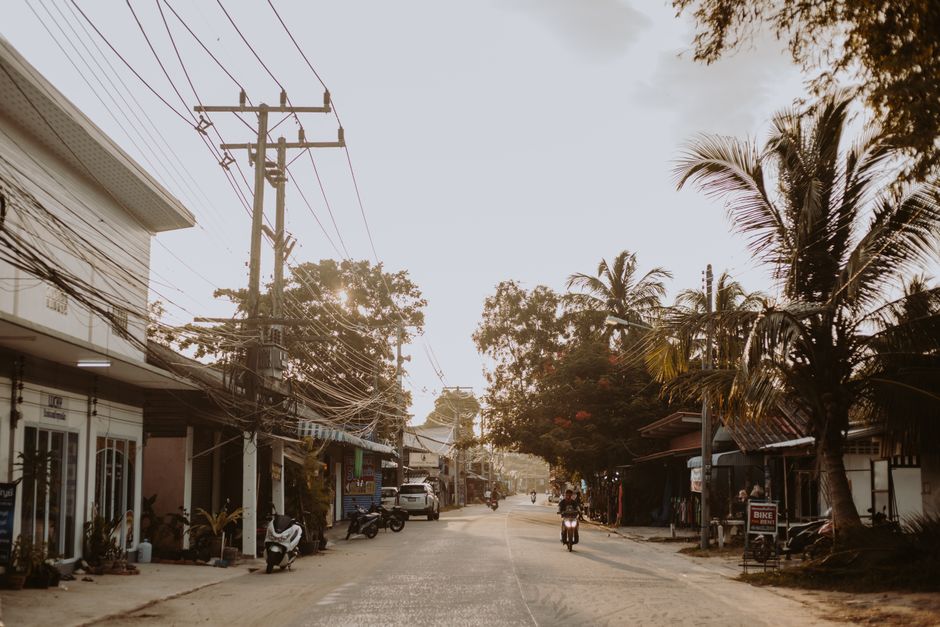
Provincial capitals offer better space per baht. Chiang Mai one-bedrooms near the Old City or Nimman cost 6,000 to 12,000 THB; Khon Kaen or Udon Thani hover around 5,000 to 10,000 THB. Beach towns like Hua Hin sit slightly higher at 8,000 to 15,000 THB due to expat demand. In genuinely rural areas, think 3,000 to 6,000 THB for a basic house or shophouse apartment, though finishes and furnishings will be simpler.
Utilities and internet
Air-conditioning drives electricity bills. A Bangkok studio running AC nightly costs 1,500 to 2,500 THB monthly; larger condos or houses in the hot season can hit 3,000 to 4,000 THB. Rural homes with fans or occasional AC use pay 800 to 1,500 THB. Water is cheap everywhere: 100 to 300 THB. Fiber internet reaches most provincial towns at 500 to 900 THB for 100 Mbps+; rural villages may rely on 4G/5G mobile hotspots. Mobile plans cost the same nationwide, 200 to 600 THB, with AIS, True, and dtac offering similar prepaid and postpaid options.
Food: markets, street stalls, and restaurants
Street food is Thailand’s great equalizer. A plate of rice with stir-fry or a bowl of noodles costs 40 to 80 THB in Bangkok, Chiang Mai, or a village market. Bangkok’s advantage is breadth: Japanese, Korean, Italian, vegan, and fusion restaurants cluster around every BTS stop, with casual dining at 150 to 400 THB per person and upscale meals from 600 THB upward. Rural and provincial towns stick closer to Thai and Chinese-Thai cuisine, with restaurant meals at 100 to 250 THB.
Groceries are cheapest at wet markets (fresh produce, meat, eggs) and local supermarkets (Tesco Lotus, Big C, Makro). Imported goods, organic lines, and Western staples like cheese or breakfast cereal double in price at Tops, Villa Market, or Gourmet Market. A single person cooking half their meals at home spends 4,000 to 8,000 THB monthly on groceries in Bangkok; rural expats paying market prices spend 3,000 to 6,000 THB.
Transport: rails, roads, and two wheels
Bangkok’s BTS Skytrain and MRT subway make car-free living viable in central zones. Fares run 16 to 59 THB per trip; a daily BTS commute (home to office and back) costs roughly 50 to 100 THB. Taxis are metered, starting at 35 THB; cross-city rides average 100 to 200 THB. Grab and Bolt ride-hailing add convenience but cost 10 to 20 percent more. Motorbike taxis in sois charge 10 to 40 THB for short hops.
Outside Bangkok, public transport is minimal. Most expats buy a scooter (new: 35,000 to 60,000 THB; used: 15,000 to 30,000 THB) or a small car. Fuel averages 35 to 45 THB per liter in 2025; a scooter doing 40 km/liter costs roughly 1,000 to 1,500 THB monthly for typical use. Car ownership adds insurance (5,000 to 15,000 THB annually), maintenance, and parking, pushing transport budgets to 3,000 to 6,000 THB per month.
Healthcare and insurance
Bangkok’s private hospitals set global standards. Walk-in GP visits cost 800 to 1,500 THB; specialist consultations 1,500 to 2,500 THB. Expat health insurance premiums vary widely: a healthy 30-year-old pays 30,000 to 50,000 THB per year for outpatient and inpatient cover; a 60-year-old with chronic conditions may pay 80,000 to 120,000 THB or more. Provincial hospitals (e.g., Chiang Mai Ram, Khon Kaen Ram) offer similar private care at slightly lower rates, though complex cases often require Bangkok referral. Public hospitals are affordable but crowded; insurance is essential for expats seeking timely, English-speaking care.
Schooling and childcare
International schools concentrate in Bangkok and Chiang Mai. Tuition ranges from 300,000 to 900,000 THB per year depending on curriculum (IB, British, American) and grade level. Bangkok’s top-tier schools (ISB, NIST, Harrow) exceed 1 million THB annually for high school. Provincial towns offer Thai private schools (bilingual programs ~80,000 to 200,000 THB per year) or homeschooling. Childcare and preschool in Bangkok cost 10,000 to 30,000 THB monthly; rural daycare runs 3,000 to 8,000 THB.
Leisure: gyms, co-working, nightlife
Bangkok gym memberships cost 1,500 to 3,500 THB per month (Fitness First, Virgin Active, local chains); co-working spaces charge 3,000 to 8,000 THB monthly. Cinema tickets are 200 to 350 THB; weekend brunches and cocktails in Thonglor or Ekkamai run 500 to 1,500 THB per outing. Provincial towns have budget gyms (500 to 1,500 THB monthly), fewer co-working options, and lower nightlife costs, but less variety. Rural areas rely on outdoor activities, temple festivals, and home entertainment.
Sample Monthly Budgets (2025)
-
- Single expat, Bangkok
Basic: 30,000–45,000 THB
Rent (studio, outer BTS) 10,000 | Utilities + internet 1,500 | Food (mix of street/home) 8,000 | Transport (BTS + occasional taxi) 2,500 | Phone 400 | Miscellaneous 3,000 | Insurance/healthcare 3,000Comfortable: 50,000–80,000 THB
Rent (1BR, mid-Sukhumvit) 20,000 | Utilities 2,000 | Food (dining out often) 12,000 | Transport 3,500 | Phone 600 | Gym + leisure 6,000 | Insurance 4,000 | Savings buffer
- Single expat, Bangkok
-
- Single expat, rural/provincial
Basic: 15,000–25,000 THB
Rent 5,000 | Utilities 1,000 | Food 5,000 | Transport (scooter fuel) 1,000 | Phone 400 | Miscellaneous 2,000 | Insurance 2,500Comfortable: 30,000–50,000 THB
Rent (nicer house/condo) 8,000 | Utilities 1,200 | Food 8,000 | Transport 1,500 | Phone 600 | Leisure + travel 6,000 | Insurance 3,500
- Single expat, rural/provincial
-
- Couple, Bangkok
Basic: 45,000–70,000 THB
Rent (1BR) 15,000 | Utilities 2,000 | Food 12,000 | Transport 4,000 | Phones 800 | Miscellaneous 5,000 | Insurance (two) 6,000Comfortable: 80,000–120,000 THB
Rent (2BR, central) 30,000 | Utilities 2,500 | Food 18,000 | Transport 5,000 | Phones 1,000 | Gym + dining out 12,000 | Insurance 8,000
- Couple, Bangkok
-
- Couple, rural/provincial
Basic: 25,000–40,000 THB
Rent 7,000 | Utilities 1,200 | Food 9,000 | Transport 2,000 | Phones 800 | Miscellaneous 4,000 | Insurance 5,000Comfortable: 45,000–80,000 THB
Rent 12,000 | Utilities 1,500 | Food 14,000 | Transport 3,000 | Phones 1,000 | Leisure 8,000 | Insurance 7,000
- Couple, rural/provincial
-
- Family (two adults, one child), Bangkok
90,000–200,000+ THB depending on schooling
International school 30,000–75,000 per month | Rent (3BR) 35,000–60,000 | Utilities 3,000 | Food 20,000 | Transport (car or double BTS) 6,000 | Insurance (three) 10,000 | Childcare/activities variable
- Family (two adults, one child), Bangkok
-
- Family, rural/provincial
45,000–120,000 THB (local or bilingual school)
Rent 12,000 | Utilities 1,500 | Food 15,000 | Transport 4,000 | Local private school 7,000–15,000 | Insurance 8,000 | Activities 3,000
- Family, rural/provincial
- Retiree couple
Bangkok: 45,000–90,000 THB | Rural: 35,000–70,000 THB
Lower transport, no schooling; higher healthcare budget; lifestyle mix of home cooking and occasional dining; travel reserve.
Choosing Your Location and Cutting Costs
Bangkok makes sense if you need world-class hospitals, international schools, co-working hubs, and city conveniences. It’s also the easiest place to live car-free, thanks to the BTS, MRT, and abundant taxis. Expats working remotely for global companies, families with school-age children, and those who crave diverse dining and nightlife gravitate here.
Provincial and rural Thailand win on space, tranquility, and budget. Towns like Chiang Mai, Khon Kaen, Udon Thani, and Hua Hin offer expat communities, decent hospitals, and international or bilingual schools, yet rents and daily costs sit 30 to 50 percent below Bangkok. Genuinely rural areas, especially in Isaan or the North, slash housing to under 5,000 THB monthly but trade convenience: expect limited English, fewer Western amenities, and a scooter or car as essential.
Money-Saving Tips Across Thailand
- Live near transit in Bangkok. BTS and MRT access lets you skip car ownership, saving 10,000+ THB monthly on fuel, parking, and insurance.
- Negotiate long-term leases. Offer six or twelve months upfront for 10 to 20 percent rent discounts.
- Cook half your meals. Market produce is cheap; even mixing three home-cooked dinners with four restaurant meals weekly saves 3,000 to 5,000 THB monthly.
- Bundle SIM and fiber. AIS, True, and dtac offer package deals that cut 200 to 400 THB monthly versus separate contracts.
- Shop insurance annually. Health and vehicle premiums vary by 20 to 30 percent between providers; compare quotes every renewal.
- Avoid peak-tourist zones. Rent and restaurant prices in Phuket’s Patong, Bangkok’s lower Sukhumvit, or Chiang Mai’s Nimman inflate during high season. Live one neighborhood over for better value.
- Use local markets and street vendors. Fresh fruit, vegetables, meat, and cooked meals from markets cost half what supermarkets and food courts charge.
- Leverage public healthcare for routine care. If you’re under 40 and healthy, a high-deductible insurance plan plus occasional public-hospital visits can cut premiums by 40 percent.
Quick Decision Checklist
- Budget: Can you cover 30,000+ THB monthly (Bangkok basic) or prefer 15,000–25,000 THB (rural)?
- Medical needs: Chronic conditions or family = Bangkok’s hospital access; healthy singles = provincial works fine.
- Commute: Office job in Bangkok = live on or near BTS; remote work = anywhere with fiber.
- Schooling: Kids in international curriculum = Bangkok or Chiang Mai; local Thai school or homeschool = rural feasible.
- Visa: Long-term visas (retirement, marriage, Elite) smooth renewals; tourist visas force border runs that favor proximity to airports or land crossings.
- Housing type: Condo (low maintenance, security) vs house (space, garden); condos dominate Bangkok, houses are common upcountry.
Whether you chase the electric pace of Bangkok or the slow-lane charm of rural Thailand, the thailand cost of living rewards those who plan. Set your priorities, crunch the real numbers in each category, and your baht will stretch further than you expect.
Ready to map out your exact monthly spend, explore visa pathways, compare neighborhoods, and access healthcare guides? Sign up now to receive our free Thailand Country Guide, packed with housing checklists, visa breakdowns, neighborhood deep-dives, healthcare provider lists, and customizable budget worksheets delivered straight to your inbox.