Thailand’s $1.3 Billion F1 Deal: Bangkok F1 Circuit Could Change Southeast Asia’s Racing Future
Thailand just revealed the blueprint that could make it Southeast Asia’s second Formula One destination. The Sports Authority of Thailand released designs for a 5.7-kilometer street circuit winding through Bangkok’s Chatuchak district, passing iconic landmarks like Bang Sue Grand Station and the legendary Chatuchak Weekend Market. With a $1.3 billion investment approved and F1 CEO Stefano Domenicali already meeting with Prime Minister Paetongtarn Shinawatra, Thailand is making a serious play to host annual F1 races from 2028 to 2032.

The question isn’t whether Thailand wants Formula One. The question is whether Bangkok can deliver what Singapore perfected: a world-class street circuit that becomes synonymous with Southeast Asian racing excellence.
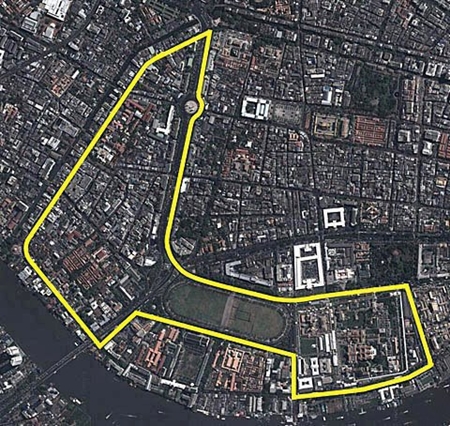
18 Corners Through Bangkok’s Heart
The proposed track runs clockwise through Chatuchak-Krung Thep Aphiwat, featuring 18 corners across 5.732 kilometers. That makes it the eighth-longest circuit on the current F1 calendar, significantly longer than Singapore’s 5.063-kilometer Marina Bay circuit.
The route showcases Bangkok’s ambition to blend motorsport with tourism spectacle. Drivers would navigate past Bang Sue Grand Station, the largest railway station in Southeast Asia, wind through Bangkok Bus Terminal, skirt Chatuchak Weekend Market where 200,000 visitors shop each weekend, and pass three major parks: Queen Sirikit Park, Chatuchak Park, and Wachirabenchathat Park.

A permanent pit and paddock complex is planned for the infield area, suggesting Thailand is designing for long-term use rather than a temporary setup. The clockwise direction differs from most F1 circuits that run counterclockwise, adding a unique challenge for drivers.
[20 Unique Facts About Bangkok – The City That Never Sleeps]
The $1.3 Billion Investment: What’s Actually Being Built
The Thai cabinet approved a 41.379 billion baht ($1.23-$1.3 billion) investment for a five-year deal from 2028 to 2032. Approximately $270 million will transform existing public roads into FIA Grade 1 certified racing surface with high-grip asphalt compounds required for cars traveling over 200 mph.
The remaining investment covers safety barriers, runoff areas, spectator facilities, medical centers, team paddocks, broadcast infrastructure, temporary grandstands, and hosting fees to Formula One Group. For comparison, hosting rights alone can exceed $40-60 million annually for established races, meaning Thailand could pay $200-300 million just for the privilege of staging the event over five years.
The Disruption Reality Check
Construction will take one to two years, executed in phases with partial closures along major arteries including Kamphaeng Phet 2-6, Phahonyothin Road, and Therd Damri Road. These aren’t minor side streets—they’re major corridors in a city where gridlock already challenges daily life.
Three parks face partial closures during construction and race preparation. Bus routes may relocate, affecting thousands of daily commuters. Vendors at Chatuchak Weekend Market could face disruptions before race weekends, though officials promise the market stays open on race days.
The circuit would close for five days per race: three days for setup, two days for practice sessions, and race day itself. For local residents and businesses, this means annual disruption becoming part of life. Singapore accepts this trade-off because the economic benefits justify the inconvenience. Whether Bangkok residents embrace or resist remains uncertain.
Setting up a business in Bangkok?
Company structure, licences, ownership rules, tax. Tell us what you are planning and we will connect you with advisers who handle it properly.
Singapore’s Blueprint: The Standard to Beat
Singapore’s Marina Bay Grand Prix attracts approximately 550,000 visitors over race weekend and reaches one billion global broadcast viewers. The economic impact extends far beyond ticket sales, with tourism, hospitality, and international investment all receiving substantial boosts.
The Marina Bay circuit showcases Singapore’s stunning skyline, particularly during the night race format. The glittering backdrop creates television gold that promotes Singapore globally with every broadcast shot.
Thailand must create similar visual appeal despite lacking Singapore’s compact, photogenic skyline around the proposed circuit. Bang Sue Station provides impressive scale, but it’s a transportation hub, not an architectural icon like Marina Bay Sands. Singapore also perfected operational execution—any failures in Thailand’s first race could damage viability before the event establishes itself.
[Top Emerging Towns Near Singapore You Should Look Into Before It’s Too Late]
Alex Albon: Thailand’s Racing Ambassador
Williams driver Alex Albon provides Thailand’s most credible F1 connection. The Thai-British driver has actively championed the Bangkok circuit proposal, meeting with Prime Minister Paetongtarn Shinawatra to discuss support for the project.
“For Thailand, there’s a huge opportunity to help promote motorsport,” Albon stated. “It’s not the most followed sport out there, the Premier League is, but we can do a good job and inspire people there, not just drivers but engineers, mechanics, people in marketing.”
Albon recognizes that building a sustainable F1 race requires cultivating local interest beyond first-event novelty. Singapore succeeded by marketing beyond hardcore F1 fans, positioning the race as a cultural spectacle rather than purely sporting event.
The Calendar Challenge
Formula One currently hosts 24 races, and promoters worldwide clamber for slots. Thailand’s 2028 target faces scheduling complexities with competition from South Africa, Rwanda, and South Korea all pursuing races.
Thailand’s bid targets either March or September. March aligns naturally with the Asia-Pacific swing, clustering alongside Australia, China, and Japan. September could pair with Singapore’s night race, creating a Southeast Asian double-header, though March appears more viable.
The five-year commitment provides stability that F1 values, but also locks Thailand into massive annual expenses regardless of event performance.
What This Means for Bangkok
For Bangkok’s expat community and residents, an F1 race represents both opportunity and disruption. F1 weekend would become Bangkok’s premier annual sporting event, attracting international visitors and media attention. The race weekend atmosphere creates festival energy that enhances the city’s lifestyle appeal.
The tourism boost could strengthen Bangkok’s economy, creating jobs and investment opportunities. The city’s international profile would rise, and real estate near the circuit might appreciate.
However, annual construction, road closures, and race preparation affect anyone near Chatuchak. Noise during race weekend extends beyond the track, with team activities, entertainment, and increased traffic creating sustained chaos. Residents might find favorite restaurants, parks, and routes inaccessible for extended periods.
The cost-benefit calculation depends on proximity and personal priorities. Living near the circuit means maximum disruption but also potential rental income. Living elsewhere means enjoying benefits while avoiding the worst inconveniences.
The Bottom Line
Thailand’s F1 gamble is bold, expensive, and potentially transformative. If executed well, Bangkok could join Singapore as Southeast Asia’s racing capitals, hosting one of motorsport’s premier events while boosting tourism and international prestige.
If executed poorly, Thailand faces years of disruption, financial losses, and international embarrassment. The $1.3 billion investment demands results, and F1 fans are unforgiving of substandard races.
The 2028 target gives Thailand time to prepare, but also creates years of anticipation and scrutiny. Every construction delay, budget overrun, or logistical challenge will fuel skepticism about whether Bangkok can deliver.
For expats and residents, the question is simple: will you embrace or resist having Formula One roar through your city annually? The answer may determine whether this ambitious gamble becomes triumph or cautionary tale.
Still weighing up your visa options?
Tell us your nationality, your plans and how long you want to stay. We will put you in touch with immigration specialists who handle these applications daily.