Vung Tau Vietnam: The Coastal City Where Beach Life Meets Business-Ready Infrastructure

*Picture this*: you’re sipping cà phê sữa đá on a breezy terrace, laptop open with a solid 4G connection, watching fishing boats bob in turquoise water, and you can still be in downtown Ho Chi Minh City for dinner tonight. That’s the everyday reality in Vung Tau, Vietnam’s coastal city that has quietly become one of Southeast Asia’s most practical beach destinations for remote workers, retirees, and anyone craving salt air without sacrificing modern conveniences.
Vung Tau sits 125 kilometers southeast of Ho Chi Minh City on a stubby peninsula jutting into the South China Sea. Unlike the tourist-heavy sands of Nha Trang or the urban intensity of Da Nang, this coastal city has built its identity around oil-and-gas industry infrastructure, domestic weekend tourism, and increasingly, a growing expat community drawn to affordable rents, reliable internet, and a 90-minute hydrofoil ride to Vietnam’s economic engine. Recent developments, including the ongoing construction of Long Thanh International Airport 60 kilometers north, are reshaping Vung Tau’s appeal as a satellite city with genuine business connectivity, not just a sleepy beach town.
This guide delivers a complete Vung Tau Vietnam coastal city overview: neighborhoods and beaches, seasonality and weather quirks, real cost-of-living numbers, what there is to do beyond sunbathing, housing realities for foreigners, and who will thrive here versus who should book a ticket elsewhere.

Everyday Life and the Vung Tau Vibe
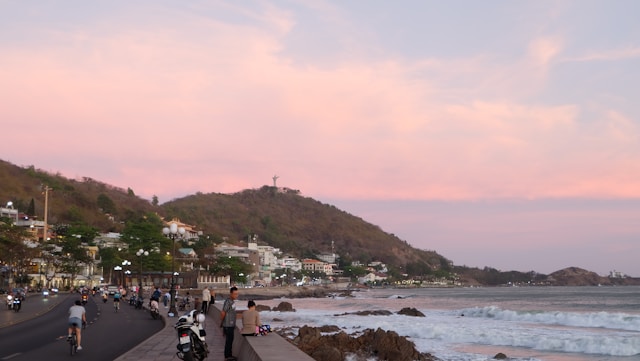
Vung Tau’s 450,000 residents live across a handful of distinct zones, each with its own rhythm. Front Beach, or Bai Truoc, runs along the sheltered western shore facing the Saigon River estuary. The water here is calm but brownish, popular with locals for morning tai chi and evening promenades rather than swimming. The promenade is lined with mid-range hotels, seafood restaurants, and open-air coffee shops. Front Beach feels urban-adjacent, walkable, and convenient for errands, making it a favorite for digital nomads who want cafes and courier services nearby.
Across the peninsula, Back Beach, or Bai Sau, stretches six kilometers along the open South China Sea. The sand is cleaner, the waves bigger, and the vibe more resort-focused. International hotel chains cluster near the northern end, while local guesthouses and longer-stay apartment blocks dominate the southern stretches. Back Beach is where you’ll find kitesurfers when the northeast monsoon kicks in and weekend families from Ho Chi Minh City sprawled under umbrellas. It’s breezier, less walkable to markets, and slightly pricier for housing, but offers the classic postcard beach life.

Between the two beaches rise Small Mountain and Big Mountain, low forested hills dotted with villas, Buddhist temples, and hiking trails. The most iconic landmark is the Vung Tau Lighthouse atop Small Mountain, a colonial-era structure reached by 800 steps and rewarding climbers with panoramic views over both coastlines. Neighborhoods on the hillsides, especially around Thang Tam beach to the south, are quieter, cooler, and attract retirees and families seeking greenery over nightlife.
Seasonality matters in Vung Tau. The dry season runs roughly November through April, with December and January bringing the coolest temperatures, around 24 to 27 degrees Celsius, and strong northeast winds that can whip sand and make sunbathing uncomfortable. Locals and expats alike refer to this as “winter,” and while it’s hardly frigid, the wind chill means mornings can feel brisk, especially on Back Beach. Surfers and kitesurfers love these months; sunbathers often migrate to Front Beach or head inland. By February the winds ease, and March through May deliver perfect beach weather, hot and calm. The rainy season from May to October brings afternoon downpours, high humidity, and occasional typhoons, but mornings are often clear, and rents drop as domestic tourists stay away.
Cost of living remains notably lower than Ho Chi Minh City. A filling bowl of bún riêu or bánh canh cua at a sidewalk stall costs 30,000 to 50,000 VND, around 1.20 to 2 USD. A Western-style brunch with eggs, toast, and espresso at a trendy café near Back Beach runs 120,000 to 180,000 VND, roughly 5 to 7.50 USD. Monthly utilities for a one-bedroom apartment, including electricity, water, and high-speed fiber internet, typically total 1,000,000 to 1,500,000 VND, 40 to 60 USD, though air-conditioning use during hot months can push electric bills higher. Grab and traditional xe ôm motorbike taxis blanket the city; a cross-town ride costs 20,000 to 40,000 VND. Many expats rent motorbikes for 1,000,000 to 1,500,000 VND per month or buy used models outright for 10 to 15 million VND. For a detailed look, see cost of living.
Getting to and from Vung Tau is half the appeal. The Greenlines DP hydrofoil departs central Ho Chi Minh City’s Bach Dang Jetty six times daily, reaching Vung Tau’s ferry terminal in 90 minutes for around 300,000 VND one-way. It’s fast, air-conditioned, and popular with weekenders and commuters alike. By road, the city sits at the end of Highway 51, a 125-kilometer drive that takes two to three hours depending on traffic. Express buses from Ho Chi Minh City’s Mien Dong station cost 100,000 to 150,000 VND and run every 30 minutes. Once Long Thanh International Airport opens in late 2025, Vung Tau will sit roughly 80 kilometers south, a potential game-changer for international connectivity and property values.
Safety and community feel rank high. Vung Tau’s economy has long revolved around oil and gas, not backpacker bars, so street hassle is minimal. Expats report low petty crime, though standard motorbike-theft precautions apply. The expat community is smaller and less visible than in Ho Chi Minh City or Da Nang, consisting mostly of oil workers, retirees, and a growing trickle of remote professionals. Facebook groups and weekend meetups at beachside bars provide social glue, but don’t expect the dense nomad co-working scene of Saigon or Chiang Mai. Internet quality is excellent by Vietnamese standards; fiber plans delivering 100 Mbps cost 200,000 to 300,000 VND monthly, and 4G coverage is solid across the city, making remote work genuinely viable.
Things To Do and Everyday Essentials
Vung Tau’s appeal isn’t packed itineraries; it’s the ease of daily pleasures. Beaches are the obvious draw. Back Beach suits swimmers and sunbathers, especially the southern stretches where the sand is finer and crowds thinner. Front Beach is better for evening strolls and people-watching. Thang Tam beach, tucked below Big Mountain, offers a quieter, rocky shoreline and calm water ideal for paddleboarding. From November to February, when the northeast monsoon blows, kitesurfers flock to Back Beach, and you’ll see colorful kites dotting the horizon most afternoons. Several operators near the beachfront offer lessons and gear rental.
Hiking and viewpoints provide a break from the sand. The lighthouse trail on Small Mountain is the most popular, starting near the base of the hill and winding upward through shaded forest before emerging at the whitewashed lighthouse. The views are worth every step, especially at sunrise or late afternoon. Big Mountain features a network of paths leading past pagodas, giant Jesus statue vantage points, and hidden shrines. Neither hike is strenuous, but bring water, a hat, and decent shoes.
Food culture revolves around seafood. Morning fish markets near the harbor bustle with tuna, crab, squid, and shellfish hauled in overnight. For a quintessential Vung Tau experience, buy fresh prawns or crab, take them to a nearby grill stall, and have them cooked to order with garlic butter and chili. A kilo of large prawns costs around 300,000 to 500,000 VND depending on season; grilling adds 50,000 VND. Local specialties include bánh khọt, crispy mini rice pancakes topped with shrimp, and fresh spring rolls bursting with herbs. Cafes range from old-school Vietnamese spots serving robusta over ice to modern third-wave roasters near Back Beach pouring single-origin pour-overs. Expect to pay 20,000 VND for a traditional cà phê đen, 60,000 to 80,000 VND for a flat white at a trendy spot.
Planning a trip to Asia?
Tell us your dates, who is travelling and what you want out of it. We will come back with somewhere to stay and things worth doing.
Day trips and cultural sites add variety. Con Dao Islands, a former prison colony turned national park, lie 180 kilometers offshore and are reachable by ferry or short flight; they’re famous for pristine diving and historical tours. Closer to home, the White Palace, a colonial-era villa perched on Big Mountain, offers period architecture and gardens. Several Buddhist temples dot the hillsides, including Thich Ca Phat Dai pagoda with its reclining Buddha. For a change of pace, drive north along the coast toward Long Hai, a quieter beach town with salt flats and mangrove forests.
Everyday essentials are well covered. Vung Tau has several hospitals, including the private Hoan My Vung Tau Hospital, equipped for routine care, minor surgery, and emergency stabilization. Serious cases typically transfer to Ho Chi Minh City’s international hospitals via ambulance or hydrofoil. Pharmacies are ubiquitous, stocked with common antibiotics, pain relievers, and over-the-counter medications, though foreign-brand prescriptions may require a trip to the city. Gyms range from basic local spots with weights and treadmills for 300,000 VND per month to modern chains like California Fitness charging 1,000,000 to 1,500,000 VND monthly. Dedicated co-working spaces are rare, but many cafes near Back Beach tolerate laptop work, and home internet is stable enough for video calls. Mobile data plans from Viettel or Vinaphone offer 4G at 100,000 to 200,000 VND monthly for generous allowances.
Housing, Visas, and the Future of Vung Tau
Renting in Vung Tau is straightforward and affordable. Studio apartments within walking distance of Back Beach start around 5,000,000 to 8,000,000 VND per month, 200 to 320 USD, often including basic furniture, air conditioning, and wifi. One-bedroom units with balconies and sea views run 8,000,000 to 12,000,000 VND. Larger two-bedroom apartments or small houses in hillside neighborhoods near the lighthouse cost 12,000,000 to 20,000,000 VND monthly. Landlords typically require a one-month deposit and prefer leases of six months or longer, though shorter-term arrangements are negotiable. Utilities are billed separately. Websites like our Vung Tau Real Estate section list available properties, and local agents can arrange viewings and paperwork for a small fee.
Buying property as a foreigner is possible under Vietnamese law, with conditions. Non-Vietnamese can own apartments in buildings where foreign ownership hasn’t exceeded 30 percent of total units, and leasehold land for up to 50 years. Condos near Back Beach list from 1.5 to 3 billion VND, roughly 60,000 to 120,000 USD, for one- or two-bedroom units. Villas on the hillside or near the marina command 5 to 15 billion VND depending on size, views, and finishes. Ownership requires a temporary residence card, property insurance, and notarized contracts. Legal advice is essential; consult a lawyer familiar with Vietnamese property law before signing anything.
Remote work viability is high for roles that don’t require constant video presence. Internet is reliable, and the time zone, UTC+7, overlaps well with European mornings and Asian business hours, though it’s tricky for real-time US collaboration. The main challenge is wind noise; if your terrace faces the sea during winter months, expect to record calls indoors or invest in good noise-cancelling gear. Power cuts are rare but do happen during storms; a UPS backup or portable battery pack is wise insurance. Cafes offering comfortable seating, strong wifi, and quiet corners include spots like Moo Moo near Back Beach and various locally run venues along Thùy Vân street.
Visa pathways for longer stays include the standard tourist e-visa, valid for 90 days and extendable in-country, and the temporary residence card for those working remotely via a sponsoring entity or married to a Vietnamese national. The most common route for digital nomads is repeated tourist visas, though Vietnam does not yet offer a dedicated digital-nomad visa category. Remote workers should track income-tax obligations in their home country and consider consulting with advisors listed in our Vietnam Visa Guide for compliance strategies. Vietnam’s rules change periodically, so staying current is critical.
Future development is reshaping Vung Tau’s trajectory. Long Thanh International Airport, scheduled for phased opening starting late 2025, will eventually handle 25 million passengers annually in its first phase, with expansion to 100 million. This infrastructure leap is driving interest from Ho Chi Minh City investors and foreign buyers betting on Vung Tau as a secondary residential and business hub. New condo towers are rising along Back Beach, and rumors of a coastal expressway linking the airport directly to Vung Tau circulate among local real estate agents. Hotels and resorts are upgrading, and international restaurant chains are testing the market. For those considering a move, buying early in quieter neighborhoods might offer upside, though speculative risks remain if projected infrastructure stalls.
Who Vung Tau Is For and Your Next Steps
Vung Tau excels for specific profiles. Remote workers who crave ocean views and morning swims without sacrificing fast internet or city access will find it ideal, especially those comfortable with a smaller, less cosmopolitan expat scene. Retirees seeking affordable beachfront living, low crime, and proximity to world-class hospitals in Ho Chi Minh City rank it highly. Weekend warriors from Saigon love the quick hydrofoil escape, and families appreciate the slower pace and outdoor activities. The city suits people who enjoy cooking with market ingredients, exploring by motorbike, and building routines around nature rather than nightlife.
Vung Tau is less suited for others. If you need a dense co-working community, cutting-edge cultural events, or international schools, Ho Chi Minh City or Da Nang will serve you better. The winter winds can be relentless for sun worshippers, and the rainy season’s humidity discourages some. Foodies seeking Michelin-level dining or endless variety may find the restaurant scene repetitive after a few months. And if your work demands flawless, business-grade connectivity at all hours, occasional storms and power dips might test patience.
Pros recap:
- affordable cost of living
- excellent internet
- easy HCMC access
- clean beaches
- safe streets
- growing infrastructure
- outdoor lifestyle
- strong healthcare nearby
- welcoming landlords
- genuine escape-from-the-city vibes without sacrificing essentials
Cons recap:
- strong winter winds
- limited expat social scene
- rainy-season humidity
- fewer international dining and entertainment options than bigger cities
- some infrastructure still catching up to demand
Next steps are simple. Book a one-week trial stay, ideally split between Front Beach and Back Beach neighborhoods to compare vibes. Test your work setup: take video calls from a terrace, check internet speeds, and note wind and noise levels. Walk or ride to markets, clinics, and cafes to gauge convenience. Budget your monthly expenses using real prices from meals, transport, and sample rents. Shortlist two or three rental options and reach out to landlords or agents listed in our Vung Tau Real Estate portal. If healthcare is a priority, map the route to Hoan My Hospital and confirm your insurance coverage for Vietnam facilities detailed in our Vietnam Healthcare Guide. Compare your findings against life in Ho Chi Minh City using insights from our Ho Chi Minh City vs Vung Tau breakdown, and cross-reference visa timelines and paperwork in our Moving to Vietnam Checklist to avoid surprises.
Ready to dig deeper? Sign up below to receive our comprehensive Vietnam Country Guide, including neighborhood maps for Vung Tau, sample monthly budgets broken down by lifestyle, step-by-step visa pathways, a Vung Tau housing checklist with landlord contract tips, and curated Cost of Living in Vietnam data to benchmark your plans. Whether you’re testing the waters for a three-month remote stint or eyeing a multi-year beachside chapter, this coastal city offers a rare blend of practicality, affordability, and daily joy that few Southeast Asian destinations can match.
Thinking seriously about moving to Asia?
Tell us where you are now and what the move looks like. We will match you with people who have done it before and can save you the expensive mistakes.