


China Relocation to ASEAN: How China Factories Shift to Southeast Asia Is Rewiring the Global Supply Chain

The rumble of container ships leaving Shenzhen for Ho Chi Minh City has grown steadily louder. In 2025, china relocation asean has shifted from boardroom contingency plan to headline-grabbing reality as manufacturers race to rebalance their exposure to tariffs, export controls, and geopolitical turbulence. Recent US tariff announcements and tightening export restrictions have accelerated what was already a slow-burning trend: factory floors that once hummed exclusively in Guangdong or Jiangsu now mirror themselves across Vietnam, Thailand, Malaysia, and Indonesia. The Diplomat reports that Chinese enterprises are actively repositioning operations in Southeast Asia to sidestep fresh trade barriers, while the Lowy Institute warns that global trade shocks are forcing supply chains to adapt faster than infrastructure can keep pace. McKinsey calculates that diversifying into the region can unlock billions in resilient capacity, yet the playbook is anything but plug-and-play. For expats managing operations, investors hunting the next industrial hub, or supply-chain professionals navigating this seismic shift, understanding where china factories shift and why matters more than ever.
This isn’t a wholesale exodus. China retains formidable scale, advanced manufacturing ecosystems, and cost advantages in upstream components that Southeast Asia cannot yet match. Instead, the emerging model is “China+ASEAN”: final assembly, labor-intensive processes, and select sub-assemblies move south, while high-value R&D, precision tooling, and core supplier networks stay anchored in the mainland. Below, we map the forces driving this reconfiguration, spotlight the Southeast Asian winners by sector, dissect the risks companies face on the ground, and flag the data points you should track to stay ahead of the curve.
What’s Driving the Relocation Wave
Three converging pressures explain why china relocation asean jumped from niche strategy to boardroom mandate.

- First and foremost are tariffs and export controls. Current US tariffs on Chinese goods range from 10 percent to over 25 percent on key categories, and recent developments include expanded entity lists that restrict semiconductor, telecom, and AI-related exports. CEOs no longer see these measures as temporary bargaining chips; they have become structural cost headwinds that erode margin and complicate market access. The Diplomat notes that Chinese manufacturers themselves are leading the charge south, setting up subsidiaries or joint ventures in ASEAN countries to preserve their customer base in North America and Europe while keeping core production competencies close to home.
- Second is risk diversification. Boards and procurement teams have spent the past few years stress-testing their supply chains against everything from pandemic lockdowns to geopolitical flare-ups. A single-country dependency, no matter how efficient, now reads as unacceptable concentration risk. The Lowy Institute observes that companies are embedding resilience clauses in supplier contracts, mandating geographic spread and dual-sourcing options. ASEAN offers that hedge: close enough to China for tight coordination, yet politically and administratively distinct enough to qualify for different tariff treatment under free-trade agreements like the Regional Comprehensive Economic Partnership (RCEP).
- Third are cost and incentive dynamics. Labor in coastal China has climbed steadily, narrowing the gap with tier-two cities in Vietnam or Thailand when you factor in energy, land, and tax breaks. McKinsey highlights that Vietnam and Indonesia roll out generous investment incentives including multi-year corporate tax holidays, duty exemptions on imported machinery, and fast-tracked permits for exporters. Thailand’s Board of Investment packages are especially attractive for automotive and electronics clusters, bundling infrastructure access with skills-training co-funding.
Companies calculate total landed cost, not just wage rates, and the math increasingly tips toward splitting production across two or three nodes rather than doubling down on a single megalopolis.
Crucially, this migration is selective. The South China Morning Post underscores that China remains the world’s manufacturing powerhouse, with unrivaled depth in toolmaking, rapid prototyping, chemical intermediates, and the supplier ecosystems that let you source 10,000 components within a 50-kilometer radius. High-mix, low-volume runs, cutting-edge battery chemistries, and semiconductor fabs still cluster around Shenzhen, Shanghai, or Suzhou. What moves to ASEAN tends to be standardized assembly, volume production where labor share is significant, and products sensitive to country-of-origin rules.
The narrative is rebalancing, not replacement.
Where Factories Are Moving in Southeast Asia (by Sector)
Walk through any industrial park inaugurated in the past eighteen months, and the sector mix tells the story of china factories shift in granular detail. Vietnam continues to lead in electronics manufacturing services (EMS) and smartphones. Samsung, Foxconn, and Luxshare have poured tens of billions of dollars into sprawling campuses around Hanoi and Ho Chi Minh City. ASEAN Exchanges data shows Vietnam’s electronics exports topped the country’s traditional garment trade in value, a symbolic handover of the economic baton. Suppliers that once served only Chinese plants now maintain parallel lines in Vietnamese industrial zones, creating a nascent but growing local supply base for printed-circuit boards, connectors, and plastic housings. The Vietnamese government has responded with targeted incentives for upstream component makers, aiming to lift local content above 30 percent and reduce the need to truck parts across the border from Guangxi or Yunnan.

Thailand has carved a niche in automotive and electric-vehicle supply chains. Global automakers treat the country as ASEAN’s Detroit, and the pivot to EVs has only reinforced that status. Battery-pack assembly, electric-motor winding, and power-electronics integration are clustering in the Eastern Economic Corridor, a special zone offering infrastructure co-investment and one-stop permitting. McKinsey notes Thailand’s engineering talent pool and established tier-one suppliers give it an edge in complex, safety-critical assembly that Vietnam cannot yet match. Board of Investment incentives sweeten the deal: eight-year corporate tax holidays for EV and smart-electronics projects, plus additional breaks if companies commit to R&D centers or skills academies on-site.
Malaysia plays to its strengths in semiconductors and high-value test and assembly. Penang and Kulim host long-standing operations by Intel, Infineon, and a roster of outsourced semiconductor assembly and test (OSAT) houses. Recent capacity expansions target advanced packaging, a technical step China wants to control but that Malaysia can execute with access to US and European equipment suppliers. The country’s bilingual workforce, established quality certifications, and deep integration into global electronics value chains make it a natural landing spot for companies hedging chip-supply risk. Local M&A has accelerated: ARC Group research highlights Chinese investors quietly acquiring stakes in Malaysian precision-component makers to lock in capacity and know-how without triggering the same regulatory scrutiny a greenfield Chinese plant might face.
Indonesia leans into battery materials and resource-led manufacturing. Nickel-ore processing for EV batteries has exploded, with Chinese smelter operators partnering with local mining groups to feed cathode and precursor plants. The government’s downstream-processing mandates and export bans on raw ore have forced investment inland, creating new industrial corridors on Sulawesi and Kalimantan. Consumer goods, from appliances to packaged foods, are also moving closer to Indonesia’s vast domestic market. While infrastructure lags peer countries, sheer market size, abundant resources, and improving ports make Indonesia a long-term play for companies willing to navigate uneven regulatory terrain.
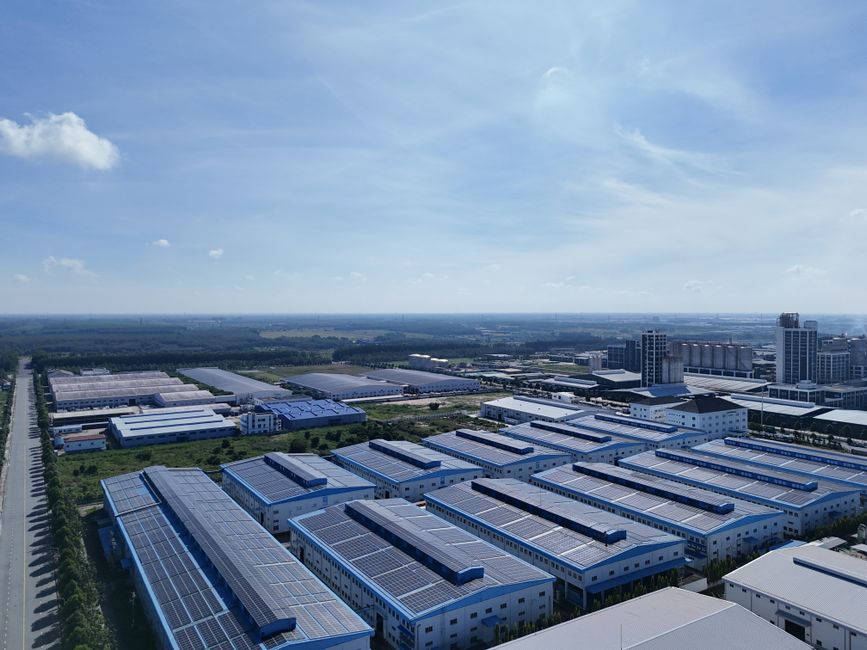
Cross-border mergers and joint ventures are the grease in the wheels. ARC Group documents a steady drumbeat of deals: Chinese machinery makers buying into Thai auto-parts firms, Taiwanese EMS contractors forming 50–50 ventures with Vietnamese state enterprises, Hong Kong trading houses acquiring Malaysian electronics distributors. These transactions transfer not just capital but process knowledge, quality systems, and customer relationships, compressing the learning curve for ASEAN plants and stitching together the multi-country networks that define the new supply chain reality.
Setting up a business in Asia?
Company structure, licences, ownership rules, tax. Tell us what you are planning and we will connect you with advisers who handle it properly.
Supply Chain Implications and Risks
On paper, china relocation asean sounds straightforward: replicate the line, train the crew, flip the switch. In practice, it resembles rewiring a jetliner mid-flight. The emerging architecture is a multi-node network spanning China and two or three ASEAN countries. A smartphone may see its logic board populated in Shenzhen, camera modules assembled in Hanoi, final integration and pack-out in Batam, and quality audits split across all three sites linked by real-time data. Dual-sourcing becomes the norm: every critical component has a primary supplier in China and a qualified secondary in Vietnam or Thailand, each capable of ramping to 60 percent of volume within weeks. This builds resilience but multiplies management complexity, vendor audits, and working-capital needs.
- Infrastructure bottlenecks top the risk list. McKinsey flags port congestion, inconsistent electricity supply, and underdeveloped industrial land as recurring pain points. A factory that runs three shifts in Dongguan may find only intermittent grid reliability in a provincial Vietnamese park, forcing costly investments in backup generators and voltage regulation. Road and rail links between new clusters and export gateways remain patchy; a truck breakdown on a single-lane highway can idle a container ship in Haiphong. The Lowy Institute warns that infrastructure build-out has not kept pace with FDI inflows, creating short-term capacity ceilings that will take years and tens of billions of dollars to lift.
- Regulatory shifts and policy uncertainty add another layer. Governments compete for investment but also guard against becoming “tariff-laundering” platforms. Recent developments include tighter country-of-origin audits and local-content verification by customs authorities in the US and EU. A product merely trans-shipped through Vietnam without substantial transformation risks losing preferential duty treatment. Companies must document value-add percentages, maintain granular bills of materials, and sometimes invite destination-country inspectors onto the shop floor. Getting this wrong can trigger retrospective duties and reputational damage.
- Skills and training present a medium-term constraint. ASEAN’s young, growing workforce is an asset, but advanced manufacturing demands process discipline, troubleshooting instincts, and familiarity with lean-production tools that take time to instill. Poaching wars for experienced line leaders and quality engineers push wages up faster than productivity, compressing the cost advantage that justified the move. Smart operators co-invest with local technical colleges, running apprenticeship schemes and on-site academies to build a pipeline rather than bidding for scarce talent.
- Tier-two and tier-three supplier maturity varies wildly. In electronics, a critical capacitor or inductor may still come from a single Chinese vendor with no ASEAN alternative, forcing hybrid logistics and customs gymnastics. In automotive, local machine shops can handle brackets and housings but lack the precision or certification for safety-critical castings. Mapping your supplier tree to the third tier and stress-testing each node for geographic concentration is no longer optional due diligence; it is survival homework. The most sophisticated players are seeding the market, co-developing ASEAN suppliers through technical assistance, prepayments, and volume commitments, effectively pulling their ecosystems south rather than waiting for organic growth.
- Compliance and traceability demands have ratcheted up. Customers and regulators want to see end-to-end material provenance: conflict minerals, forced-labor checks, carbon footprints. A multi-country supply chain multiplies the audit surface. Companies invest in digital twins, blockchain-based lot tracking, and third-party verification platforms to prove where every screw and resistor originated. The administrative load is real, but so is the upside: clean traceability becomes a competitive differentiator when rivals stumble over opacity.
A practical playbook for phased relocation includes starting with pilot lines in one ASEAN country, validating quality and logistics before committing capex; negotiating flexible lease terms in industrial parks that let you scale or pivot; embedding secondees from your China operation to transfer tribal knowledge; and securing dual customs certifications so output qualifies for multiple trade agreements.
Move too fast and you risk quality escapes and customer penalties; move too slowly and competitors lock up the best sites and talent.
Tracking the Signals That Matter Next
So where do you point your binoculars? Foreign direct investment and M&A flows are the leading indicators. Watch quarterly FDI releases from national investment boards in Vietnam, Thailand, Malaysia, and Indonesia. Sudden spikes in electronics or automotive approvals signal where the next cluster will coalesce. ARC Group and ASEAN Exchanges publish deal trackers; a flurry of cross-border acquisitions in precision engineering or logistics within a single quarter often precedes a broader buildout. Sector-specific M&A, such as Chinese battery firms buying into Indonesian nickel refineries or Taiwanese IC-design houses taking stakes in Malaysian OSAT plants, telegraphs tomorrow’s capacity today.
Trade-policy developments remain the wild card. US tariff schedules, RCEP utilization rates, and bilateral agreements can shift overnight. Subscribe to alerts from the Office of the US Trade Representative and ASEAN Secretariat trade bulletins. Changes to rules of origin, tariff exclusions, or anti-dumping investigations directly alter the economics of every plant location decision. The Lowy Institute and McKinsey both stress that companies need scenario models: if tariffs on Vietnam rise by 10 percentage points, does Thailand or Malaysia become the swing location?
Infrastructure corridors and industrial-park pipelines offer ground-truth visibility. Track announcements of new deep-water ports, dry ports, rail extensions, and dedicated EV or electronics zones. Governments pre-signal priorities through infrastructure co-financing and zoning changes. A new port in southern Vietnam or an elevated expressway linking Bangkok to the Eastern Seaboard means shorter lead times and lower logistics costs, tilting future site selections. Major developers like Sembcorp, Amata, or local state enterprises publish their park roadmaps; these are treasure maps for where manufacturing density will concentrate in the next three to five years.
Visa and residency trends matter more than you might think. A surge in skilled-worker visa applications in Vietnam or Malaysia points to multinational teams mobilizing for plant start-ups. Real-estate leasing data in Vietnam for expat housing near industrial zones is a proxy for headcount growth. If serviced-apartment occupancy in Binh Duong or Penang jumps, factories are staffing up. For expats considering assignments or entrepreneurial ventures, these patterns reveal which cities will see the best amenities, international schools, and professional networks in the coming years.
Finally, keep an eye on corporate earnings calls and supply-chain disclosures. Major EMS providers, automotive tier-ones, and semiconductor houses increasingly break out capex and production footprints by country. Listen for phrases like “capacity rebalancing,” “China-plus-one execution,” or “ASEAN ramp.” When a Foxconn or a Bosch confirms greenfield investment in Thailand or Vietnam, dozens of smaller suppliers will follow within twelve to eighteen months, creating a predictable wave you can ride.
For a deeper dive into market-entry mechanics, incentive structures, and vetted industrial parks in each country, explore our dedicated country guides. If you are mapping your own china relocation asean strategy, our Southeast Asia supply-chain research hub consolidates regulatory updates, logistics benchmarks, and supplier directories in one place. And if Vietnam sits at the top of your shortlist, sign up to receive our Vietnam Country Guide for Manufacturers, a practical resource covering everything from BOI-equivalent incentives and customs procedures to logistics-hub comparisons and industrial-park scorecards: get the guide here. The supply chain is being redrawn in real time; the question is whether you will shape it or simply react to it.
Want updates as policies and infrastructure shift? Join our waiting list.
Still weighing up your visa options?
Tell us your nationality, your plans and how long you want to stay. We will put you in touch with immigration specialists who handle these applications daily.


