


Northern Thailand is cooler, greener and slower than the south. Its mountains run up to the borders with Myanmar and Laos, and its towns were once the heart of the Lanna kingdom, which ruled the region for about 500 years. These 5 places make an easy loop of 7 to 10 days from Chiang Mai.

1. Chiang Mai

Chiang Mai was founded in 1296 as the Lanna capital, and its old city is still ringed by a moat and the remains of brick walls. Inside are more than 30 temples, including Wat Chedi Luang, whose huge ruined chedi was damaged by an earthquake in the 16th century. Evenings are for the night markets, and for khao soi, a curry noodle soup that is the north’s signature dish.
2. Doi Inthanon

Doi Inthanon, about 2 hours from Chiang Mai, is Thailand’s highest mountain at 2,565m. A road runs almost to the summit, passing waterfalls, rice terraces and hill tribe villages. Near the top are 2 royal pagodas set in flower gardens, and on clear winter mornings the valleys below fill with mist. Bring a jacket: it can drop close to freezing in January.
3. The White Temple, Chiang Rai
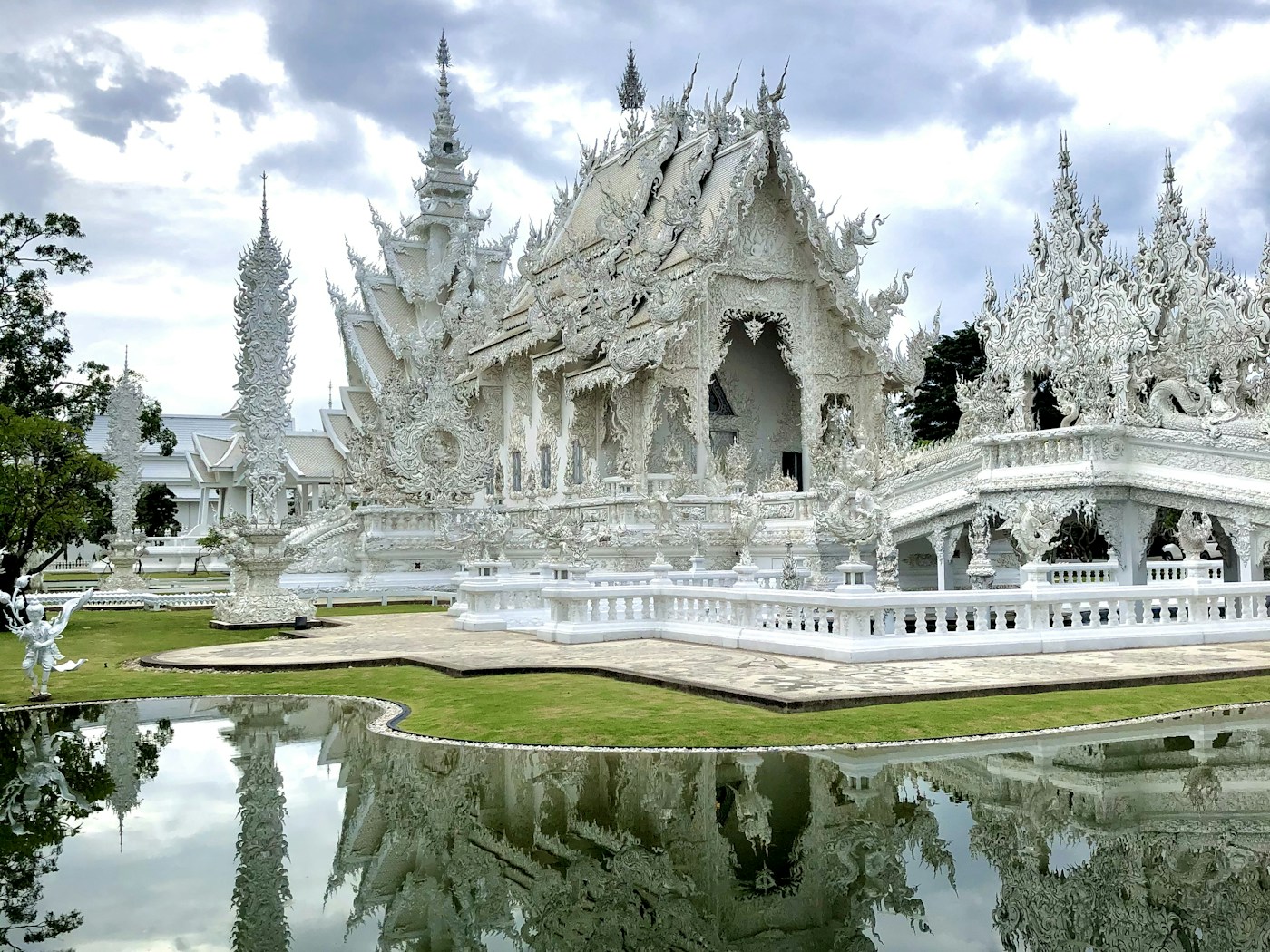
Wat Rong Khun, known as the White Temple, is just outside Chiang Rai, about 3 hours north of Chiang Mai. It was designed by the Thai artist Chalermchai Kositpipat and building began in 1997. The whole temple is white, for purity, and covered in mirrored glass, with a bridge over a sea of reaching hands that represents desire. It is still being built and is planned to be finished later this century.
4. Pai

Pai is a small town in a wide valley in Mae Hong Son province, reached by a mountain road from Chiang Mai with 762 bends. It is known for its relaxed pace, hot springs, waterfalls and Pai Canyon, a set of narrow ridges best seen at sunset. Hire a scooter only if you are confident on mountain roads, or book a driver.

5. Ban Rak Thai

Ban Rak Thai is a hill village close to the Myanmar border, settled by Chinese soldiers and their families who came from Yunnan in the 1950s. Its houses sit around a lake, with tea plantations on the slopes behind, and the village is known for oolong tea and Yunnan style dishes. Stay overnight to see the lake at dawn.
When to go
November to February is the cool season, with clear skies and fresh mornings. March and April are hot and can be hazy from crop burning, and the rains from June to October turn the mountains green.


