


Thailand’s Viral 7-Eleven: When Khao Ok Talu Became Southeast Asia’s Mount Fuji
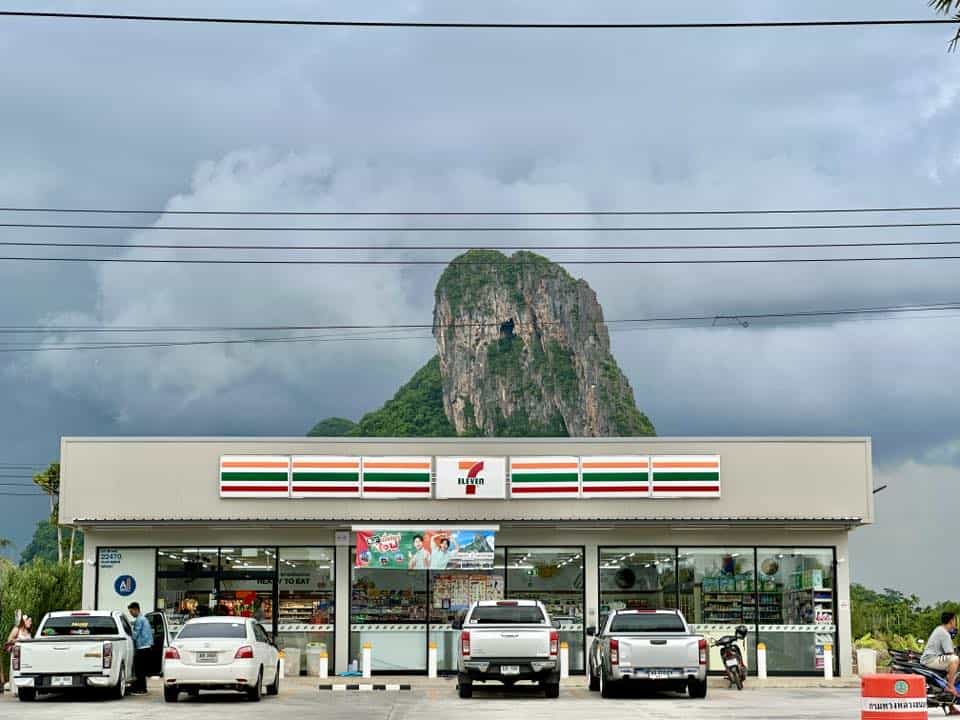
A Facebook photo posted on November 28, 2024, broke Southeast Asian social media in the most unexpected way. San Pitanupong shared a snapshot of a 7-Eleven in Phattalung, Thailand, set against Khao Ok Talu mountain that looked uncannily similar to Japan’s iconic Lawson convenience store with Mount Fuji rising behind it. Within days, the post garnered over 50,000 likes, 2,400 shares, and spawned countless pilgrimages from travelers seeking Thailand’s answer to one of Japan’s most photographed locations.

But here’s what makes this story fascinating: Thailand didn’t copy Japan’s viral moment. It accidentally created its own while Japan was literally building barriers to block tourists from the original spot.


The Accidental Doppelganger
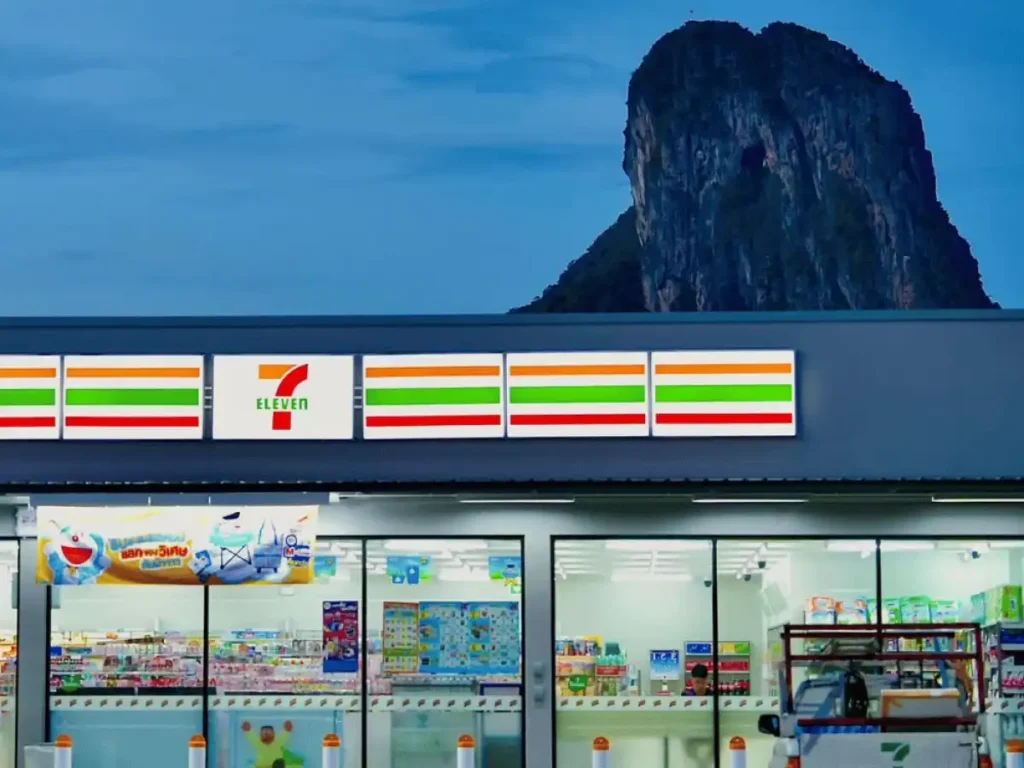
The comparison is genuinely striking. Japan’s Mount Fuji Lawson features the perfectly symmetrical, snow-capped volcanic peak rising majestically behind a blue-branded convenience store. Thailand’s version shows Khao Ok Talu, a 250-meter limestone mountain with a distinctive natural hole near its summit, looming dramatically behind the green-orange-red 7-Eleven branding.
The compositions mirror each other perfectly: convenience store in foreground, imposing mountain dominating background, clear sight lines creating that Instagram-ready frame. What separates them isn’t quality but context. Mount Fuji is Japan’s most sacred peak at 3,776 meters. Khao Ok Talu is a regional landmark that most people outside Phattalung province had never heard of until this photo went viral.
When Japan’s Fame Became a Problem
Understanding Thailand’s viral moment requires understanding what happened to Japan’s Mount Fuji Lawson—a cautionary tale about social media destroying what makes locations special.
The Lawson store in Fujikawaguchiko became globally famous through Instagram and TikTok. Then problems started. Tourists flooded the narrow street, creating traffic hazards. Garbage accumulated. Local residents faced daily disruptions from crowds blocking sidewalks.
In May 2024, Fujikawaguchiko officials erected a large black mesh barrier specifically blocking the Lawson-Mount Fuji view. The 2.5-meter-high, 20-meter-long screen became Japan’s most controversial photo block. As of late 2025, the barrier remains in place. The message is clear: overtourism has consequences.
Thailand’s 7-Eleven emerged into this exact context. Just as Japan blocked its famous view, Thailand accidentally created an alternative offering similar aesthetic appeal without barriers, crowds, or restrictions.
The Mountain Nobody Expected to Go Viral
Khao Ok Talu rises in Phattalung province, southern Thailand, featuring a distinctive natural hole near its summit that gives the mountain its name—”Ok Talu” translates roughly to “pierced chest.” The 250-meter limestone formation isn’t particularly tall, but its unique silhouette and dramatic hole create instant visual recognition.
Before the viral photo, Khao Ok Talu attracted primarily Thai domestic tourists and local worshippers visiting the Buddhist temple at the summit. The mountain featured in regional tourism materials but lacked international recognition. Now, suddenly, Khao Ok Talu has become Southeast Asia’s answer to Mount Fuji—at least photographically.
The timing proved perfect. San Pitanupong’s photo appeared exactly when Japan’s Mount Fuji Lawson barrier was generating international media coverage about overtourism. Travelers disappointed by Japan’s barriers suddenly had an alternative delivering similar aesthetic satisfaction without crowds or limitations.
How to Actually Get There
For travelers inspired to visit, the journey requires planning. Phattalung sits in southern Thailand, approximately 840 kilometers from Bangkok—not a quick side trip.
The practical route involves flying to Trang Airport, the nearest facility with regular domestic connections. From Trang, buses or taxis cover the remaining distance to Phattalung in about one hour. Once there, mention “Baan Pheng Bypass Road” to drivers—the location has become locally famous enough that most transportation providers know exactly where tourists want to go.
Best visiting months run November through March, avoiding Thailand’s rainy season and intense summer heat. Morning visits (7:00-9:00 AM) or late afternoon (4:00-6:00 PM) provide optimal lighting that recreates the viral photo’s aesthetic. Unlike Japan’s Lawson on a narrow street, Thailand’s 7-Eleven sits on a bypass road with better spacing for photography.
Planning a trip to Asia?
Tell us your dates, who is travelling and what you want out of it. We will come back with somewhere to stay and things worth doing.
Beyond the Photo
Smart travelers won’t journey to Phattalung solely for a convenience store photo. Fortunately, the province offers genuine attractions justifying the trip.
Thale Noi Waterfowl Reserve, Thailand’s first wetland bird sanctuary, sits about 30 kilometers from Phattalung city. The expansive marshland attracts hundreds of bird species, with early morning boat tours navigating lotus-covered waters offering scenes far more memorable than any convenience store.
Wat Khuha Sawan, a cave temple built within a limestone cliff, houses a large reclining Buddha and provides cool respite while delivering cultural experiences beyond typical tourist circuits. Phattalung city itself represents authentic southern Thai life without tourism infrastructure overwhelming more famous destinations.
The region’s culinary scene showcases southern Thai specialties rarely encountered in Bangkok. Kanom jeen (rice noodles with curry), sataw (stink beans), and fresh seafood prepared with southern Thai spice profiles provide foodie motivations beyond the 7-Eleven photo.
The Broader Trend
Thailand’s viral 7-Eleven represents a broader phenomenon where everyday locations become tourist attractions through perfect compositions and social media amplification. The Philippines experienced similar moments when a 7-Eleven in Camalig, Albay went viral for its Mount Mayon backdrop, drawing comparisons to Japan’s Mount Fuji Lawson and garnering 20,000 likes and 8,700 shares.
These viral moments create interesting questions about tourism motivations. Are travelers genuinely interested in these mountains and regions, or primarily chasing specific photo compositions for social media validation? The honest answer is probably both. The viral photo creates initial awareness, but experiencing the actual location often reveals unexpected depth beyond the Instagram frame.
What This Means for Thailand
From a tourism perspective, the viral 7-Eleven represents exactly the organic marketing Thai authorities dream about. Zero budget, massive international exposure, and positioning a previously overlooked province as a compelling destination—it’s the social media equivalent of winning the lottery.
Phattalung now appears on international travel radars where it previously didn’t register. Tourism Authority of Thailand doesn’t need millions promoting the region; social media users are doing it voluntarily while reaching audiences TAT marketing could never access.
However, Thai authorities should study Japan’s situation carefully as a warning. Viral fame without infrastructure planning and sustainable tourism frameworks creates problems that ultimately destroy what made locations special. If thousands descend on Phattalung’s 7-Eleven without proper planning, the same overtourism issues that forced Japan to erect barriers could emerge.
The viral moment also highlights Thailand’s diversity—offering everything from Bangkok’s urban sophistication to obscure southern provinces with viral-worthy natural landmarks. While Vietnam emphasizes affordability and Malaysia touts visa-free policies, Thailand demonstrates it can generate organic social media moments that competitors can’t manufacture.
The Bottom Line
Thailand’s viral 7-Eleven moment captures something larger than one convenience store photo. It demonstrates how social media continues reshaping tourism patterns, how everyday locations can become attractions through perfect timing and composition, and how regional competition for tourist attention increasingly happens through organic content rather than traditional marketing.
For travelers, the viral photo offers entry points to destinations they’d never otherwise consider. For Thailand, it provides free marketing that positions lesser-known regions as worthy alternatives to overvisited spots. For local communities, it creates both opportunities and challenges that require careful management.
Whether Phattalung’s moment translates into sustainable tourism growth or becomes a cautionary tale like Japan’s Mount Fuji Lawson remains to be seen. The answer depends on how Thai authorities, local communities, and visitors themselves choose to respond to viral fame.
One thing is certain: somewhere in Southeast Asia, another convenience store sits unknowingly in front of a photogenic backdrop, waiting for someone with a smartphone to discover it and start the cycle again.
Thinking seriously about moving to Asia?
Tell us where you are now and what the move looks like. We will match you with people who have done it before and can save you the expensive mistakes.


