Penang Real Estate 2025: Malaysia’s Rising Coastal Investment Hub
Penang, Malaysia has emerged as one of Southeast Asia’s most attractive coastal real estate markets in 2025, blending strong fundamentals with lifestyle appeal. Often celebrated as a coastal gem for home buyers in the region [Southeast Asia’s Coastal Gem for Home Buyers in 2025], the island state offers a unique mix of heritage charm and modern infrastructure that draws both local and foreign investors. For context, Malaysia property trends nationwide in 2024 saw record transaction volumes, and Penang’s market is similarly characterized by steady growth and cautious optimism. This analysis examines Penang’s property pricing trends, sales activity, rental yields, and key demand drivers, providing a clear, data-driven outlook for investors. We also explore high-demand areas like George Town, Tanjung Tokong, and Batu Ferringhi; discuss foreign buyer interest in light of current policies; and outline practical considerations – from ownership rules to financing – for those looking to invest in Penang real estate in 2025.

Pricing Trends and Sales Activity
After a pandemic-era slowdown, Penang’s housing prices have resumed a modest upward trajectory. The median transacted price for Penang residential properties now hovers around RM595,000 (US$130,000), with a median price of roughly RM520 per square foot (approximately RM5,600 per square meter). In prime city areas such as George Town, new condominium units often command higher rates – for example, upscale high-rises in and around Gurney Drive commonly range RM800–RM1,200 per sq. ft., whereas suburban and mainland locations offer more affordable options in the RM300–RM600 per sq. ft. range. Overall, Penang property prices have appreciated at a sustainable pace. In the first half of 2023, the market recorded a robust 5.6% year-on-year growth in home prices, one of the fastest rates in Southeast Asia This growth was underpinned by government incentives, infrastructure development, and increased foreign investment, signaling confidence in the market’s fundamentals.
Sales activity in Penang reflects healthy demand, especially in the mid-market segment. Nationwide, 2024 saw property transaction volumes reach their highest level in a decade, and Penang contributed to this momentum with solid sales of new units and steady secondary market transactions. Notably, homes priced under RM500,000 continue to attract the strongest buyer interest (primarily from local first-time buyers). By 2025, there are signs of segmentation in Penang’s market performance: Knight Frank’s 1H2025 report noted that high-rise residential properties in Penang experienced a slight dip in transaction volume and value compared to the previous year. This suggests that an oversupply of condominiums in certain areas (e.g. less central locations or older projects) is tempering price growth and making buyers more selective. In contrast, landed homes and niche segments – such as heritage shophouses in George Town – continue to see firm demand and even price upticks, supported by their scarcity value. Overall, Penang’s sales momentum remains resilient yet measured. Developers have become more strategic with new launches, focusing on aligning supply with genuine demand, and buyers are increasingly data-driven, comparing value across locations before committing. This equilibrium is keeping the market healthy in 2025, with neither a frenzy nor a freeze in activity.


Rental Yields and Investment Returns
Penang offers moderate to strong rental yields by regional standards, adding to its appeal for property investors seeking income. Gross rental yields for apartments currently average around 5%, which is healthy compared to many Asian city markets. Yields do vary by location and property type: affordable apartments and units in high-demand neighborhoods can fetch higher returns (often in the 5%–6% range), whereas luxury condos purchased at premium prices might yield closer to 3%–4%, according to some estimates. For instance, market data shows the average rental yield for apartments in Penang is approximately 5.74%. This figure is slightly higher than Kuala Lumpur’s average yields, reflecting Penang’s lower entry prices relative to rents, as well as sustained rental demand. Such yields indicate that a well-chosen property in Penang can generate solid cash flow alongside the prospect of long-term appreciation.
Several factors underpin these rental returns. Tenant demand in Penang is robust, fueled by a combination of expats, domestic professionals relocating from other states for work, and a vibrant student population in areas with universities. The tourism industry’s rebound has also spurred interest in short-term rentals, though investors should be aware of local regulations: Penang has imposed restrictions on Airbnb-style short lets in many residential complexes to maintain peace for residents. Therefore, those aiming for high yields via holiday rentals should ensure their property is in a permissible category (for example, certain commercial-titled service apartments allow short-term stays). Otherwise, the long-term rental market is the safer play – occupancy rates are high for well-located units, and landlords can expect steady tenancy from young professionals, families, or expatriates. With mortgage interest rates in Malaysia still relatively low, many investors find that rental incomes in Penang can cover a good portion of financing costs, making the invest in Penang real estate proposition financially sound. As always, location and property management are key: choosing popular neighborhoods and maintaining the property well will help maximize rental uptake and returns.

High-Demand Areas in Penang
Penang’s property market has distinct micro-markets, with certain areas exhibiting especially strong demand and development in 2025. Here we highlight three locales drawing investor attention:
-
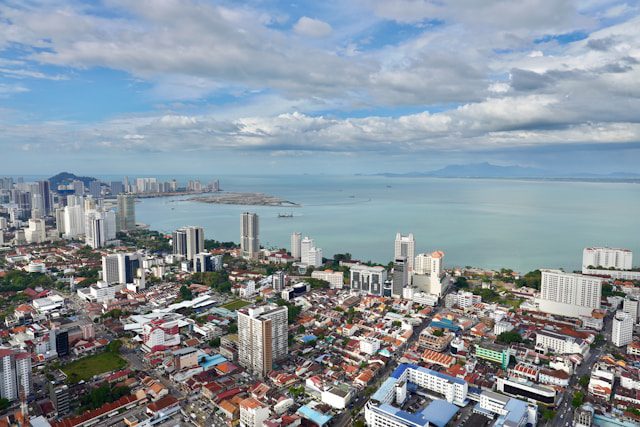
George Town (City Centre) – The state’s capital and a UNESCO World Heritage city, George Town blends historical charm with urban convenience. Demand here is two-fold. First, heritage pre-war shophouses and colonial-era buildings in the core heritage zone attract investors for boutique hotels, cafes, and unique residences (though foreign buyers are generally barred from owning these heritage-classified properties to preserve local culture). Second, the surrounding city center has seen modern condominium projects catering to professionals and expats. Areas like Gurney Drive and Pulau Tikus host luxury high-rises with seafront views, proximity to shopping malls and top-notch medical facilities. These condos command top-tier prices and have a ready pool of tenants among the city’s affluent locals and expatriate managers. George Town’s limited land supply and its status as a cultural/tourism hub keep property values resilient. Rental demand is bolstered by the city’s role as an economic center and its popularity among expats who enjoy the walkable lifestyle and rich food scene (as detailed in our lifestyle article [Why Penang Is Southeast Asia’s Coastal Gem for Home Buyers in 2025]). Investors favor George Town not only for its prestige and liquidity but also for its potential for gentrification gains – for example, restored heritage properties have seen significant value appreciation over the past decade.
-
Tanjung Tokong & Tanjung Bungah (Northern Coast) – Located along the northern coast just outside George Town, Tanjung Tokong has become Penang’s premier suburban enclave for upscale living. This area (which includes the Seri Tanjung Pinang development) features master-planned waterfront communities and high-rise condominiums that cater to the upper-middle class, both local and foreign. For instance, Straits Quay in Tanjung Tokong offers a marina-front lifestyle with modern condos, retail promenades, and dining, making it very popular with expatriates. New phases of land reclamation are adding to the housing supply here, indicating developers’ long-term confidence. Prices for sea-view condominiums in Tanjung Tokong are among the highest on the island (often RM700–RM1,200 per sq. ft., depending on the project age and amenities), yet demand remains strong due to the location’s reputation and amenities. Adjacent to this, Tanjung Bungah offers a mix of older resorts, low-density condos, and landed villas cascading towards the hills. It’s slightly further from the city (about 20 minutes drive) and thus quieter, which appeals to retirees and families. Both Tanjung Tokong and Tanjung Bungah benefit from nearby international schools, upscale supermarkets, and recreational clubs, adding to their appeal for long-term foreign residents. Notably, even international hospitality brands are investing here: Ascott Ltd has partnered with a local developer to launch a new Ascott Residences in the area – a 99-unit luxury beachfront condominium slated to open by 2028. This premium project (between Tanjung Bungah and Batu Ferringhi) underscores the northern coast’s status as a high-end residential zone. Investors targeting this area are typically seeking capital appreciation and lifestyle play; historically, properties here have seen consistent value growth, and rental yields around 4–5% are attainable given the steady expat tenant base.
-
Batu Ferringhi (Tourist Belt) – Penang’s famous beach resort strip on the northwestern coast is not only a hotspot for tourists but also a niche real estate market. Batu Ferringhi is known for its long stretch of white sand beaches lined with hotels, resorts, and a smattering of luxury residences. In recent years, it has drawn interest from both foreign buyers (often for use as vacation homes or retirement retreats) and locals looking for weekend homes or Airbnb investments. The property stock here ranges from resort-style condominiums (some with hotel-like facilities) to sprawling hillside villas with panoramic sea views. Developments like By The Sea and Ferringhi Residence offer modern condos that blend resort living with residential comfort. Prices in Batu Ferringhi vary widely – one can find older condo units in the secondary market for under RM600,000, while newly launched luxury beachfront condos or landed bungalows can reach several million ringgit. The rental market in Batu Ferringhi is strongly tied to tourism; owners who rent out units short-term can see high nightly rates during peak holiday seasons, though occupancy is seasonal. With Malaysia’s tourism sector recovering strongly (the country recorded over 25 million visitors in 2024), interest in Batu Ferringhi properties has picked up, especially for those positioned as holiday rentals or serviced residences. The local government is also improving infrastructure in this area – for example, better road links and beach maintenance – which enhances its long-term appeal. For investors, Batu Ferringhi offers the allure of a resort location with potential for both enjoyment and profit. It may not appreciate as uniformly as George Town or Tanjung Tokong, but specific high-end projects here could see significant gains, especially as branded residences and upscale projects (like the Ascott development) elevate the overall market profile. This area’s unique blend of tropic beauty and upcoming luxury projects ensures it remains on the radar of those scanning the best coastal real estate markets in Southeast Asia [Best Coastal Real Estate Markets in Southeast Asia in 2025].

Thinking about buying in Asia?
Tell us the budget, the area and roughly when you want to move. We will come back with straight answers from people who work this market every day.
Foreign Buyer Interest and Policy Updates
Foreign investor interest in Penang real estate remains significant in 2025, thanks to Malaysia’s relatively liberal ownership laws and the island’s international appeal. Under the Malaysia My Second Home (MM2H) program – a long-term visa scheme – thousands of foreigners have made Malaysia. For More Info About Visas In Malaysia, Sign-up to Our Malaysia Visa Waitinglist.
For foreign property purchases, Malaysia imposes minimum price thresholds that vary by state. Penang’s thresholds in 2025 are among the highest in the country (reflecting the state’s higher property values). On Penang Island, foreign buyers generally must purchase real estate priced above RM1,000,000 for a condominium or RM3,000,000 for a landed house. In Penang’s mainland (Seberang Perai), the minimums are lower – RM500,000 for a strata unit (apartment) and **RM1,000,000 for a landed property. These requirements are designed to channel foreign investment into higher-end properties so as not to drive up prices in the mass market segment that local first-time buyers rely on. Importantly, Penang (like other states) requires foreign purchasers to obtain state consent for each property purchase. This comes with a one-time approval fee (often around 3% of the property price, known locally as the foreign levy). In recent times, the Penang government has shown some flexibility: to clear an overhang of unsold upscale units, authorities temporarily lowered the foreign purchase threshold to ~RM700,000 for certain new projects and reduced levy fees, in a scheme that ran through end-2023. Many developers also absorbed or discounted the state levy for foreign buyers during this period to incentivize sales. These pro-investor measures, combined with a relatively favorable exchange rate, have helped sustain foreign interest.
It’s important to note that some property types remain off-limits to foreigners regardless of price. For instance, foreigners cannot purchase properties classified as “Malay Reserved Land” or most agricultural land, and they are generally restricted from buying landed properties in special heritage zones (particularly pre-war heritage houses around core George Town). Such rules protect certain cultural and community assets for locals. Aside from these, Penang does allow foreign freehold ownership of nearly all other residential properties (including new landed homes in gated strata communities above the price threshold). Overall, foreign investment in Malaysia real estate – and Penang in particular – is welcomed and forms an important part of the market. The legal framework is transparent and investor-friendly: foreign buyers enjoy the same property titles as locals, and there are no additional punitive taxes on foreign ownership (Malaysia does not have extra stamp duties for foreigners, unlike some neighboring countries). This openness, combined with Penang’s strong lifestyle appeal, has made the island a magnet for overseas property investors and retirees. As long as buyers abide by the minimum price rules and obtain the necessary approvals, the process of buying and holding property in Penang is straightforward. The combination of clear rules and high-quality opportunities underpins Penang’s reputation as a preferred destination for international real estate investment.

Infrastructure and Economic Outlook
Penang’s real estate prospects are bolstered by a robust local economy and ongoing infrastructure developments. Often dubbed the “Silicon Valley of the East,” Penang’s economy is anchored by electronics manufacturing, tourism, and services – all showing promising trends through 2025. In the first half of 2025, Penang led Malaysia in attracting manufacturing investment. The state recorded RM12.5 billion in approved manufacturing investments in 1H2025, a 150% jump year-on-year. This included major foreign direct investments (from the U.S., China, and other countries) in new semiconductor plants and expansions, making Penang the top recipient of manufacturing FDI nationwide (securing about 20% of Malaysia’s total). Such industrial growth translates into significant job creation – over 11,000 new jobs are expected from these approved projects alone – which in turn fuels housing demand. The influx of skilled workers and engineers bolsters the mid-range property segment (e.g. demand for family apartments in areas like Bayan Lepas and Gelugor), while higher-level managerial talent (including expatriates) adds to demand for upscale homes and rentals. In short, Penang’s economic fundamentals are strong and provide a sturdy foundation for real estate value: the state enjoys one of the highest GDP per capita in Malaysia, low unemployment, and rising incomes in the tech sector, all of which support a healthy property market.
On the infrastructure front, several major projects are set to enhance connectivity and livability in Penang, thereby uplifting real estate values in the medium term. A flagship initiative is the Penang Transport Master Plan, under which the state’s first Light Rapid Transit (LRT) line is slated to begin construction. This LRT (the “Komtar–Bayan Lepas Line”) will link the city center (Komtar in George Town) to the airport and the sprawling Bayan Lepas industrial zone, significantly easing traffic bottlenecks along the island’s eastern corridor. Proximity to future LRT stations is already a selling point for new residential projects; studies indicate properties near transit nodes can see value uplifts of around 10–20% over time thanks to improved accessibility. Complementing the LRT, road infrastructure is being upgraded as well – for example, the Pan Island Link highway project aims to provide a new expressway across the island, and there is a long-term proposal for an undersea tunnel (or a third bridge) to connect Penang Island to the mainland, which would further integrate the region. These developments, if realized on schedule, will make commuting smoother and open up new areas for property development (e.g., land in south Penang Island and parts of Seberang Perai will become more attractive as connectivity improves).
Penang’s international airport expansion is another catalyst for the property and tourism markets. A RM1.55 billion upgrade project commenced in late 2024 to more than double the airport’s capacity – from handling 6.5 million passengers per year currently to 12 million passengers in the future. The expansion, slated for completion by 2027–2028, involves a new terminal and enhanced facilities. This will support growth in tourism, business travel, and possibly new air routes. More international flights and improved connectivity can only increase Penang’s attractiveness for both leisure and business activities – a positive signal for hospitality-related real estate (like serviced apartments, hotels, and Airbnb-suited condos) and for any property catering to foreigners or frequent travelers. Indeed, the hospitality sector’s recovery has been strong; by end-2024, hotel visitor numbers and receipts had rebounded substantially (Malaysia logged over RM102 billion in tourism receipts in 2024) and Penang’s hotel occupancy and room rates were on an upswing. This tourism momentum tends to spill over into property demand, as successful short-term rental returns can spur more investors to buy, and improved city amenities make Penang more livable for all.
The state’s long-term development plans also include creating new land for future growth. The ambitious Penang South Islands reclamation project (sometimes called the “Silicon Island” project for the first island) has begun initial phases. This project aims to reclaim three man-made islands off the southern coast of Penang Island, adding roughly 4,500 acres of new land that will host industrial parks, residential townships, and green spaces. Full completion will take time – reclamation and development are expected to span 10–15 years (targeting the 2030s) – so it’s a long game. However, it symbolizes confidence in Penang’s growth trajectory and, over the long term, will create new coastal real estate opportunities (imagine new waterfront townships with modern infrastructure). In the nearer term, one beneficial side effect is that land scarcity on Penang Island is being addressed, which could help stabilize land prices and provide space for future affordable housing, potentially keeping the market sustainable.
Overall, Penang’s economic and infrastructure outlook bodes well for property investors. The combination of a diversified economy, high-skilled workforce, and government investments in connectivity forms a virtuous cycle supporting real estate values. Property values are expected to remain resilient in 2025 and beyond, with areas near infrastructure projects or economic hubs likely to see above-average appreciation. Investors should, of course, stay attuned to macro factors – for example, interest rate trends (which affect mortgage costs) and global economic conditions – but Penang has shown remarkable stability. Even amid global headwinds, Malaysia’s real estate market has demonstrated resilience, and Penang in particular benefits from its appeal to both domestic buyers and foreign entrants. Notably, the Malaysian ringgit remains relatively weak against major currencies as of 2025, which makes Penang property quite affordable in USD or SGD terms. This currency advantage provides an extra incentive for foreign investors, effectively giving more bang for your buck when buying in Malaysia. In summary, Penang’s strategic development and solid economy are set to keep its property market on an upward, sustainable path.
Moving Forward
From an investor’s perspective, Penang hits a sweet spot. It may not offer the ultra-cheap “frontier market” bargains, but it provides value: you are buying into a developing yet developed market – one with modern amenities and strong rental demand, but at prices and yields that often beat more mature markets. The island’s appeal is reflected in its inclusion among the region’s top destinations Best Coastal Real Estate Markets in Southeast Asia in 2025 for property investment. Still, prudent investing remains key. It’s wise to leverage local expertise, do thorough research, and align your investment with your objectives, whether that’s steady rental income or long-term capital growth.
Lastly, stay informed on market conditions. Consider joining investor groups or subscribing to property news – for example, you can Join the Malaysia Real Estate Waiting List to receive curated updates on new launches and investment opportunities in Penang and other Malaysian hotspots.
Thinking seriously about moving to Asia?
Tell us where you are now and what the move looks like. We will match you with people who have done it before and can save you the expensive mistakes.