Bali Culture Guide: Offerings, Names, Temples and Nyepi 2027
Bali culture runs on ritual. Offerings appear on doorsteps before breakfast, temple ceremonies close roads in the afternoon and a whole village can turn out in white for a festival you didn’t know was happening. For visitors, these moments are the best part of the island.

Most of what you’ll see comes from Balinese Hinduism, a local form of the faith shaped by older island beliefs. It guides daily life, family names, farming and the calendar. Knowing a little of it makes you a better guest and a more observant traveller.
Here’s a short guide to the customs you’ll meet most often, and the dates to plan around in 2027.
Canang sari, the daily offering
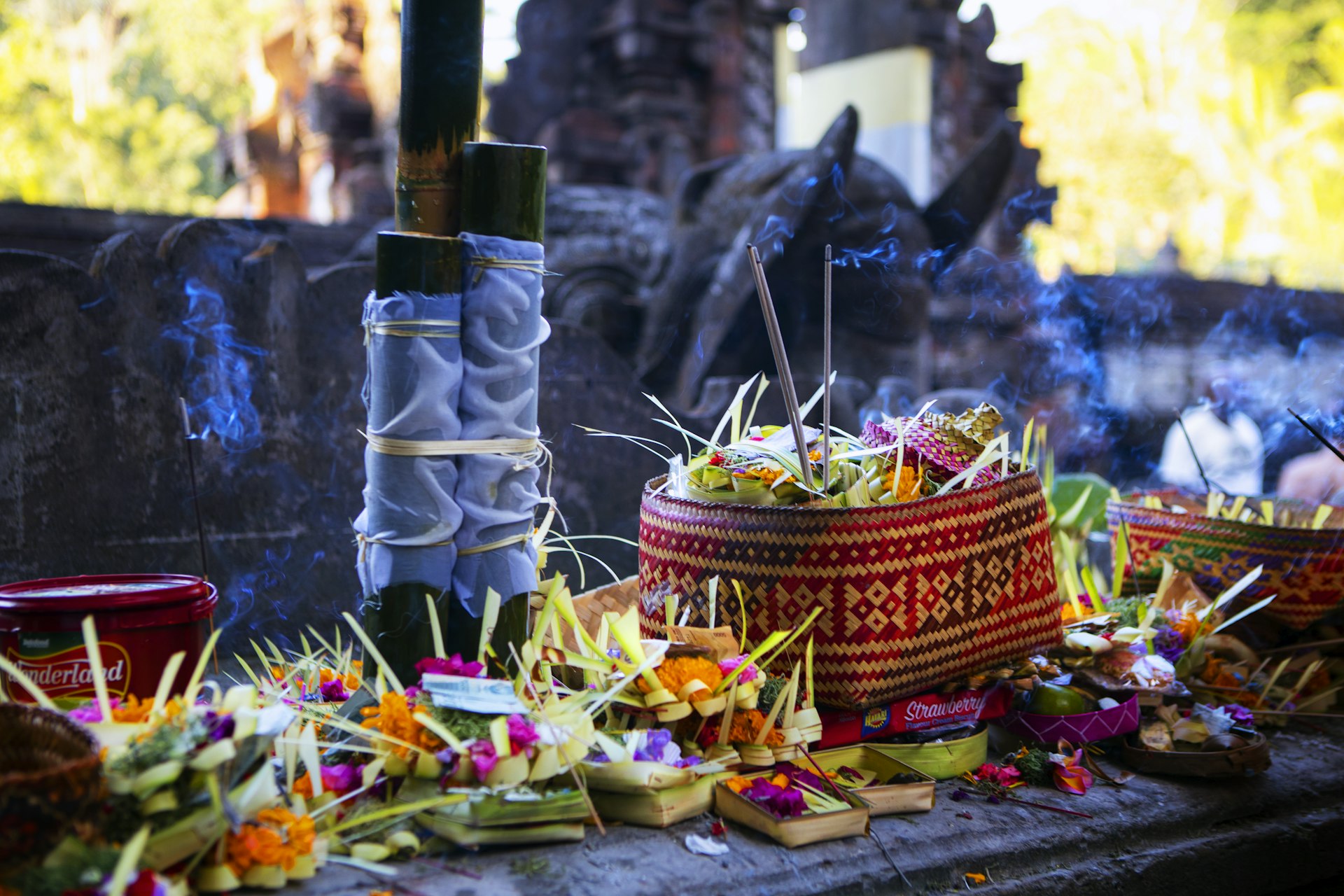
Canang sari are small trays woven from palm leaf and filled with flowers, a little rice, sometimes a sweet or a coin, and a stick of incense. They’re made fresh each day, usually by the women of the household, and placed on shrines, doorsteps, shop counters and even car dashboards.
The name joins two words. Canang is the palm leaf tray and sari means essence. Flowers are often set out by colour to face the compass points, with white to the east, red to the south, yellow to the west and blue or green to the north, each linked to a different god.

You’ll also see plainer offerings set straight on the ground. These are for lower spirits and are meant to stay there.
- Step around offerings on pavements and steps.
- If you tread on one by accident, don’t worry. Most locals see it as already given.
- Don’t move or tidy them, even at your villa gate.
Balinese names and birth order
Meet a few people in Bali and you’ll hear the same names again and again. That’s because most Balinese names follow birth order.
| Birth order | Common names |
|---|---|
| First child | Wayan, Putu or Gede |
| Second child | Made, Kadek or Nengah |
| Third child | Nyoman or Komang |
| Fourth child | Ketut |
A fifth child starts the cycle again, often as Wayan Balik, meaning Wayan once more. Names often begin with I for boys and Ni for girls, so I Wayan or Ni Made. A personal name follows, and that’s usually what friends use. Some families also carry titles such as Ida Bagus, Anak Agung or Gusti, which show a traditional family line.
How to visit a Balinese temple
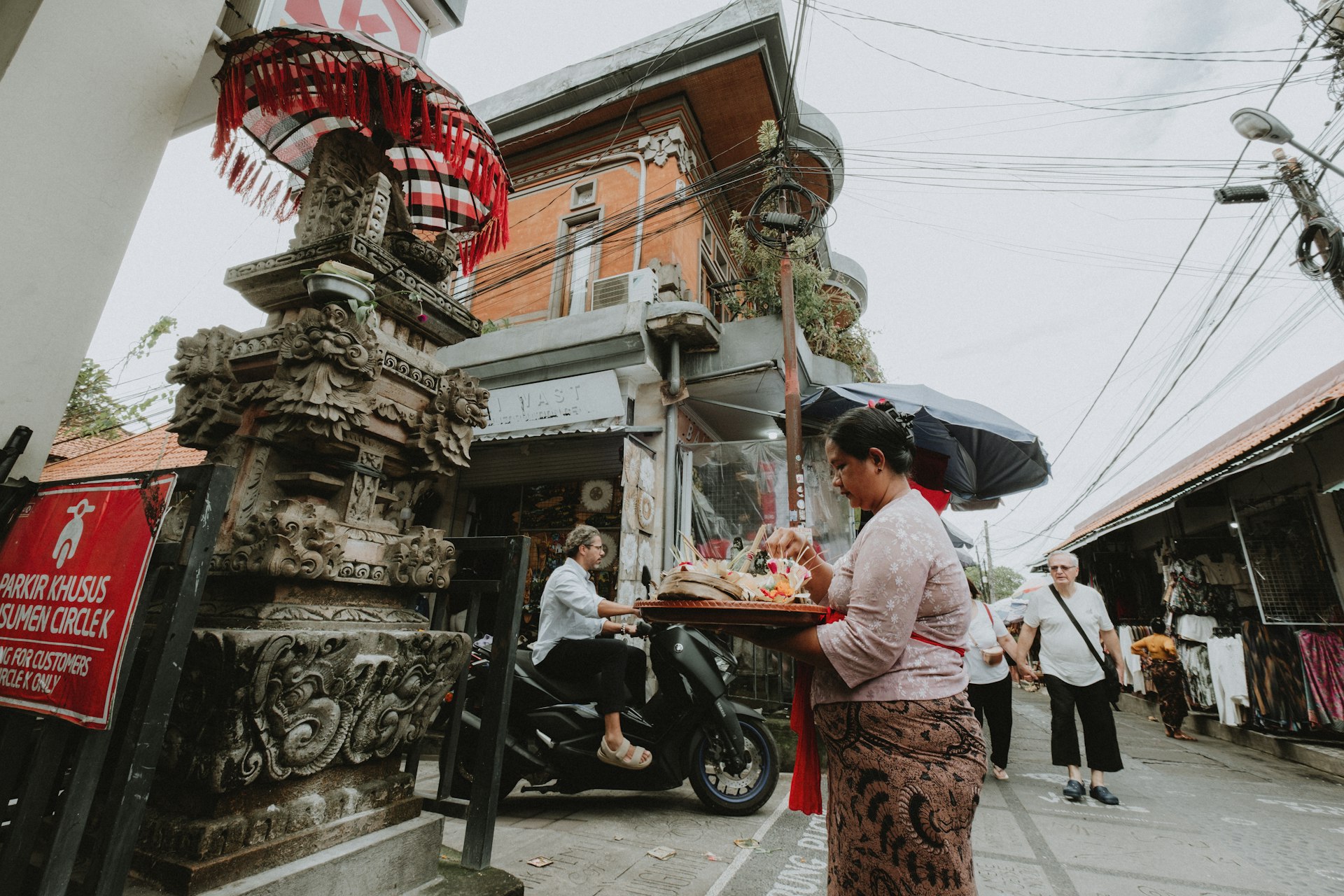
Bali has thousands of temples, called pura, from family shrines to great complexes like Besakih, the mother temple on the slopes of Mount Agung, and Tirta Empul, a holy spring temple where Balinese come to bathe and pray. Visitors are welcome at most of them outside the inner courtyards.
- Wear a sarong and a sash tied at the waist. Most temples lend them at the entrance for a small donation, and many ask for shoulders to be covered too.
- Keep your head lower than the priest’s and step aside when a ceremony passes.
- Don’t sit on or climb temple walls and shrines, however good the photo.
- Use your right hand to give and receive offerings, gifts and money.
- Many temples ask women not to enter during menstruation, and anyone with an open wound is asked to wait outside. Signs at the gate explain this.
If you’re invited into a family ceremony, take your lead from the hosts. Sit when they sit, accept holy water with cupped right hand over left and dress in clean, modest clothes.
Nyepi, the Day of Silence, on 8 March 2027
Nyepi marks the Balinese New Year in the Saka calendar. In 2027 it falls on Monday 8 March, the start of Saka year 1949. For 24 hours, from 6am on 8 March to 6am on 9 March, the island stops.
The day follows 4 rules known as Catur Brata Penyepian, which ask for no fire or light, no work, no travel and no entertainment. Ngurah Rai International Airport closes, roads empty and village wardens called pecalang patrol the streets to keep everyone indoors.
Hotels stay open for guests. Expect quiet grounds, dimmed lights after dark, closed beaches and a limited menu. Many travellers book a hotel for 2 or 3 nights around Nyepi and treat it as a day to rest. On a clear night the sky over Bali is full of stars.
The days around Nyepi are just as interesting. Melasti, a purification ceremony, takes place at the coast a few days before, with long processions carrying temple objects to the sea. The day after Nyepi, called Ngembak Geni, is for visiting family and asking forgiveness. In 2027 Eid al-Fitr follows on 10 March, a national holiday across Indonesia, so flights and hotels around those dates will be busy. Book early.
Ogoh-ogoh night
On the evening before Nyepi, villages parade ogoh-ogoh through the streets. These are giant figures of demons and spirits made from bamboo, papier-mache and foam, built over months by local youth groups called sekaa teruna. They’re carried on bamboo frames, spun at crossroads to confuse bad spirits, and many are burned at the end of the night.
The best places to watch are town centres and main crossroads. Arrive early, stay behind the crowd line and keep drones at home.
Subak, a thousand years of shared water
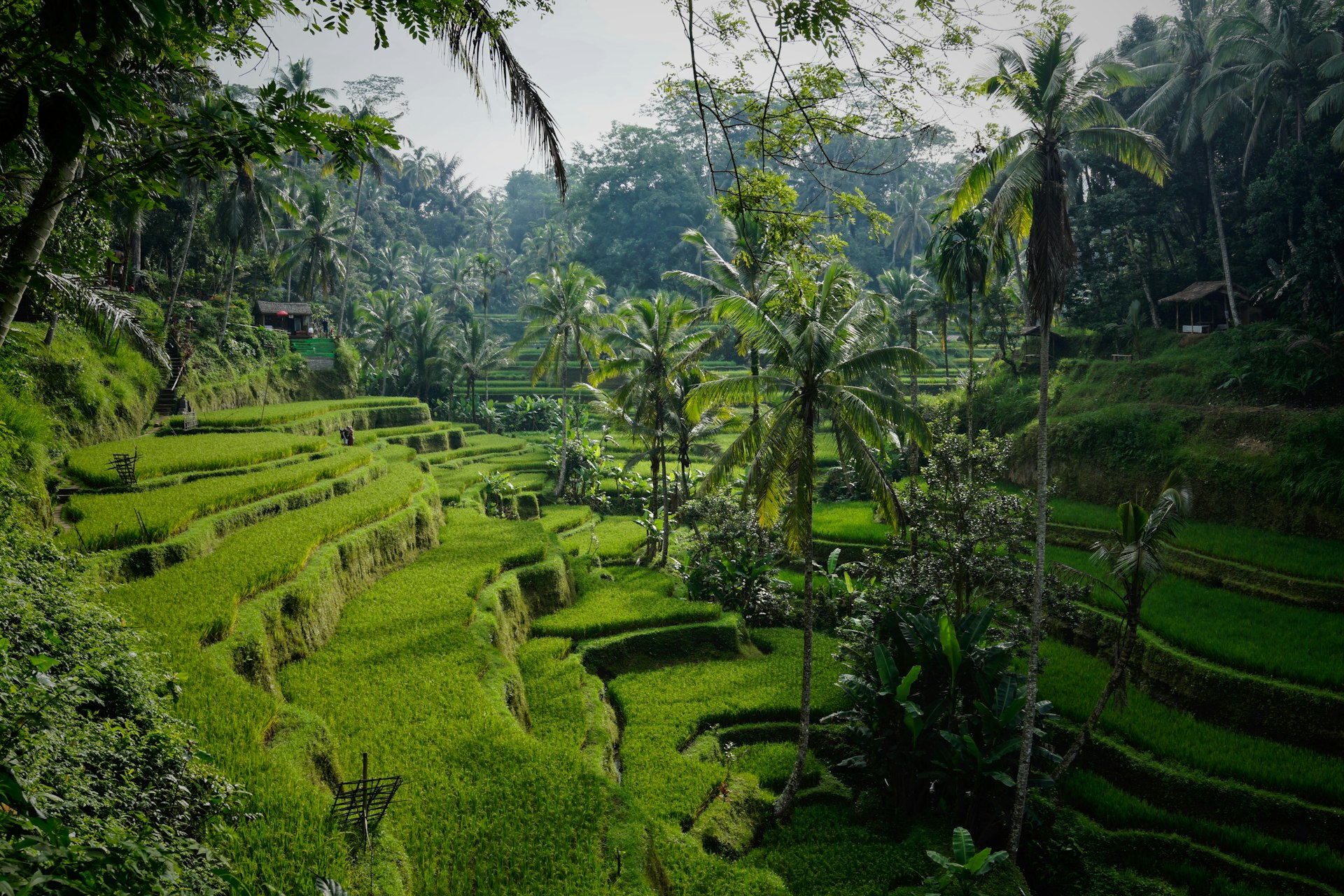
Bali’s rice terraces depend on subak, a cooperative system that carries water from springs and lakes through temples and canals to the fields. Farmers share it by agreed rules, with water temples setting the planting rhythm. The system dates back around 1,000 years.
UNESCO added the subak landscape to its World Heritage List in 2012. Jatiluwih, in the Tabanan regency, is the easiest place to see it at scale. Walk the marked trails early in the morning and stay on the paths between paddies.
Practical notes for 2027
- Foreign visitors pay a tourist levy of 150,000 rupiah per entry to Bali. It’s best paid online before you fly.
- Carry a sarong in your day bag. It saves a stop at every temple gate.
- Ceremonies can close roads with little notice. Allow extra time on full moon days and festival days.
- Galungan and Kuningan, a 10 day festival honouring ancestors, comes around every 210 days in the Balinese calendar. Look for tall bamboo poles called penjor lining the roads.
Common questions about Balinese culture
Can tourists leave the hotel on Nyepi?
No. Everyone, including visitors, stays inside their hotel or home from 6am on 8 March to 6am on 9 March 2027. Only emergency services operate.
Is it rude to step on a canang sari?
It’s best to step around them. If it happens by accident, there’s no need to fix it. Simply be more careful next time.
Do I need my own sarong for temples?
Most temples lend a sarong and sash at the entrance for a small donation. Bringing your own is quicker and more comfortable.
Why do so many Balinese share the same name?
Most Balinese names follow birth order, so every family has its Wayan, Made, Nyoman or Ketut. Personal names and nicknames tell people apart.
Where can I see the subak rice terraces?
Jatiluwih in Tabanan is the best known, with walking trails through the terraces. The area around Ubud also has smaller subak landscapes within easy reach.