


Bangkok Infrastructure Developments: A New Era of Livability for Expats and Nomads
Bangkok is undergoing a wave of infrastructure upgrades that promise to make daily life in the city more convenient, reliable, and enjoyable – especially for expats, digital nomads, and long-term visitors. From cleaner streets and faster commutes to a more connected and “smart” urban environment, these developments are transforming Bangkok into a truly modern metropolis. Below, we explore the key projects – burying power lines, expanding mass transit, upgrading the airport, and embracing smart-city tech – and what they mean for residents and expatriates.


Bangkok Infrastructure: Burying Power Cables for a Cleaner, Safer Bangkok
One of the most visible improvements across Bangkok is the ongoing project to bury the maze of overhead electrical and communication cables. In 2024, the National Broadcasting and Telecommunications Commission (NBTC) launched a bold plan to tidy up 151 routes (440 km) of tangled telecom wires and move cables underground along 32 routes (67+ km), aiming to finish this phase by the end of the year This initiative isn’t just about aesthetics – although clearing the chaotic web of wires certainly makes Bangkok’s streetscapes more attractive – it’s also about safety and reliability. Overhanging cables have caused accidents and even fires in the past, so putting them underground reduces hazards and power outages. The responsibility is shared by NBTC, the Metropolitan Electricity Authority (MEA), and the Bangkok Metropolitan Administration (BMA), indicating how crucial this project is for the city.
In fact, the MEA has outlined an ambitious decade-long effort to relocate about 1,454 km of electrical lines underground as part of a “smart metro grid” overhaul. As of mid-2023, 91 km of power lines had already been moved below street level, with plans to bury 236 km by 2027 on key roads and business districts. Much of the focus is along BTS Skytrain and MRT routes to maximize impact. These new underground systems will also use smart technology like automated monitoring and smart meters to quickly detect and fix issues before they disrupt service. As MEA Governor Wilas Chaloeysat put it, “We are making big changes for people living in the city to make life more convenient. We have followed our principle of ‘Go Smart, Go Digital and Go Green’ for a sustainable future.” This massive infrastructure facelift – slated to continue through the 2020s – means a more resilient power supply (fewer outages and safer streets) and a more beautiful city skyline with far fewer black cables crisscrossing overhead. For expats and locals alike, that translates to more reliable electricity for your home or business and more visually appealing neighborhoods – no more dodging low-hanging wires on the sidewalk or seeing sparks during a storm.


New MRT and Monorail Lines Transforming Commutes
Bangkok’s notorious traffic jams are getting some relief thanks to new mass transit lines that have come online recently. In 2023, two new rapid transit lines opened, dramatically expanding the city’s rail network: the MRT Yellow Line and the MRT Pink Line. These lines are actually modern monorails that now link areas of the city that previously had no train service, giving residents more options to get around quickly.
An MRT Pink Line monorail train in Bangkok. New mass transit lines like the Pink and Yellow Lines have expanded the rail network and cut commute times. The Pink Line began full service in late 2023, spanning 34.5 km with 30 stations from Bangkok’s northern suburb of Khae Rai (Nonthaburi) to Min Buri in the east. This driverless monorail zips above congested roads, cutting travel time by over 50% on that corridor – trips that once took over two hours by car now take under an hour by train. The Pink Line is designed to integrate with five other transit lines as well, improving connectivity across northern Bangkok. On the other side of town, the Yellow Line (which opened in mid-2023) runs 30+ km from Lat Phrao in north-central Bangkok to Samrong in the southeast. It serves neighborhoods along the eastern ring road and connects with existing MRT/BTS lines at key points, essentially creating an orbital route. Together, the Pink and Yellow Lines have significantly improved public transport options – “providing a faster and more efficient way for people to travel between the city’s major districts,” as Thailand’s Deputy Transport Minister noted at the Pink Line launch.
These new lines are a game-changer for commuters. Expats living in areas like Min Buri or along Lat Phrao Road, which used to be far from any rail line, can now hop on a clean, air-conditioned train and reach downtown business centers or connections to the BTS/MRT with ease. This opens up new residential options for long-term visitors – you aren’t limited to living right on top of the older BTS lines anymore. For example, an IT professional could live in a more spacious apartment in Nonthaburi or along Srinakarin Road (served by the Yellow Line) and still get to a Sukhumvit office conveniently. The expanded network also reduces our dependence on cars and motorbikes, meaning less time stuck in traffic and more sustainable city travel.
And it doesn’t stop here – Bangkok continues to build out its urban rail. The MRT Orange Line is under construction to link east and west Bangkok (from the Thailand Cultural Centre through Ramkhamhaeng to Min Buri), and although its full completion has faced delays, officials project the entire line will be operational by 2030. The eastern section of the Orange Line is expected to open sooner (late 2020s), further improving access to suburbs. Future projects like the planned Light Blue Line and extensions of existing lines are also on the horizon. For the city’s expat community, every new line means shorter commute times, less money spent on taxis or fuel, and easier exploration of Bangkok’s diverse neighborhoods – you can visit friends or attend business meetings across town without the uncertainty of traffic jams.
Planning a move to Bangkok?
Tell us where you are now and what the move looks like. We will match you with people who have done it before and can save you the expensive mistakes.
 Suvarnabhumi Airport Expansion Boosts Connectivity

Frequent travelers and long-term visitors flying in and out of Bangkok will soon notice a big upgrade at Suvarnabhumi International Airport. The airport – already one of Asia’s major hubs – is undergoing a multi-billion-baht expansion to increase capacity and improve the passenger experience. The centerpiece of this project is the brand-new Satellite Terminal 1 (SAT-1), which officially opened with a royal inauguration in March 2025.
The new Satellite Terminal 1 at Suvarnabhumi Airport during trials. This expansion adds 28 gates (8 for superjumbos) and modern facilities, greatly increasing Bangkok’s international flight capacity. SAT-1 is a massive four-story concourse connected to the main terminal by an underground automated people mover. It features 28 new gates, including 8 that can handle giant aircraft like the Airbus A380, and is designed to handle 15 million additional passengers per year, raising Suvarnabhumi’s total capacity to about 65 million travelers annually. In practical terms, this 30% capacity boost means the airport can comfortably accommodate growth in tourist and business arrivals for years to come. Passengers will benefit from less congestion at boarding gates and immigration lines, and more flight options as airlines add routes or increase frequencies. The new terminal’s design focuses on efficiency and comfort: it has spacious gate lounges, high ceilings with natural light, an airy Thai forest-inspired interior theme, and plenty of dining and shopping venues. An underground automated tram (APM) now shuttles travelers between the main terminal and SAT-1 in just 3 minutes, so even with the larger footprint, getting around is quick. Notably, SAT-1 recently earned a UNESCO design award for its striking architecture, blending modern structure with Thai cultural elements.
For expats, digital nomads, and frequent flyers, the airport expansion has tangible perks. More capacity and gates should translate into smoother arrivals and departures – fewer circling in holding patterns, shorter waits on the tarmac for a free parking bay, and a quicker journey through immigration. Airports of Thailand (AOT) is also installing 80 new automated immigration e-gates to speed up passport control lines. The overall goal is to make Bangkok a premier aviation hub that can rival other Asian capitals, which means a more pleasant travel experience when you’re coming to Thailand or flying out for work trips or vacations. Additionally, the expansion includes a new parking building and upgraded baggage systems, all aimed at reducing those travel hassles like lost luggage or long waits for a suitcase.
Looking ahead, Bangkok isn’t stopping at SAT-1. Plans are underway for further enlarging the main terminal and eventually constructing a whole second terminal (South Terminal) by 2027, which could boost total capacity to 100–150 million passengers per year in the long term. What this means for long-term residents is that Bangkok will continue to be extremely well-connected internationally. You’ll have an easier time finding direct flights to more destinations, which is a boon if you’re an expat doing regional business or a nomad flying frequently. Plus, more flight capacity can lead to competitive airfares. In short, Suvarnabhumi’s expansion cements Bangkok’s status as a convenient base for global travel – a key quality-of-life factor for those of us who choose to live here.
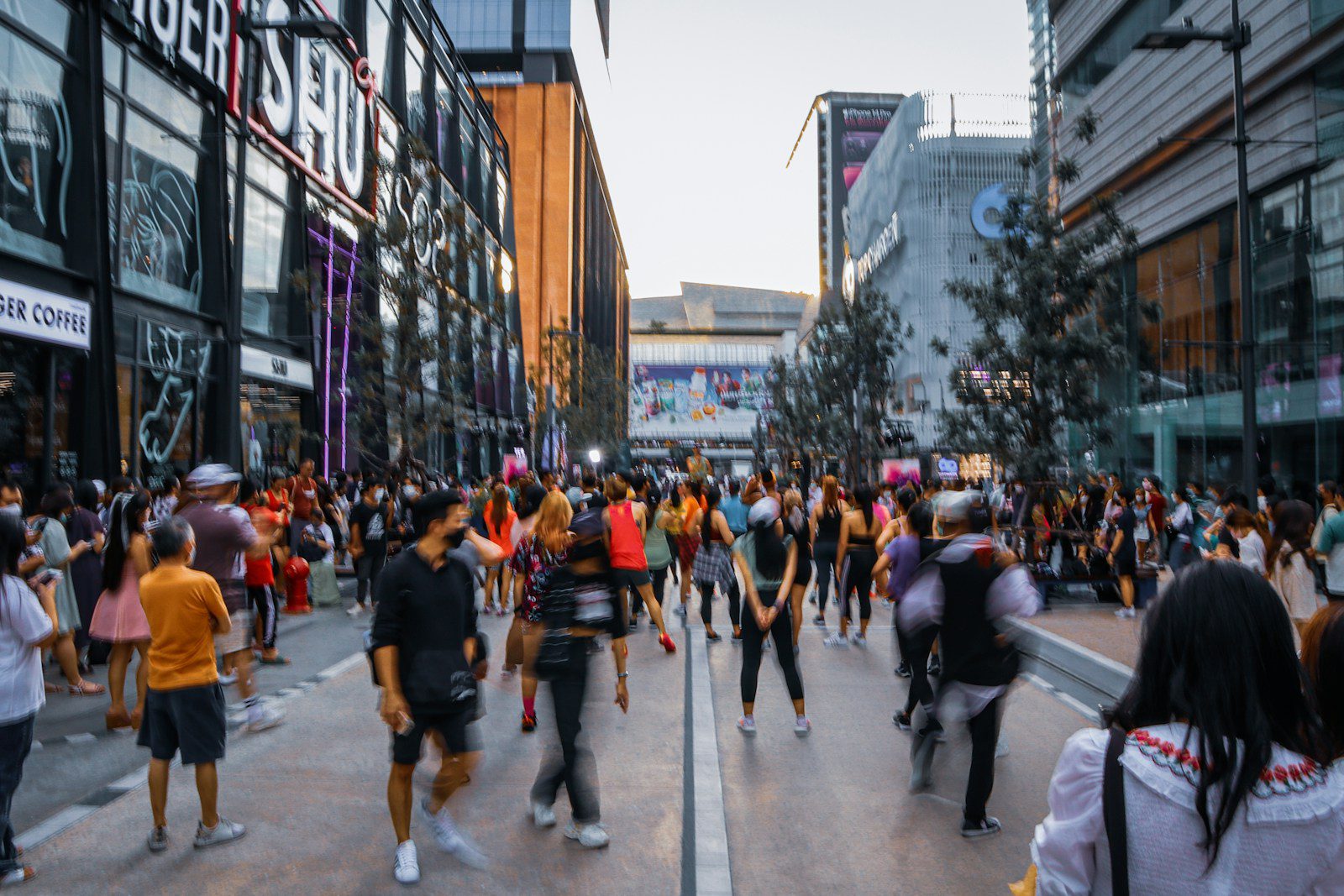
Smart City Innovations Enhance Urban Life
Bangkok’s infrastructure push isn’t only about concrete and steel – it’s also about becoming a smarter, more tech-enabled city. The Bangkok Metropolitan Administration under Governor Chadchart Sittipunt has launched several smart-city initiatives aimed at improving everyday life through technology. Traffic management is one major focus. In 2025 Bangkok partnered with Google on an AI-powered system called “Project Green Light” to optimize traffic signals at clogged intersections. Using real-time data from Google Maps and AI algorithms, this system adjusts the timing of green/red lights to match actual traffic conditions, rather than relying on fixed timers. Early results from other cities have shown up to 30% fewer stops and 10% lower emissions thanks to AI-managed traffic flow. Bangkok was one of only 18 cities worldwide selected for this project, and officials reported promising initial outcomes, leading them to expand smart traffic lights to more junctions citywide. For residents, this means shorter and less frustrating drives across town and a greener, less polluted city – a welcome change for anyone who’s spent hours in Bangkok traffic.
Another innovation boosting livability is the rise of digital citizen services. The city has rolled out platforms like Traffy Fondue, a popular mobile app that lets residents report problems (potholes, broken streetlights, garbage issues, etc.) directly to city authorities. This kind of civic tech has been incredibly effective. A recent study noted that the Traffy Fondue platform achieved an 84% citizen satisfaction rate and saved the Bangkok government around $2.14 million per year by streamlining issue reporting and resolution. Essentially, by empowering residents to flag issues with a few taps on their phone – and by using data analytics to prioritize and respond – the city is becoming more responsive and well-maintained. Expats living in Bangkok can take advantage of these tools just like locals: report that giant pothole on your Soi via the app and see it fixed in days, or use the BMA’s open data dashboards to see real-time air quality and plan your outdoor activities.
The smart-city drive also includes things like expanded free public Wi-Fi zones, cashless payment systems for transit, and the integration of services under the Thailand Smart City initiative. Bangkok is one of the pilot cities in the ASEAN Smart Cities Network, and the national government has a goal of establishing 105 smart cities by 2027. In practical terms, this means the capital is seeing more IoT sensors and data-driven management: smart surveillance cameras for security, digital kiosks for accessing government services, and even an expanding network of EV charging stations to support the surge in electric vehicles. All these efforts align with Bangkok’s vision of “Go Smart, Go Digital, Go Green,” making the city not just higher-tech but also more sustainable and user-friendly. For expats and digital nomads, Bangkok’s tech upgrades translate into conveniences like easier navigation (think real-time bus arrival apps), faster bureaucratic processes (online work permit renewals, anyone?), and an overall sense that the city is keeping up with modern demands.
A Better Life for Expats in Bangkok
Crucially, these improvements benefit not just native Bangkokians but also the large international community that calls Bangkok home. The city is clearly positioning itself as a regional hub for talent and investment – cleaner, more reliable infrastructure is attractive for businesses and remote workers alike. With world-class transit and aviation connectivity, plus the low cost of living Thailand is known for, Bangkok is poised to remain one of the top destinations for expats in Asia.
Want to relocate to the new Bangkok? To keep up with the latest developments and insider tips, be sure to join our Thailand Guide waiting list – you’ll get updates on city changes and opportunities to thrive in Thailand. And if you’re curious about how affordable this enhanced city life can be, check out our Thailand Infrastructure upgrades in 2025 for the wide range of the nation. Bangkok’s future is bright, and there’s never been a better time to be a part of this dynamic city’s story.
Still weighing up your visa options?
Tell us your nationality, your plans and how long you want to stay. We will put you in touch with immigration specialists who handle these applications daily.


