5-Day Vietnam Coastal Itinerary: From Hanoi to Ho Chi Minh City
Vietnam’s coastline offers an incredible journey through history, culture, and stunning seascapes. This 5-day Vietnam coastal itinerary takes you from the charming capital of Hanoi down to bustling Ho Chi Minh City, hitting iconic stops like Ha Long Bay, Hoi An, and Da Nang along the way. It’s a fast-paced yet culturally rich route – perfect for short-term travelers or digital nomads scouting Vietnam’s beach towns and cities for longer stays. You’ll experience Hanoi’s street food and heritage, cruise among Ha Long Bay’s limestone islands, relax in Hoi An’s lantern-lit streets, soak up Da Nang’s modern beach city vibe, and finish with the energy of Ho Chi Minh City. Let’s dive into this realistic 5-day Vietnam tour from north to south.


Day 1: Hanoi – Old Quarter Charm and Capital Culture
Begin your journey in Hanoi, Vietnam’s thousand-year-old capital. Spend the day exploring the vibrant Old Quarter, where scooter-filled streets weave between French colonial buildings, temples, and markets. Take a morning walk around Hoan Kiem Lake to see locals practicing tai chi and visit Ngoc Son Temple on its island. Dive into Hanoi’s history at the Temple of Literature (Vietnam’s first university) or the Ho Chi Minh Mausoleum and One Pillar Pagoda for a glimpse of the nation’s heritage.
Don’t miss a traditional water puppet show in the evening, a unique art form born from Vietnam’s rice paddies. Hanoi is also a foodie paradise – try a bowl of pho bo (beef noodle soup) or bun cha (grilled pork with noodles) at a street stall for an authentic lunch. In the afternoon, sip on an egg coffee in a hidden café overlooking the bustling streets for a classic Hanoi experience.
For convenience and atmosphere, base yourself near Hoan Kiem Lake or in the Old Quarter. There are plenty of boutique hotels and hostels tucked in historic shophouses. This puts you steps away from Hanoi’s famed street food stalls and bia hơi corners (fresh beer joints). Enjoy a night out in the Old Quarter’s lively sidewalk bars, but get some rest – tomorrow you head to the coast.

Hanoi’s Noi Bai Airport is the gateway for international arrivals. Once in the city, use ride-hailing apps or taxis to get around efficiently. To start your coastal itinerary, you’ll embark by road to Ha Long Bay on Day 2 – consider arranging a shuttle or private car for an early start.
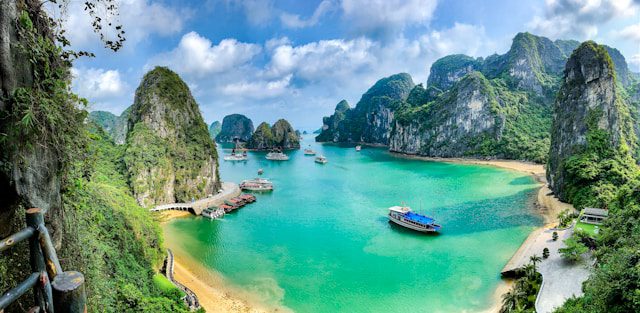
Day 2: Ha Long Bay – Cruising Among Karsts in the Gulf of Tonkin
Sunset over the karst-studded waters of Ha Long Bay. No trip to northern Vietnam would be complete without experiencing the otherworldly beauty of Ha Long Bay, a UNESCO World Heritage site featuring thousands of limestone karsts rising dramatically from emerald waters. On Day 2, leave Hanoi at dawn for the ~3-hour drive to Ha Long Bay. By late morning, board a cruise from Tuan Chau Harbor and set sail into a panorama of jade-green sea and towering rock islands.
Most Ha Long Bay cruises kick off with a seafood lunch on deck as you glide past famous islets. In the afternoon, enjoy activities among the islands – kayak through hidden lagoons, explore surreal caves like Sung Sot (Surprise Cave), or take a dip in the bay’s calm waters at a quiet beach. Many cruises stop at a floating fishing village, where you can see pearl farms or take a bamboo boat rowed by locals. As evening approaches, ascend to the sundeck to witness a breathtaking sunset shimmering on the water.
If time permits, opting for an overnight cruise is highly recommended. Watching dusk and dawn in Ha Long Bay is magical – some boats offer sunrise tai chi sessions and nighttime squid fishing for an extra-special experience. Where to Stay: On an overnight Ha Long cruise, you’ll sleep in a cozy cabin surrounded by silence and stars. (For travelers who prefer to return to land, you can stay in a Ha Long city hotel or head back to Hanoi for the night, but an overnight on the bay is a trip highlight.)
After the cruise, you’ll need to travel south to Central Vietnam. The fastest option is to return to Hanoi by early evening and catch a flight from Hanoi (Noi Bai) to Da Nang (about 1.5 hours). Vietnam’s domestic flights are frequent and affordable – a quick flight saves you a lengthy train or bus ride. By nightfall of Day 2 (or early Day 3), you should be arriving in the Da Nang/Hoi An area to continue your coastal adventure.

Day 3: Hoi An – Lanterns, Beaches, and Living History
Spend the afternoon exploring landmarks like the iconic Japanese Covered Bridge and the bustling Central Market. Cultural stops abound – you can visit heritage homes dating back centuries or join a hands-on workshop. Hoi An is famous for its skilled tailors, so if you’ve ever wanted a custom suit or dress, this is the place (they can sometimes whip up garments within a day!). As the sun sets, head to the Thu Bon River bank. The town begins to glow with hundreds of lanterns at dusk, creating a magical ambiance as you take an evening stroll. You might even take a short boat ride to release a paper lantern on the water for good luck.
Hoi An’s regional cuisine is a highlight. Don’t miss trying Cao Lau, a savory local noodle dish made with water from ancient well sources, and the delicate White Rose dumplings – both Hoi An specialties. Grab a banh mi from the famous Banh Mi Phuong or enjoy Mot herbal tea on the street as you soak in the atmosphere. Dinner in Hoi An could be a riverside restaurant serving fresh cao lau and crispy pancake wraps, followed by dessert of coconut sorbet or banana pancakes from a night market stall.
Hoi An offers charming homestays and boutique hotels, many with French-Vietnamese decor and a friendly family vibe. Consider staying right in the Ancient Town (for colonial charm and convenience) or at a beachside resort by An Bang Beach just a few kilometers away if you prefer ocean breezes. (An Bang is a great place for a morning swim or evening beach bar session, if you can squeeze it in.) The town’s slower pace is a nice respite – you might find yourself imagining a longer stay here, like many expats who now call Hoi An home.
Hoi An is compact, so you can see a lot in one day. To avoid midday heat, do indoor visits or a quick trip to the nearby Tra Que herb village in early afternoon, then resume walking the town in late afternoon. Everything in the Old Town is reachable by foot. By day’s end, you’ll likely have tailor-made clothes in progress, a camera full of lantern photos, and a newfound love for this little city.
Planning a trip to Asia?
Tell us your dates, who is travelling and what you want out of it. We will come back with somewhere to stay and things worth doing.
Day 4: Da Nang – Beaches, Bridges, and Modern Vietnam Vibes
Day 4 takes you 30 minutes up the coast to Da Nang, a dynamic city that perfectly blends beach life with urban convenience. Da Nang, on Vietnam’s central coast, is a city of contrasts – a major urban center of over a million residents that feels far calmer and cleaner than Hanoi or Saigon. It offers all the amenities of a big city yet retains a friendly, laid-back beach town vibe. Divided by the Han River – city skyline on one bank and sandy beaches on the other – it’s no surprise Da Nang has earned a reputation as Vietnam’s “most livable city”.
Transfer from Hoi An after breakfast (either by private car or even a fun motorbike ride for the adventurous) and stop at the Marble Mountains en route. These five marble-and-limestone hills are home to Buddhist pagodas and caves filled with hidden shrines – a brief climb rewards you with panoramic views of the coastline and city, and a chance to see local stone carvers at work. Next, head to My Khe Beach, Da Nang’s most popular strip of white sand, for a late morning swim or a coconut under a palm umbrella. Even a quick walk along the beach will show you why the city draws both tourists and digital nomads – soft sand and gentle waves just minutes from downtown.
Explore a bit of modern Da Nang. You could visit the towering Lady Buddha statue at Linh Ứng Pagoda on the Son Tra Peninsula for sweeping views of the coast. Or, check out the city itself: Da Nang’s downtown has clean, spacious streets and plenty of cafes (the city feels like there’s a hip coffee shop on every corner). Enjoy a casual lunch of Mi Quang (turmeric rice noodles with pork and herbs – a Danang specialty) or sample fresh seafood at a local eatery – Da Nang is famous for affordable seafood feasts by the beach.
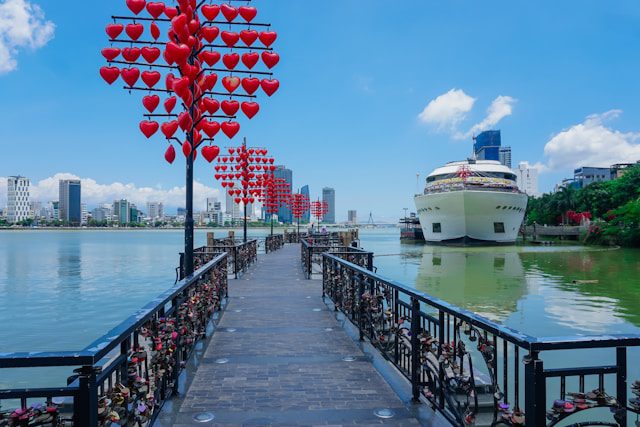
Don’t miss the city’s showpiece – the Dragon Bridge (Cầu Rồng) – which comes alive at night. This gleaming golden bridge, shaped like a dragon flying across the Han River, is an icon of Da Nang. On weekend nights at 9 PM, join the crowd along the riverfront to watch the dragon breathe actual fire and water – an energetic display synchronized with lights that dazzles onlookers. The skyline view here is fantastic: shimmering buildings and the neon Han River bridges reflecting on the water. For a laid-back night, you might visit a rooftop bar or a beach bar – unlike Saigon’s pulsating nightlife, Da Nang’s social scene is more about chilling by the water or at a cozy pub, which many remote workers appreciate.
As Day 4 wraps up, you’ll head to the airport for a flight from Da Nang to Ho Chi Minh City (about 1 hour 20 minutes by plane). Try to catch an evening flight after dinner so you can enjoy Da Nang’s sunset and night views before you leave. By the end of the day, you’ve experienced a mini Da Nang travel guide highlighting its best: cultural sites, a beautiful beach, and a taste of the modern Vietnamese city lifestyle.
(Tonight in Saigon) Upon arriving in Ho Chi Minh City late in the evening, check into a hotel in District 1, the central district. This will position you well for sightseeing on your final day. Many travelers choose areas around Ben Thanh Market or Dong Khoi Street for convenience, or the Pham Ngu Lao area for budget options and a backpacker vibe. Get a good night’s sleep – tomorrow you’ll dive into Vietnam’s biggest city.

Day 5: Ho Chi Minh City – Saigon’s Urban Energy and Farewell
Welcome to Ho Chi Minh City (Saigon), Vietnam’s largest metropolis and economic hub. Arriving here can feel like a jolt of energy: discover a city where street food, historic alleyways, and honking motorbikes now mix with skyscrapers, minimalist showrooms, and upscale patisseries. It’s a place of intriguing contrasts – Buddhist temples and French colonial architecture standing in the shadows of gleaming high-rises, and traditional markets competing with modern malls.
Start your day with a dose of history. Pay a visit to the War Remnants Museum for a sobering look at Vietnam’s 20th-century history, or tour the Reunification Palace, frozen in time since the end of the Vietnam War. Nearby, admire the beautiful French colonial landmarks – Notre Dame Cathedral and the Central Post Office – both are picturesque and hark back to Saigon’s earlier days. Grab a Vietnamese iced coffee (strong brew with sweet condensed milk – fuel for the busy streets!) at an old-school café like Café Apartments on Nguyen Hue, or enjoy a pastry at a French bakery to see the colonial influence in the local food scene.
For lunch, indulge in Ho Chi Minh City’s famed food culture. This city is a street food heaven: try banh mi from a street cart or com tam (broken rice with grilled pork and egg) at a casual eatery. If you have time, swing by Ben Thanh Market – not only can you shop for souvenirs (coffee, tea, dried fruit, and handcrafts are popular buys), but the market’s food stalls are perfect for a quick bowl of bun bo Hue (spicy beef noodle soup) or a plate of fresh spring rolls. In the afternoon, explore a different neighborhood: perhaps trendy Thao Dien in District 2 for its boutique shops and cafés popular with expats, or historic Chinatown (Cholon) in District 5 to see bustling temples like Thien Hau Pagoda. Keep in mind traffic in Saigon can be intense – use metered taxis or apps like GrabBike to hop around efficiently.
Cap off your 5-day Vietnam trip with a celebratory night in Saigon. A rooftop bar is a fantastic way to take in the city’s skyline – try a cocktail at the modern Bitexco Tower’s sky deck or a craft beer at a rooftop garden bar while gazing at the endless sea of city lights. Alternatively, dive into the chaos of Bui Vien Street in the evening – the city’s walking street is full of neon, music, and revellers, an adventure in itself if you’re up for a party. For a more upscale dining experience, Ho Chi Minh City has world-class restaurants; you might treat yourself to fusion Vietnamese cuisine at a contemporary eatery or seek out a hidden speakeasy for a final toast.
Read for Your Adventure?
As your 5-day Vietnam tour comes to an end, reflect on the incredible diversity you’ve experienced – from Hanoi’s lakes and legends to the natural wonder of Ha Long Bay, from Hoi An’s lantern-lit nights to Da Nang’s coastal modernity, and finally Saigon’s urban buzz. In just five days, you’ve traveled nearly the length of Vietnam, experiencing a sampler of its coastal highlights, culture, and cuisine. It’s been a whirlwind, but the memories (and photos) are sure to last.
If you’re inspired to explore further or even considering making Vietnam a more permanent move, we have resources to help. Ready to take the leap? Join our Vietnam Move waiting list for exclusive guidance on relocating to Vietnam’s vibrant cities and coasts. You’ll get insider tips on visas, housing, and investment in destinations like Da Nang (Vietnam’s “Most Livable City”) and beyond. And be sure to check out our other Vietnam lifestyle and real estate articles for deeper insights into living your best life in this amazing country. Hẹn gặp lại (see you again) in Vietnam!
Thinking seriously about moving to Asia?
Tell us where you are now and what the move looks like. We will match you with people who have done it before and can save you the expensive mistakes.