


Phuket Old Town Guide: History, Food and Vegetarian Festival
Phuket Old Town was built on tin. In the 19th century, tin mining drew Hokkien Chinese traders and workers to the island, and the wealth they made shaped the streets you walk today.

The result is a compact grid of pastel shophouses, family shrines, cafés and old mansions a short drive from the beaches. It’s the cultural heart of the island, and the best place to understand how Phuket became the place it is.
This guide covers the history, the food, the Sunday walking street and the Vegetarian Festival, which runs from 10 to 18 October 2026.
A town built on tin
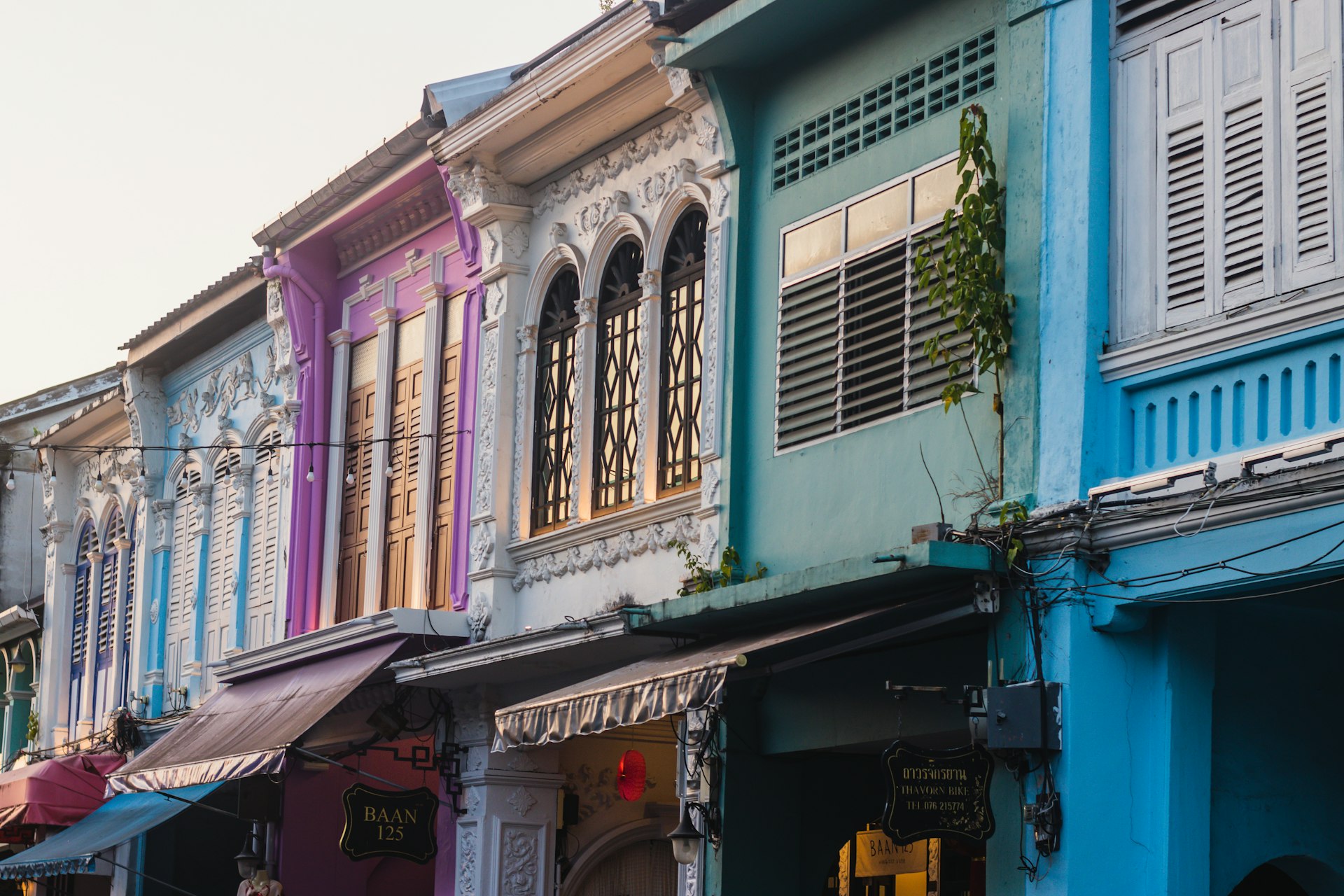
Tin mining turned Phuket into one of the richest places in the region in the 1800s. Many of the miners and merchants were Hokkien Chinese, some arriving from Penang and Malacca, and they settled in what is now Phuket Town.
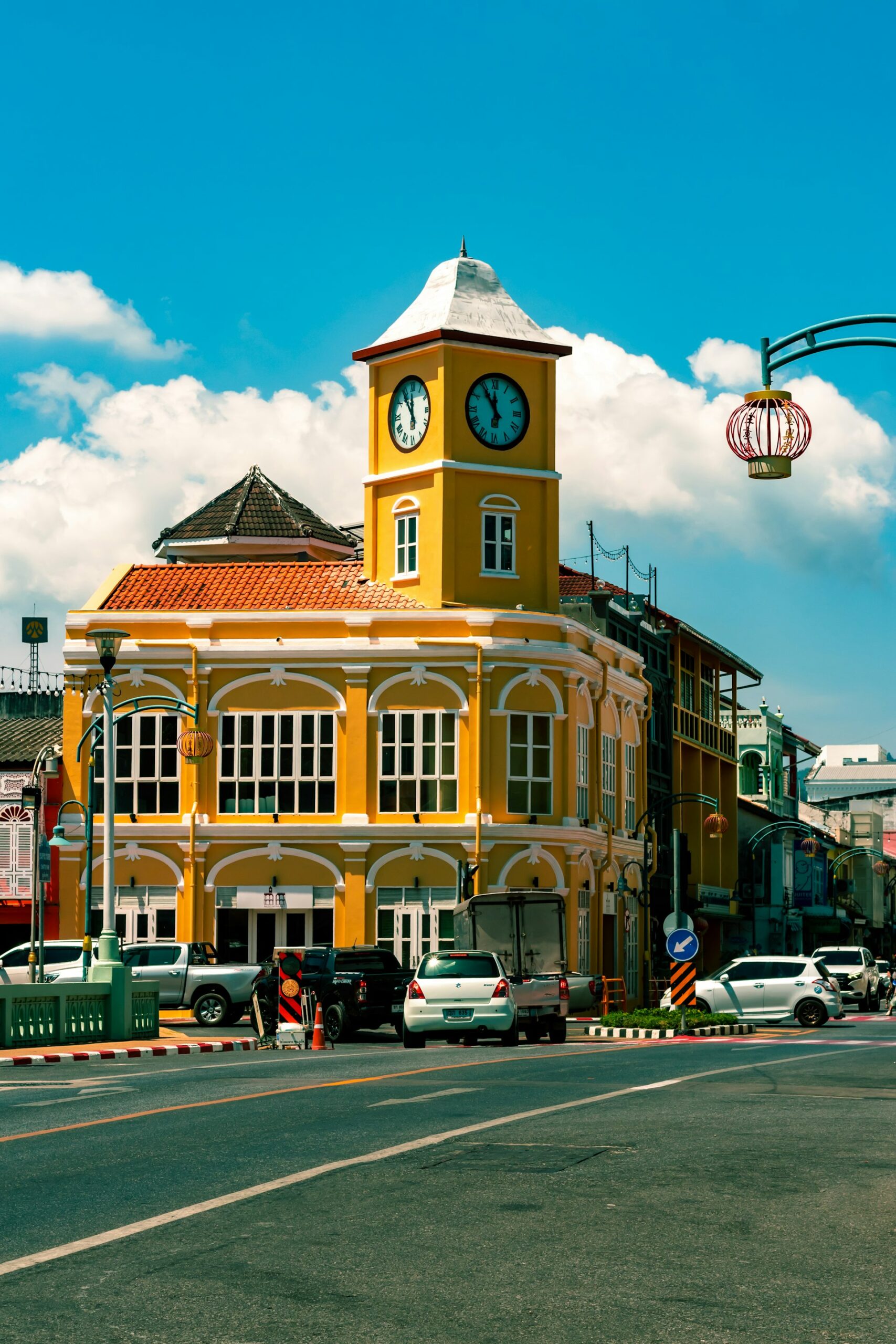
Their wealth built the Sino-Portuguese shophouses that still line Thalang, Dibuk and Krabi Roads. The style blends Chinese layouts with European details such as arched windows, shuttered doors and stucco mouldings. Shops sat on the ground floor and families lived above. At street level, a covered five foot walkway shades pedestrians from sun and rain.

Wander into Soi Romanee, a short lane off Thalang Road lined with brightly painted shophouses. It was once the town’s entertainment street and is now one of its most photographed corners.
Baba culture and Peranakan heritage
Phuket’s Baba families descend from Chinese settlers who married into local Thai and Malay families. Over generations, they developed their own culture, known across the region as Peranakan.
Look for it at weddings and family celebrations. Women wear embroidered kebaya blouses with batik sarongs and hand beaded slippers. Food arrives in tiered tiffin carriers. Phuket’s Baba wedding ceremonies, with their elaborate dress and processions, are still held each year.
To learn more, visit the Phuket Thai Hua Museum at 28 Krabi Road. The building opened in 1934 as the island’s first Chinese school and became a museum in 2010. Its 13 rooms tell the story of the Chinese community, tin mining and local festivals. It’s open from 9am to 5pm, closed on Mondays, and entry is 200 baht.
Thailand’s first UNESCO City of Gastronomy
In 2015, Phuket became the first city in Thailand named a UNESCO City of Gastronomy. The title recognises a food culture that mixes Hokkien Chinese, Thai and Malay cooking into something distinct to the island.
A good food day in Old Town might look like this.
- Dim sum for breakfast, with steamed buns, dumplings and strong local coffee.
- Mee hokkien, thick yellow noodles fried with seafood, pork and greens.
- Moo hong, pork belly slow braised with black pepper, garlic and soy until it falls apart.
- Oh-aew, a shaved ice dessert with a clear jelly and red beans, ideal in the afternoon heat.
Breakfast is the local speciality. Many of the best places open early and sell out by late morning, so start before 9am.
Lard Yai, the Sunday walking street
Every Sunday from 4pm, Thalang Road closes to traffic and becomes Lard Yai, a walking street market. The name means big market in the southern Thai dialect, a nod to the road’s history as the town’s main trading street.
Stalls sell local snacks, Phuket specialities, crafts and clothes, and there’s live music and street performance along the way. The market runs until about 9pm or 10pm. Arrive around 5pm, when the shophouses look their best in the late light and the crowds are still thin.
Old Town by night
After dark, many of the old shophouses become cafés, galleries and cocktail bars. Some keep their original tiled floors, wooden shutters and family altars. The streets are quiet and safe, and the town is best explored slowly, on foot.
For a simple evening, walk Thalang Road, turn into Soi Romanee, then continue to Dibuk Road for a drink in one of the restored shophouse bars.
The Phuket Vegetarian Festival 2026
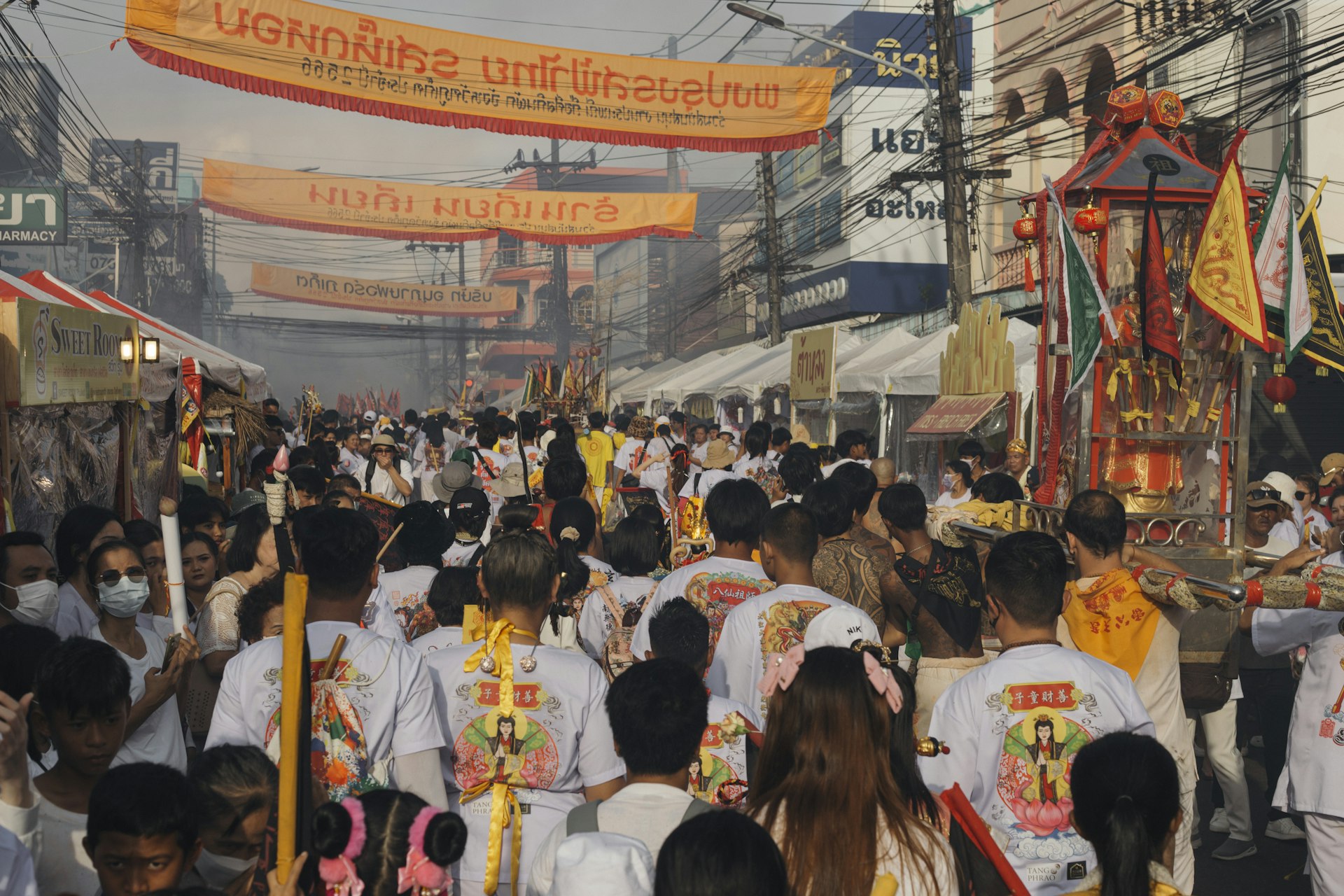
The Phuket Vegetarian Festival, also called the Nine Emperor Gods Festival, follows the Chinese lunar calendar. In 2026, it runs from 10 to 18 October. On the evening of 9 October, the Go Teng poles are raised at each shrine to invite the gods down, and they’re lowered on 19 October to close the festival.
The festival dates back to 1825, when a visiting Chinese opera troupe fell ill in Kathu and recovered after keeping a strict vegetarian diet and honouring the Nine Emperor Gods. The ritual has been held every year since.
For nine days, Old Town’s Chinese shrines host Taoist ceremonies, early morning street processions and plant based food. Devotees dress in white, and yellow flags with red characters mark the jay food stalls. Jay food contains no meat, dairy, eggs or alcohol, and no pungent vegetables such as garlic and onion.
| Date | What happens |
|---|---|
| Friday 9 October | Go Teng poles raised at the shrines, 4pm to 6pm |
| 10 to 18 October | Festival days, with jay food across the island |
| Friday 16 October | Jui Tui Shrine procession, the largest shrine |
| Saturday 17 October | Kathu Shrine procession into Phuket Town |
| Sunday 18 October | Final night procession and firecrackers around town |
| Monday 19 October | Go Teng poles lowered |
Procession times can change, so check with the shrines on the day. Most processions start early, around 7am.
Tips for visitors
- Wear white, with long sleeves, long trousers and closed shoes.
- Bring earplugs and a mask for the firecrackers and smoke.
- Stand well back from the front of processions and give mediums space.
- Ask before photographing people up close.
- Eat jay food all week. It’s a good way to take part respectfully.
Common questions about Phuket Old Town
When is the Phuket Vegetarian Festival in 2026?
It runs from 10 to 18 October 2026. The Go Teng poles go up on the evening of 9 October and come down on 19 October.
What day is the Lard Yai walking street?
Lard Yai is held every Sunday on Thalang Road, from 4pm until about 9pm or 10pm.
How long do you need in Phuket Old Town?
Half a day covers the main streets, a museum and a meal. Stay into the evening for the cafés and bars, or plan a Sunday visit to catch Lard Yai.
What should I eat in Phuket Old Town?
Start with dim sum for breakfast, then try mee hokkien, moo hong and oh-aew. These dishes show the Hokkien Chinese roots of Phuket’s food.


